A chemical powder pneumatic conveying system plays a critical role in pharmaceutical manufacturing, where materials such as APIs, excipients, and fine powders must be handled under strictly controlled and hygienic conditions, and as the industry continues to move toward automation, more companies are replacing traditional manual handling with advanced chemical material conveying systems that ensure enclosed, contamination-free, and highly efficient material transfer. In this environment, selecting the right system and supplier is not only about equipment performance, but also about compliance with GMP standards, process validation, and long-term operational reliability.
In pharmaceutical applications, a chemical powder pneumatic conveying system is designed to transport materials through sealed pipelines using controlled airflow, ensuring that powders are moved safely without exposure to the environment, while maintaining strict hygiene requirements. Compared with open handling methods, a fully enclosed conveying system significantly reduces the risk of cross-contamination, protects operators from dust exposure, and ensures consistent product quality, which is essential for meeting regulatory requirements in pharmaceutical production.
Different conveying technologies can be applied depending on process requirements, as a vacuum conveying system or negative pressure conveying system is often preferred for hygienic environments where dust containment is critical, while a high pressure conveying system may be used for longer distances or higher capacity applications. In some cases, a combination of systems, such as integrating vacuum feeding with a pneumatic conveying system, provides greater flexibility and ensures stable material transfer across different stages of production.
From a design perspective, material characteristics must be carefully evaluated when selecting a powder conveying system or granular conveying system, as factors such as particle size, flowability, moisture sensitivity, and abrasiveness directly affect system configuration and performance. For sensitive pharmaceutical powders, low-velocity conveying methods and optimized airflow control are often required to prevent material degradation, while ensuring accurate dosing and consistent product quality throughout the process.
GMP design requirements are one of the most important aspects when selecting a chemical powder pneumatic conveying system, as all product-contact parts must be made of high-quality materials such as stainless steel 316L with smooth, polished surfaces to prevent material accumulation and facilitate cleaning. In addition, hygienic design features such as sanitary connections, absence of dead zones, and compatibility with CIP/SIP systems are essential to ensure easy cleaning, validation, and compliance with regulatory standards.
Cost is another critical factor in system selection, as the price of a chemical powder pneumatic conveying system can vary depending on system complexity, containment level, automation requirements, and validation support, with small systems starting from around USD 10,000 and large turnkey solutions exceeding USD 100,000. However, pharmaceutical-grade systems typically have higher costs due to the need for hygienic design, advanced sealing, and documentation such as IQ/OQ validation, which are necessary for regulatory approval and long-term operational safety.
Supplier selection plays a decisive role in the success of the project, as an experienced supplier can provide customized system design, material testing, GMP-compliant engineering, and full validation support, ensuring that the system meets both technical and regulatory requirements. In contrast, choosing an inexperienced supplier or focusing only on price may result in poor system performance, compliance issues, and higher long-term costs, making it essential to evaluate suppliers based on engineering capability, project experience, and after-sales support.
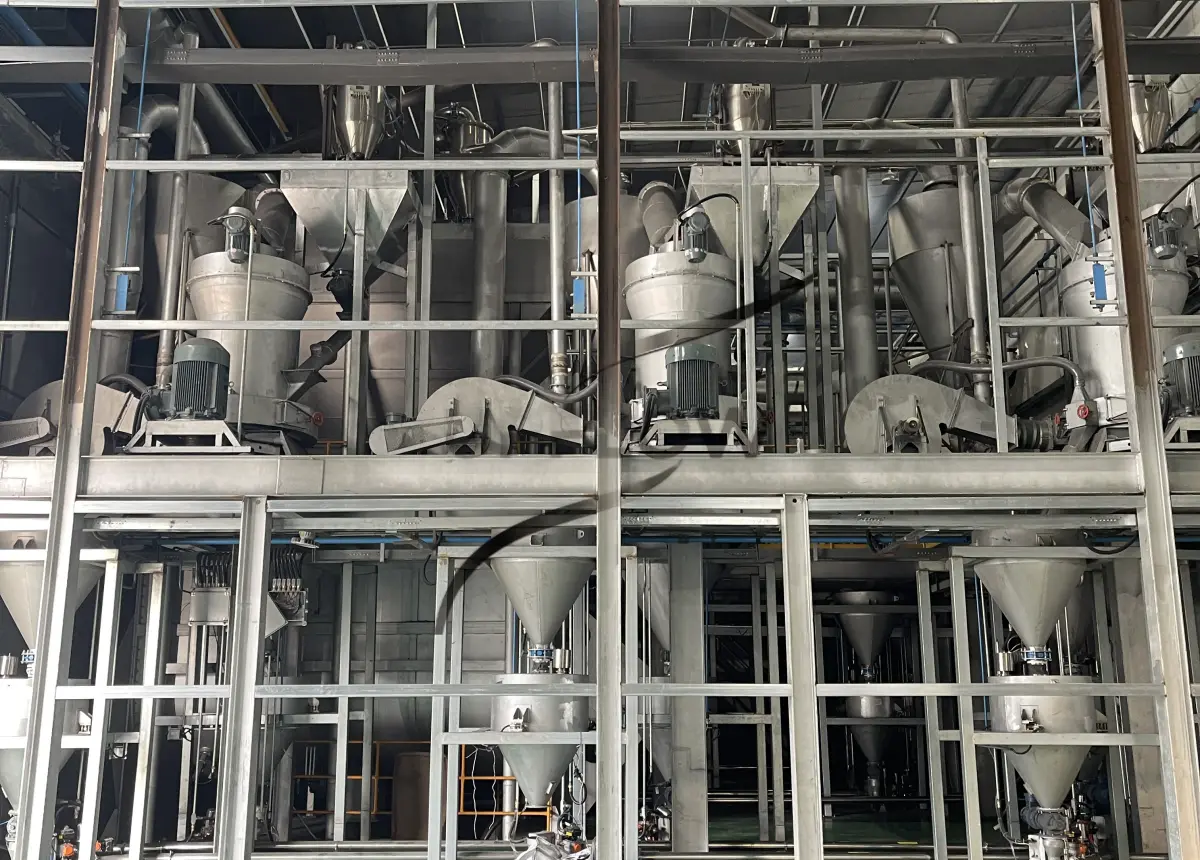
In modern pharmaceutical plants, central conveying systems are increasingly used to distribute materials efficiently to multiple production units, enabling centralized control and reducing manual handling, while improving production efficiency and consistency. This type of integrated material conveying system is particularly suitable for large-scale production environments where multiple processes must operate simultaneously under strict control.
From a long-term perspective, investing in a well-designed chemical powder pneumatic conveying system provides significant benefits, including improved production efficiency, reduced labor costs, enhanced product quality, and lower risk of contamination, all of which contribute to a strong return on investment. Most pharmaceutical plants achieve ROI within one to three years, especially when upgrading from manual or semi-automatic processes to fully automated systems.
Overall, selecting the right chemical powder pneumatic conveying system requires a comprehensive evaluation of system design, GMP compliance, cost factors, and supplier capability, rather than focusing on a single parameter such as price. By choosing a reliable supplier and a properly designed system, pharmaceutical manufacturers can ensure safe, efficient, and compliant production while supporting long-term growth and operational excellence.