
Introduction: Why Food Powder Conveying Systems Matter in 2026
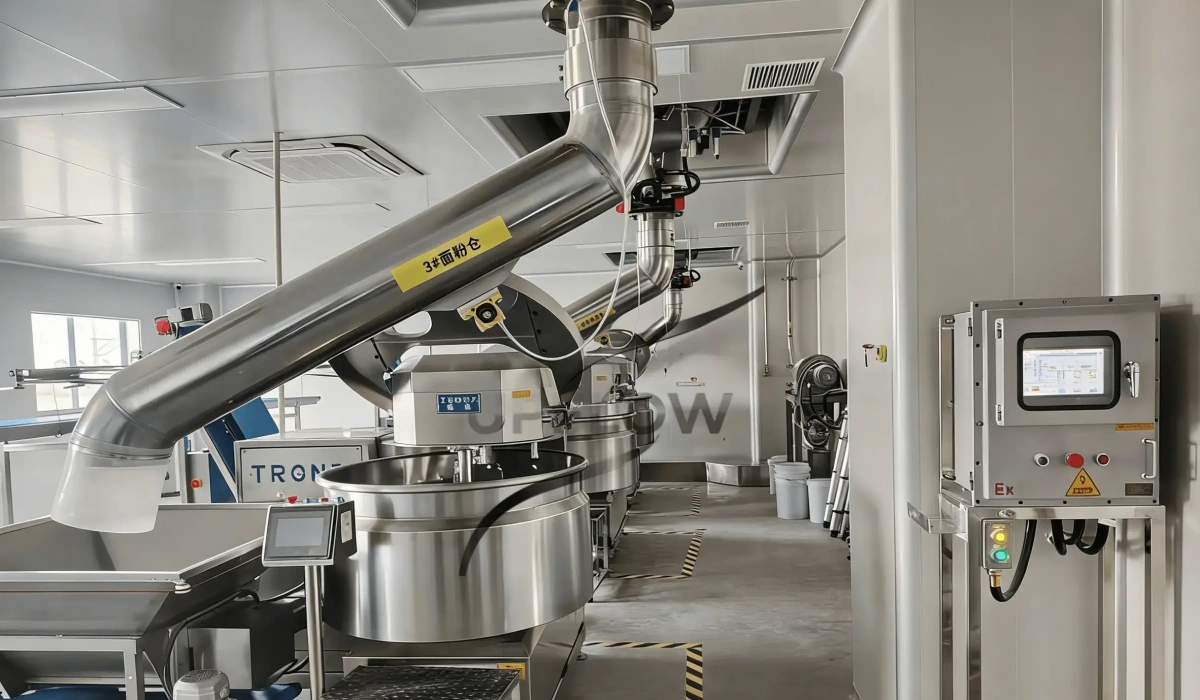
A food powder conveying system has become a critical solution for modern food processing plants that aim to improve hygiene, automation, and production efficiency, especially as manual handling methods can no longer meet the strict requirements of food safety and consistency. As manufacturers move toward fully integrated material automation systems, more companies are adopting enclosed conveying technologies such as powder conveying systems and positive pressure conveying systems to ensure dust-free, continuous, and contamination-free material transfer throughout the production process.
Common Food Powders and Their Conveying Characteristics
In the food industry, a wide range of materials are handled using a food powder conveying system, and understanding their characteristics is essential for proper system design, as different powders behave differently during conveying. Common materials include flour, sugar, milk powder, cocoa powder, starch, protein powder, seasoning powders, and food additives, each requiring specific handling conditions to maintain product quality and prevent contamination.
For example, flour and starch are fine powders with good flowability but are highly dust-prone, making them suitable for high-speed airflow conveying systems that ensure efficient transport while maintaining cleanliness. Sugar and milk powder, on the other hand, are more sensitive to moisture and may require gentle conveying through a powder transfer system or low-velocity conveying method to avoid caking or degradation, while cocoa powder and protein powder are lightweight and cohesive materials that often require optimized airflow and anti-blockage design within a pneumatic conveying system to ensure stable operation.
For bag-fed flour going to a mixer, use our flour transfer interface worksheet to check the pickup, receiver discharge, weighing arrangement and permitted refill window before requesting a proposal.
System Types and Conveying Solutions
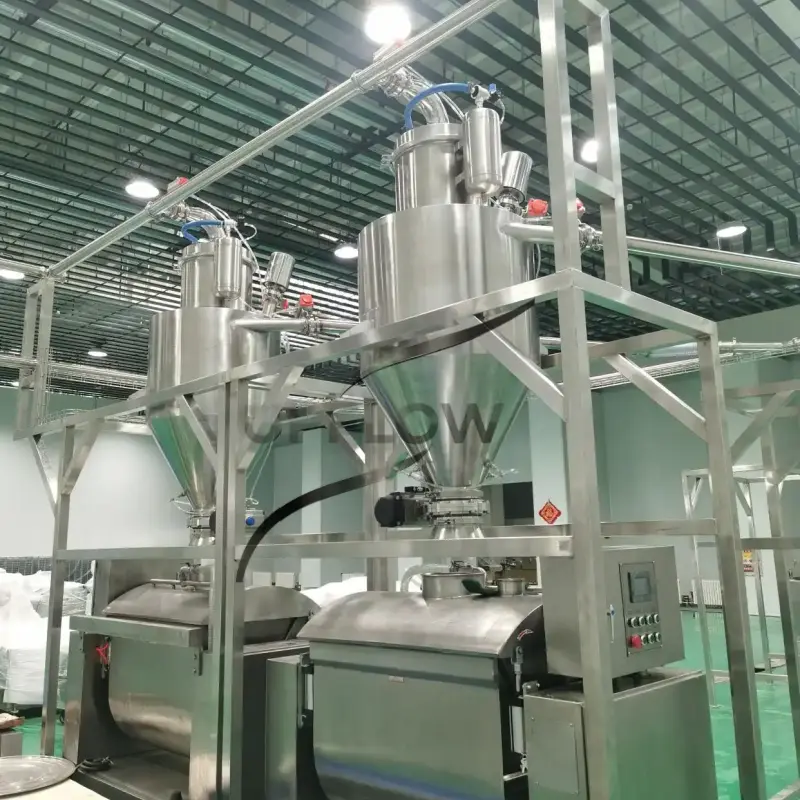
A typical food powder conveying system uses airflow to transport materials through sealed pipelines, ensuring a fully enclosed and hygienic process that meets food safety standards. Depending on production requirements, different system types can be applied, including positive pressure conveying systems for long-distance conveying systems, as well as vacuum-based systems for short-distance, high-cleanliness applications.
In large-scale food factories, a central conveying system is often used to distribute materials from storage silos to multiple production lines, enabling automated feeding and reducing manual handling, while a mixed conveying system may be used when different materials need to be transported simultaneously or sequentially. For applications involving both powders and small particles, a combination of powder conveying systems and granular conveying systems ensures flexibility and stable operation across different production processes.
Key Design Considerations for Food Powder Conveying Systems
Designing a reliable food powder conveying system requires careful evaluation of multiple factors, including material properties, conveying distance, production capacity, and hygiene requirements, as these parameters directly influence system performance and cost. For example, materials with high moisture sensitivity require special sealing and drying considerations, while long-distance conveying requires more robust airflow design and higher-pressure systems.
In addition, pipeline design and airflow control play a critical role in ensuring stable conveying performance, as improper design can lead to blockage, excessive energy consumption, or material degradation. By optimizing pipe routing, reducing unnecessary bends, and maintaining consistent airflow, a material automation system can achieve efficient operation while minimizing maintenance and energy costs.
Price Guide: How Much Does a Food Powder Conveying System Cost?
The cost of a food powder conveying system can vary significantly depending on system size, automation level, material requirements, and engineering complexity, with small systems typically ranging from USD 8,000 to USD 20,000, while medium systems may range from USD 20,000 to USD 80,000, and large turnkey systems exceeding USD 80,000 or more. However, the initial investment is only part of the total cost, as long-term expenses such as energy consumption, maintenance, and cleaning must also be considered when evaluating system value.
Food-grade requirements such as stainless steel construction, hygienic design, and clean-in-place (CIP) capability also increase system cost, but they are essential for ensuring compliance with food safety standards and reducing contamination risks. In many cases, investing in a well-designed system can significantly reduce operating costs over time and improve overall production efficiency.
How to Choose the Right Supplier
Selecting the right pneumatic conveying manufacturer is one of the most important decisions when investing in a food powder conveying system, as system performance depends heavily on engineering capability and design experience rather than just equipment quality. A reliable supplier should provide customized solutions based on material characteristics, production requirements, and plant layout, while also offering technical support, installation guidance, and after-sales service.
Choosing an experienced supplier helps avoid common issues such as poor system design, contamination risks, and inefficient operation, ensuring that the system delivers stable performance and long-term reliability. In contrast, selecting a supplier based only on price often leads to higher operational costs and potential production problems.
Conclusion: Investing in the Right System for Long-Term Success
A well-designed food powder conveying system is essential for modern food processing plants, as it enables efficient, hygienic, and automated material handling while supporting scalable production and consistent product quality. By carefully evaluating system design, cost factors, and supplier capability, manufacturers can implement a solution that not only meets current production needs but also provides long-term value and operational stability.