
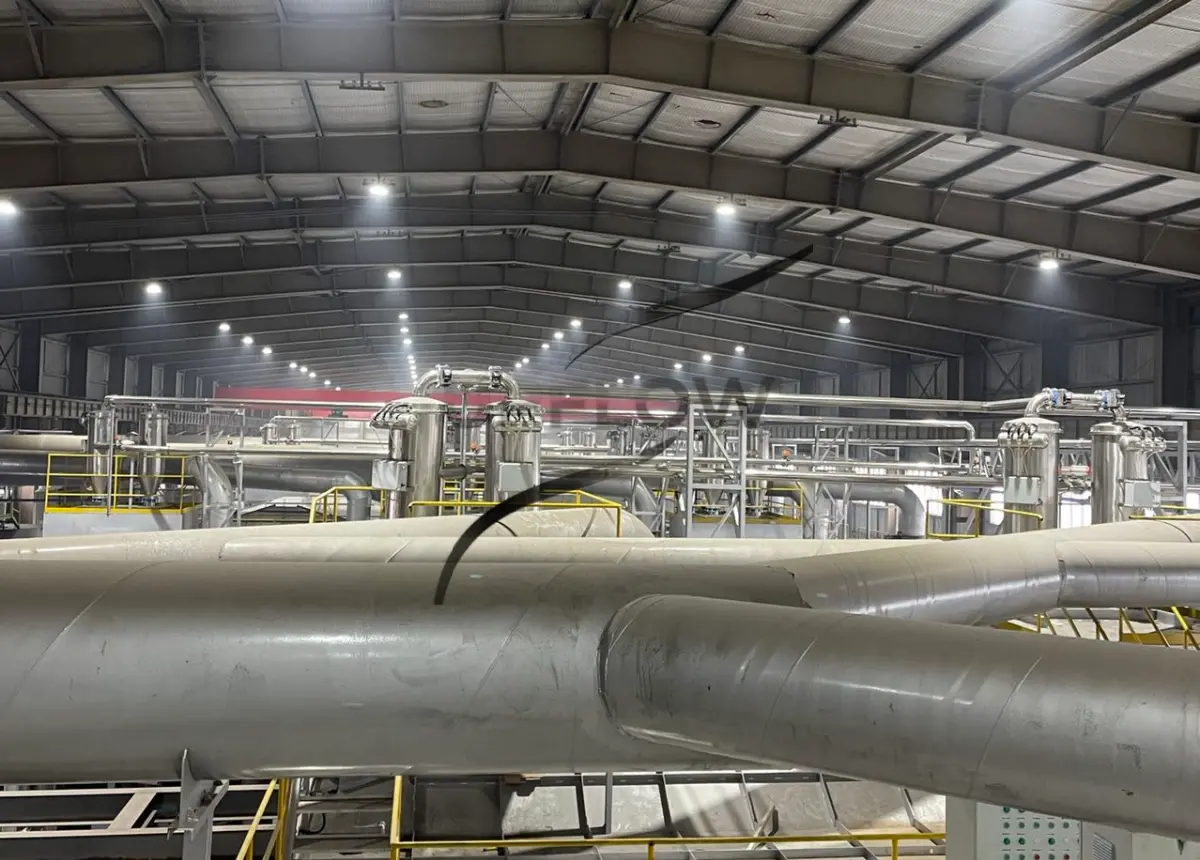
An automatic powder batching and conveying system has become a core solution in modern industrial plants, especially in industries such as food, pharmaceuticals, chemicals, and new energy, where manufacturers are increasingly replacing traditional manual feeding and mixing processes with fully integrated systems that combine storage, feeding, weighing, mixing, and pneumatic conveying systems, allowing companies to significantly improve batching accuracy, reduce labor costs, and maintain consistent product quality while achieving a clean, dust-free, and highly automated production environment.
As industrial production continues to move toward automation and intelligence, conventional batching methods that rely on manual or semi-automatic operation are no longer sufficient, because they often lead to inconsistent ingredient ratios, high labor intensity, dust pollution, and limited scalability, while modern automated systems based on PLC or DCS control can increase production efficiency by 20–40%, reduce material waste by up to 25%, and ensure precise batching accuracy at ±0.1%–0.2%, making them an essential investment for companies aiming to improve competitiveness and product consistency.
A well-designed automatic powder batching and conveying system typically integrates multiple functional modules into a unified architecture, where raw materials are unloaded from bags or bulk storage, transferred through sealed feeding systems, and then conveyed via pneumatic conveying systems or mechanical conveyors to a high-precision weighing and batching unit, followed by mixing and final discharge to production lines or packaging systems, forming a complete closed-loop workflow that minimizes dust emissions, reduces contamination risks, and improves overall plant cleanliness and safety.
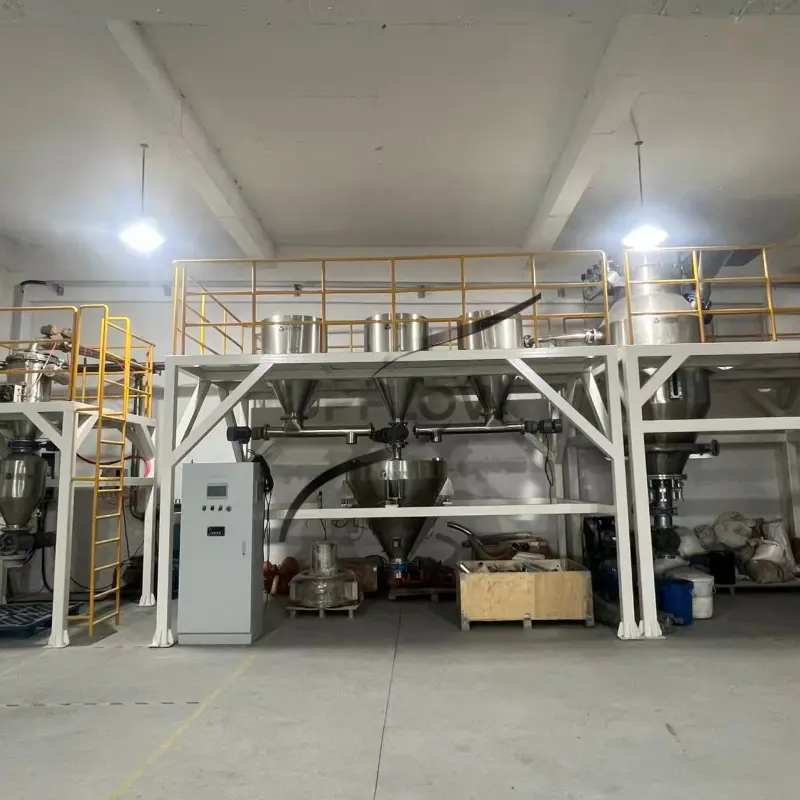
Within this system, the conveying section plays a critical role, as the selection between vacuum conveying and positive pressure conveying depends on factors such as conveying distance, capacity, and material characteristics, while pneumatic conveying is particularly suitable for long-distance, dust-free transport and hygienic applications, and when combined with advanced feeding equipment such as screw feeders or rotary valves, it ensures stable material flow and prevents issues such as bridging or inconsistent feeding that could affect batching accuracy.
At the same time, the weighing and batching system adopts either gain-in-weight or loss-in-weight configurations depending on whether the process is batch or continuous, and with the integration of load cells, dynamic PID control, and multi-stage feeding strategies, the system can accurately handle multiple materials simultaneously while maintaining high precision even under varying material conditions such as changes in bulk density or moisture content.
In addition to standard functionality, system optimization is essential to ensure long-term stability and performance, as factors such as pipeline design, airflow control, and feeding accuracy directly impact system efficiency, and by minimizing sharp bends, optimizing conveying velocity, and implementing adaptive control algorithms, manufacturers can prevent pipeline blockage, reduce wear, and maintain consistent batching accuracy, while also addressing challenges such as material segregation in multi-component systems through proper conveying methods and mixer selection.
Dust control is another key aspect of the automatic powder batching and conveying system, as modern designs rely on fully enclosed conveying combined with negative pressure systems, filtration units, and sealed transfer points to eliminate dust leakage, improve workplace safety, and comply with environmental regulations, which is especially critical in industries such as pharmaceuticals and food processing where hygiene standards are strict
Furthermore, system flexibility and scalability are increasingly important, as modern production lines require quick switching between different recipes and materials, and advanced systems allow operators to store multiple formulas, adjust parameters automatically, and switch production modes within minutes, while modular design enables future expansion without major system modifications, supporting long-term business growth and operational efficiency.
From a cost perspective, the price of an automatic powder batching and conveying system depends on factors such as system complexity, number of materials, level of automation, equipment selection, and customization requirements, with typical systems ranging from USD 20,000 for small setups to over USD 150,000 for large turnkey solutions, but despite the initial investment, the system can deliver significant returns through reduced labor costs, improved efficiency, lower material waste, and enhanced product consistency, often achieving payback within a relatively short period.
In practical applications, these systems are widely used across industries including food processing, pharmaceuticals, chemicals, and lithium battery materials, where centralized conveying and batching solutions can supply multiple production lines simultaneously, reduce manual feeding points, improve cleanliness, and provide real-time monitoring of material flow, demonstrating the value of integrated system design in modern industrial production.
Overall, an automatic powder batching and conveying system is no longer just an optional upgrade but a necessary infrastructure for modern factories, as it enables efficient, precise, and scalable production while supporting automation, digitalization, and future smart factory development, making it a key investment for companies seeking long-term competitiveness and operational excellence.