
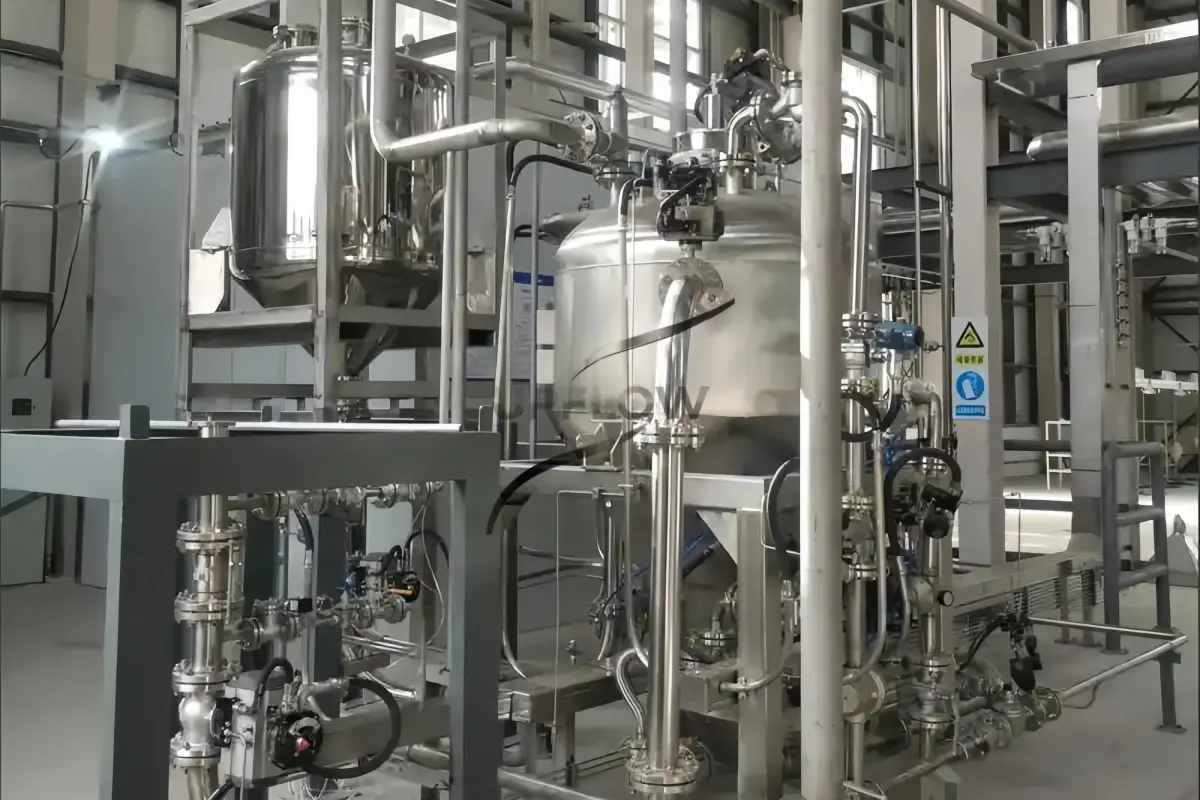
Material Profile: Lithium Hydroxide Properties and Classifications
Lithium hydroxide, commonly known as LiOH, is a critical lithium compound widely used in lithium-ion battery cathode production, greases, ceramics, and chemical synthesis industries, and it is also referred to as battery-grade lithium hydroxide, lithium hydroxide monohydrate (LiOH·H₂O), or anhydrous lithium hydroxide, depending on purity and processing form.
In industrial handling, lithium hydroxide is typically processed as a fine crystalline powder, with a bulk density ranging from approximately 0.6 to 1.0 g/cm³, and it is characterized by high chemical reactivity, hygroscopic behavior, strong alkalinity, and sensitivity to moisture and air exposure, which makes it prone to caking and dust generation during handling. It can be classified into battery-grade lithium hydroxide (high purity for energy storage applications) and industrial-grade lithium hydroxide (used in general chemical processing), both requiring precise and enclosed conveying systems to ensure quality and safety.
What Is a Lithium Hydroxide Pneumatic Conveying System?
A lithium hydroxide pneumatic conveying system is an advanced material handling solution that uses compressed air or controlled airflow to transport lithium hydroxide powder through enclosed pipelines in a safe and automated manner.
In industrial applications, it is also known as a powder automatic conveying system for lithium hydroxide materials, a dilute phase conveying system for lithium hydroxide powder, a low-pressure conveying system for lithium hydroxide handling, or a fully automatic conveying system for lithium chemical powders, depending on system configuration and production requirements.
By forming a controlled gas-solid flow, this powder conveying system for lithium hydroxide materials ensures continuous, stable, and dust-free transport in modern chemical and battery material production lines.
System Composition and Functional Structure
A complete lithium hydroxide pneumatic conveying system consists of several integrated subsystems, each playing a key role in ensuring efficient and reliable operation.
The dust collection system is essential for maintaining environmental compliance, as it captures airborne particles generated during conveying, ensuring clean exhaust and safe working conditions. The feeding system, including screw feeders, ensures uniform and controlled feeding of lithium hydroxide powder into the pipeline.
The conveying pipeline system is constructed from corrosion-resistant and wear-resistant materials, designed to handle the chemical properties of lithium hydroxide while maintaining product purity. The control system, often based on PLC automation, acts as the system’s “brain,” allowing precise control of airflow velocity, pressure, and feeding rate.
Finally, the air supply system, which may include vacuum pumps, provides the necessary airflow energy to drive material transport.
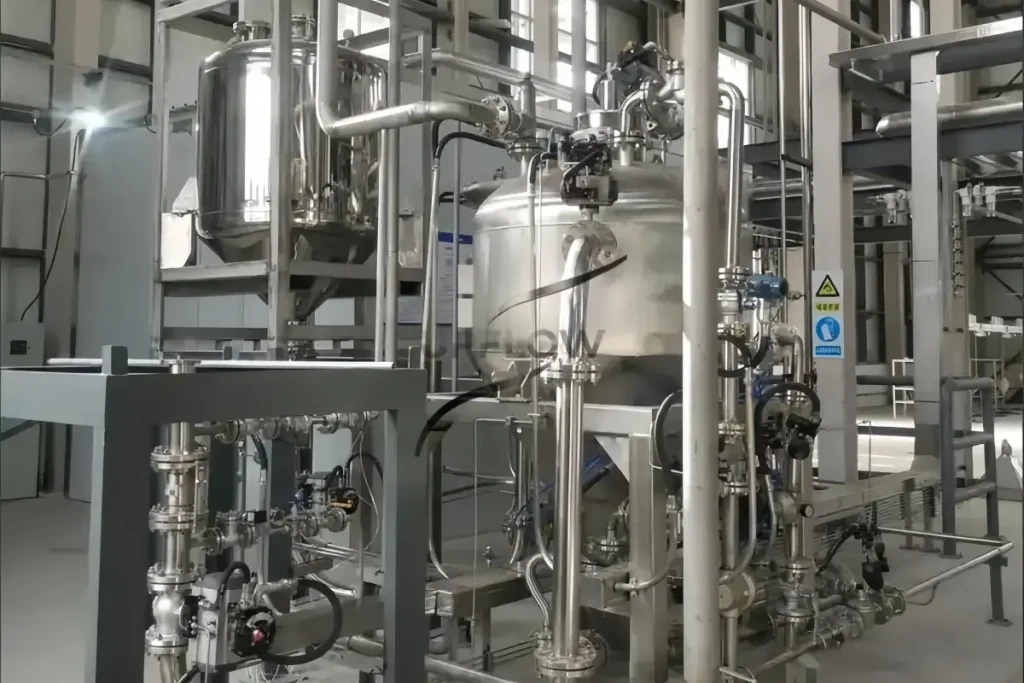
Working Principle of Lithium Hydroxide Pneumatic Conveying
The lithium hydroxide pneumatic conveying system operates based on aerodynamic principles, where compressed air generates both kinetic and pressure energy to move particles through pipelines.
During operation, lithium hydroxide powder is introduced into the pipeline, where it is either suspended in airflow (dilute phase conveying system) or transported in clusters, depending on system design. As a low-pressure conveying system for lithium hydroxide powder, it allows continuous and stable transport, while minimizing material degradation and energy consumption.
The enclosed nature of the system ensures that the material remains isolated from external conditions, preventing moisture absorption and contamination.
Key Advantages of Lithium Hydroxide Conveying Systems
The lithium hydroxide pneumatic conveying system offers several advantages that make it ideal for modern industrial applications.
As a fully automatic conveying system for lithium hydroxide materials, it reduces manual handling and improves production efficiency, while its enclosed structure ensures a clean and dust-free conveying environment. In addition, the system provides strong adaptability, allowing flexible pipeline routing and multi-point feeding configurations.
Compared with mechanical systems, this powder automatic conveying system for lithium hydroxide powder features fewer moving parts, resulting in lower maintenance requirements and higher operational reliability.
Industrial Applications in Lithium and Chemical Processing
The lithium hydroxide pneumatic conveying system is widely used in lithium battery manufacturing, chemical processing, ceramics, and environmental industries.
As a dilute phase conveying system for battery-grade lithium hydroxide powder, it is commonly used to transport materials from production units to storage silos or mixing systems. In battery material production lines, a fully automatic conveying system for lithium hydroxide materials ensures precise feeding into cathode preparation processes, improving product consistency and process efficiency.
Conclusion
The lithium hydroxide pneumatic conveying system provides a reliable, efficient, and environmentally friendly solution for transporting reactive lithium powders. By integrating powder automatic conveying systems, dilute phase conveying systems, low-pressure conveying systems, and fully automatic conveying systems for lithium hydroxide materials, manufacturers can achieve improved safety, higher efficiency, and stable material handling performance in advanced industrial environments.