
Material Overview: Lithium Iron Phosphate (LFP) Properties and Classification
Lithium Iron Phosphate (LFP), also known as LiFePO₄ or lithium iron phosphate cathode material, is one of the most important cathode materials used in modern lithium-ion battery manufacturing, especially for electric vehicles (EVs) and energy storage systems (ESS).
During battery production, LFP powder requires extremely controlled handling because of its fine particle size, strict purity requirements and sensitivity to contamination. Any material loss, dust leakage or foreign particle contamination may affect downstream mixing processes and final battery performance.
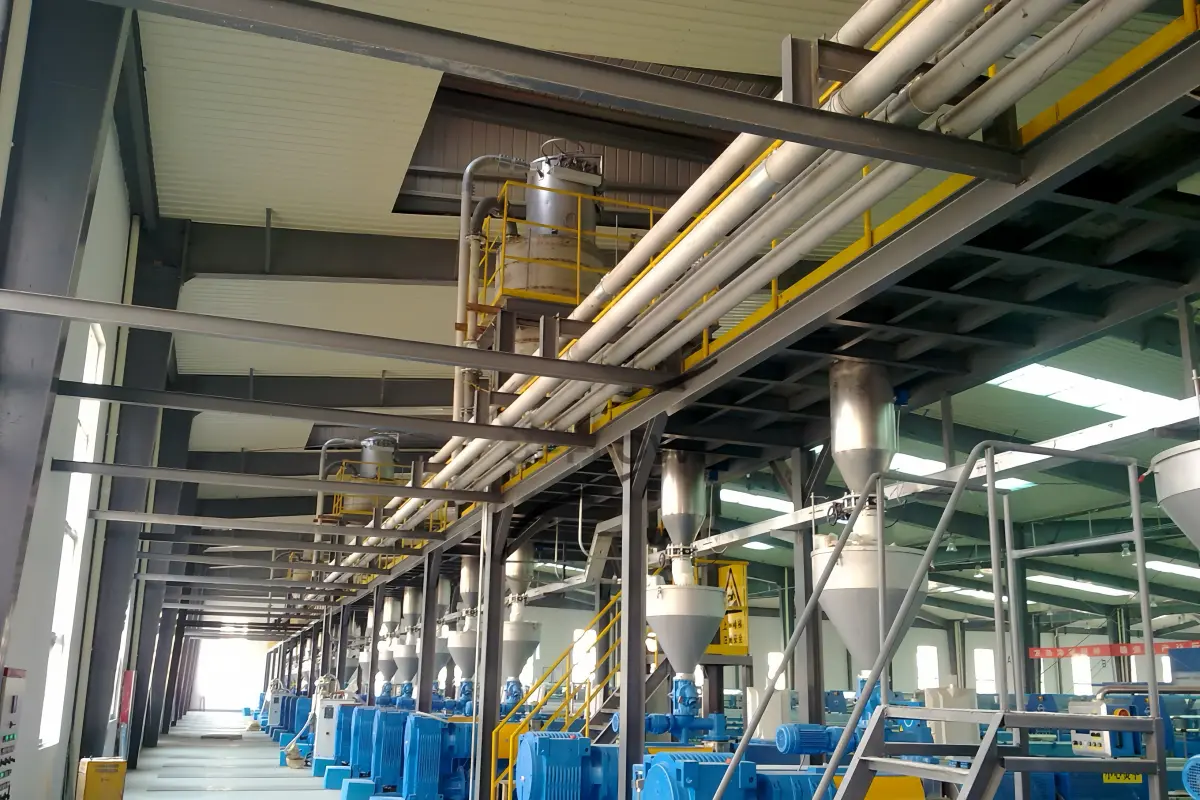
A properly designed Lithium Iron Phosphate (LFP) Pneumatic Conveying System provides a clean, enclosed and automated solution for transferring LFP powder between storage, feeding, weighing and mixing processes.
LFP Powder Handling Requirements in Battery Manufacturing
Battery-grade LFP powder requires careful handling during transportation because product quality depends heavily on material purity and consistency.
Important requirements for Lithium Iron Phosphate Pneumatic Conveying System include:
Closed conveying to prevent dust leakage
Avoiding contamination from external particles
Stable feeding accuracy for mixing processes
Reduced material degradation during transfer
Easy cleaning and maintenance of conveying equipment
For this reason, pneumatic conveying systems are widely considered for lithium battery material handling applications.
What Is a Lithium Iron Phosphate Pneumatic Conveying System?
A lithium iron phosphate (LFP) pneumatic conveying system is a modern powder handling solution that uses compressed air or controlled airflow to transport LFP powder through enclosed pipelines in a fully automated and dust-free environment.
In industrial applications, it is also known as a dust-free conveying system for LFP cathode material, an automatic feeding system for lithium iron phosphate powder, a powder transfer system for LiFePO₄ materials, or a pneumatic material conveying system for battery production lines, depending on system configuration.
By forming a stable gas-solid flow, this material conveying system for lithium iron phosphate powder ensures efficient, continuous, and clean transport throughout the production process.
Material Handling Challenges of LFP Powder
LFP powder presents several challenges during lithium battery powder handling due to its physical and chemical characteristics.
First, as a fine powder material, it is prone to dust generation and airborne dispersion, which requires a fully enclosed conveying system for lithium iron phosphate powder to maintain a clean working environment. Second, LFP has strong abrasiveness, which can lead to wear on pipelines and equipment, making wear-resistant materials such as ceramic-lined pipes or tungsten carbide coatings essential.
Additionally, LFP is highly sensitive to contamination, especially metal impurities, which means that conveying systems must be designed to avoid contact with iron components and ensure high purity transport conditions.
Working Principle of LFP Pneumatic Conveying System
The lithium iron phosphate pneumatic conveying system operates based on gas-solid two-phase flow, where compressed air or vacuum pressure is used to move powder particles through pipelines.
In a positive pressure pneumatic conveying system for LFP powder, material is pushed through the pipeline using compressed air, making it suitable for long-distance and high-capacity transport. In contrast, a negative pressure conveying system for lithium iron phosphate materials uses vacuum suction, which is ideal for multi-point feeding and high cleanliness requirements.
As a dust-free conveying system for LiFePO₄ powder, the entire process takes place in a sealed pipeline, ensuring stable material flow while preventing dust leakage and contamination.
How to Select the Right Pneumatic Conveying System for LFP Powder
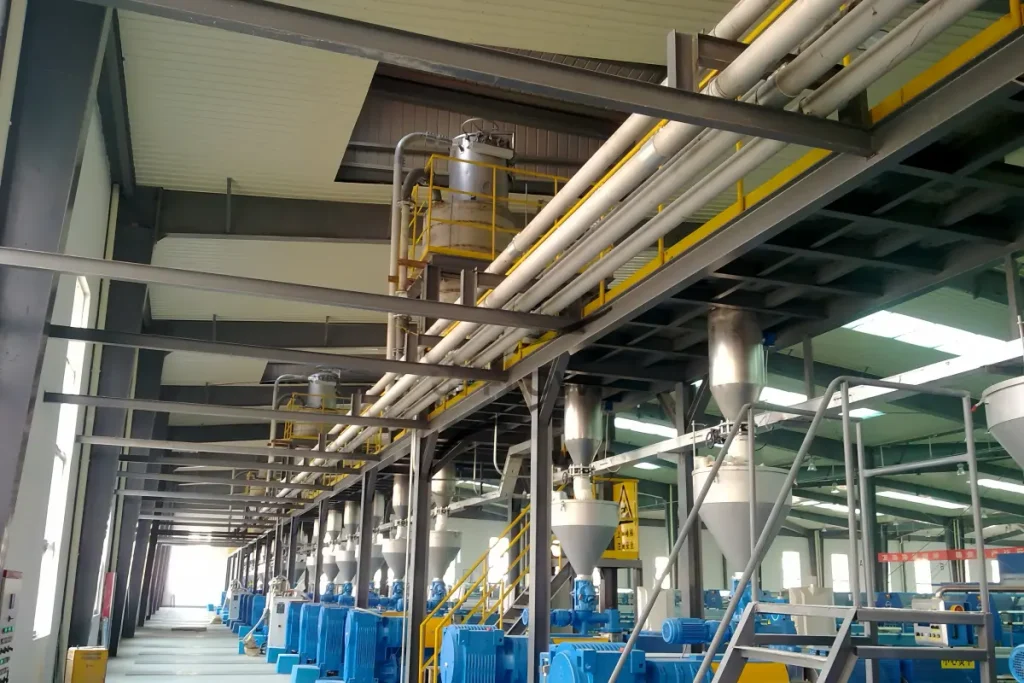
Selecting a Lithium Iron Phosphate Pneumatic Conveying System requires comprehensive evaluation of production requirements and material characteristics.
Key factors include:
Conveying Distance
Long-distance transportation may require positive pressure conveying, while short-distance and multi-point feeding applications often benefit from vacuum conveying.
Production Capacity
The conveying system should be designed according to required throughput and battery production schedule.
Material Purity
Battery-grade LFP requires a clean conveying environment to minimize contamination risks.
Factory Layout
Flexible pipeline routing allows the conveying system to adapt to different production line arrangements.
Advantages of LFP Pneumatic Conveying Systems
The lithium iron phosphate pneumatic conveying system offers several advantages for battery material production.
As a dust-free conveying system for LFP cathode materials, it eliminates powder leakage and improves workplace safety. It also supports fully automatic operation, functioning as an automatic feeding system for lithium iron phosphate powder, which reduces manual handling and improves efficiency.
In addition, the system provides flexible pipeline layout and long-distance conveying capability, making it suitable for complex production lines. Compared with mechanical conveying, this powder transfer system for LFP materials reduces maintenance requirements and enhances system reliability.
Application in Lithium Battery Manufacturing
The lithium iron phosphate pneumatic conveying system is widely used in battery production lines for transporting LFP powder from storage silos to mixing systems, reactors, or packaging units.
As a material conveying system for lithium iron phosphate powder, it ensures stable and precise feeding, which is critical for maintaining consistent cathode material quality. It is also commonly integrated with automatic batching and dosing systems, enabling full-process automation in lithium battery manufacturing.
UPFLOW Solution for Lithium Battery Material Handling
UPFLOW provides customized pneumatic conveying solutions for lithium battery materials, including LFP, LCO, NMC, graphite and other fine powders. For more Lithium Cobalt Oxide (LCO) Pneumatic Conveying System Guide: Lithium Cobalt Oxide (LCO) Pneumatic Conveying System for Battery Material Powder Handling
Our engineering team evaluates material characteristics, conveying distance, production capacity and factory layout before designing each system.
Depending on project requirements, solutions can include:
Vacuum conveying systems
Positive pressure conveying systems
Powder feeding systems
Weighing and batching integration
Stainless steel powder handling equipment
FAQ
What is LFP powder?
Lithium Iron Phosphate (LFP), also called LiFePO₄, is a cathode material widely used in lithium-ion batteries for electric vehicles and energy storage systems.
Why is pneumatic conveying suitable for LFP powder?
Pneumatic conveying provides enclosed transportation, reduces dust generation and helps maintain product purity during battery material handling.
Should LFP powder use vacuum or positive pressure conveying?
The selection depends on conveying distance, capacity requirements, factory layout and cleanliness requirements.
Can LFP conveying systems connect with battery production lines?
Yes. LFP powder conveying systems can be integrated with storage silos, feeding equipment, weighing systems and mixing processes.