
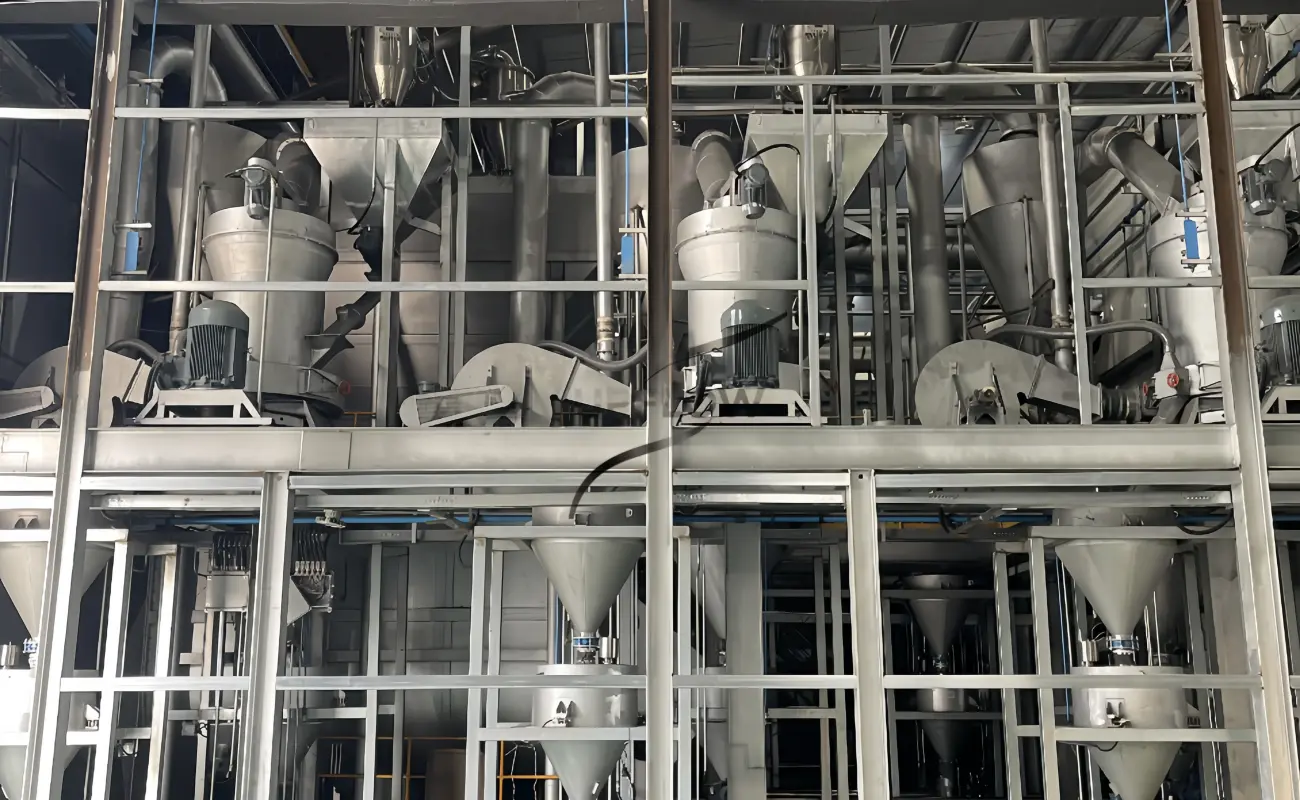
Alumina Powder Material Characteristics
Alumina powder, also known as aluminum oxide powder (Al₂O₃), is one of the most widely used industrial mineral materials due to its exceptional hardness, chemical stability, wear resistance, and high-temperature performance. It is extensively applied in advanced ceramics, refractory materials, abrasives, catalyst carriers, lithium battery separators, polishing compounds, and electronic components.
The bulk density of alumina powder typically ranges from 0.8 to 1.5 t/m³, depending on particle size distribution and manufacturing process. Common grades include calcined alumina powder, activated alumina, tabular alumina, fused alumina, and ceramic-grade alumina powder. Because alumina particles are often fine and abrasive, dust generation and equipment wear become important considerations during material handling and transportation.
Why Choose an Alumina Powder Pneumatic Conveying System?
An alumina powder pneumatic conveying system provides a reliable solution for transferring alumina materials through enclosed pipelines while maintaining stable flow and minimizing environmental impact. Compared with conventional mechanical conveying methods, an alumina powder dust-free conveying system offers cleaner operation, lower contamination risk, and improved automation capability.
Whether transporting ceramic-grade alumina or activated alumina powders, a properly designed alumina powder automatic feeding system can improve production efficiency while protecting both equipment and product quality.
Working Principle of an Alumina Powder Transfer System
The alumina powder pneumatic conveying system operates by using controlled airflow generated by blowers, compressors, or vacuum units. Powder is introduced into the conveying line through feeding devices such as rotary valves or screw feeders, then transported through enclosed pipelines to downstream production equipment.
As a modern alumina powder transfer system, it can function continuously between storage silos, mixing units, reactors, packaging stations, and processing equipment. The enclosed conveying process helps reduce dust emissions while maintaining stable material transfer over long distances.
For real project case information: Alumina Pneumatic Conveying System Project | Wear Resistant Solution for Abrasive Powder Handling.
Key Features of an Alumina Powder Dust-Free Conveying System
Clean and Enclosed Material Handling
An alumina powder dust-free conveying system keeps powder completely enclosed throughout the transfer process, reducing airborne dust and helping manufacturers maintain a cleaner working environment.
Flexible Pipeline Configuration
A pneumatic conveying system for alumina powder can be configured for horizontal, vertical, or complex routing layouts, allowing manufacturers to optimize factory space while maintaining efficient material flow.
High Automation Capability
As an advanced alumina powder automatic feeding system, the equipment can integrate with weighing systems, batching equipment, storage silos, and process controls, enabling fully automated production operations with minimal manual intervention.
Long-Distance Powder Transportation
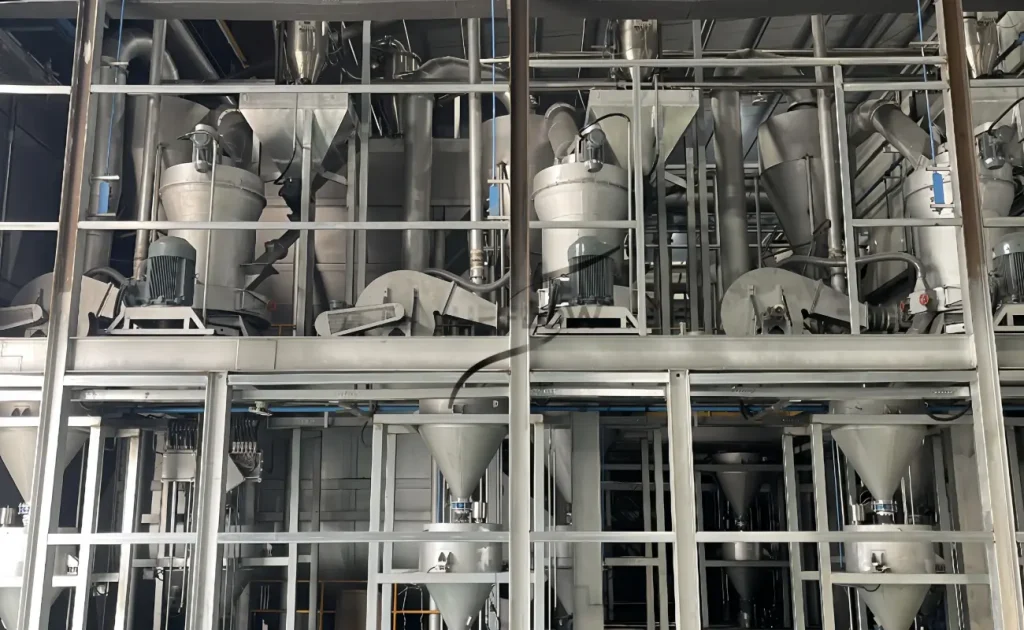
A well-designed alumina powder transfer system supports long-distance conveying between different production areas, making it suitable for large-scale ceramic plants, chemical facilities, and mineral processing operations.
Reduced Maintenance and Reliable Operation
By using wear-resistant pipeline materials and optimized airflow design, the alumina powder pneumatic conveying system can effectively handle abrasive alumina particles while maintaining stable operation and reducing maintenance requirements.
Applications Across Multiple Industries
The alumina powder pneumatic conveying system is widely used in advanced ceramics, refractory production, catalyst manufacturing, battery materials, abrasives processing, electronics, and chemical industries. As manufacturers continue to pursue cleaner and more automated production methods, demand for efficient alumina powder automatic feeding systems and dust-free powder transfer systems continues to grow.
Whether serving as a dust-free conveying system for ceramic-grade alumina powder or an automatic feeding system for activated alumina materials, pneumatic conveying technology provides a highly efficient solution for modern industrial processes.
Conclusion
The alumina powder pneumatic conveying system combines enclosed conveying, flexible plant integration, high automation, and reliable long-distance powder transportation. By utilizing advanced dust-free conveying systems, automatic feeding systems, and alumina powder transfer systems, manufacturers can improve productivity, reduce material loss, and achieve cleaner, more efficient production operations.