
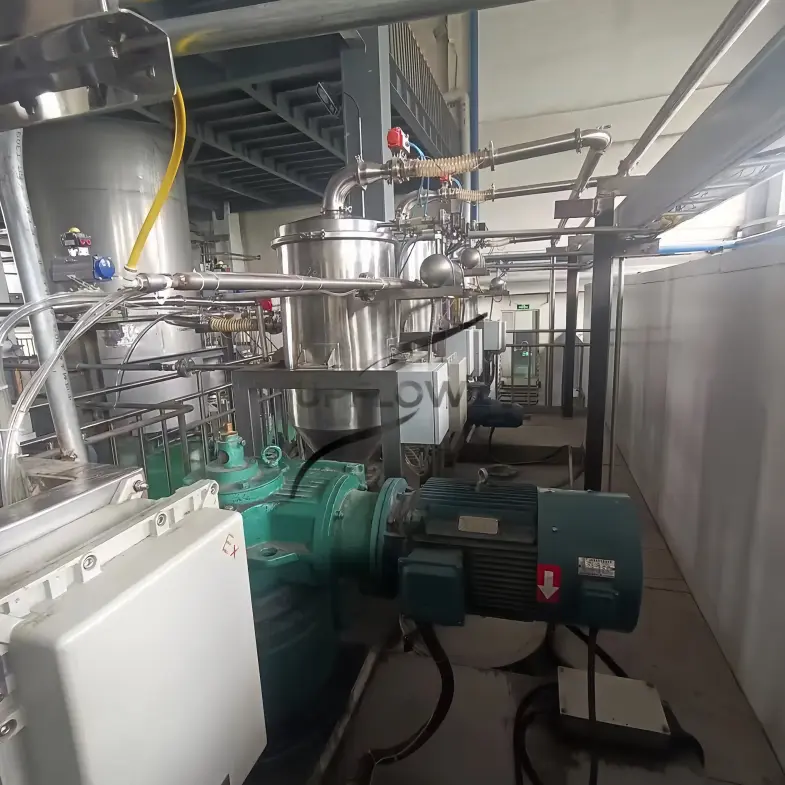
As pharmaceutical manufacturers increasingly adopt automated processes for botanical medicines, herbal formulations, nutraceutical ingredients, and plant-derived active compounds, the efficient transfer of plant extract powders has become an important consideration in modern pharmaceutical powder handling. Compared with many conventional pharmaceutical powders, plant extracts can have highly variable physical properties depending on the source plant, extraction method, concentration process, drying technology, and final formulation, which means that conveying equipment must be designed around the actual material characteristics rather than relying only on nominal capacity. A properly engineered plant extract powder pneumatic conveying system can provide enclosed powder transfer between extraction, drying, blending, storage, and pharmaceutical production equipment while reducing manual handling, dust emissions, and unnecessary exposure of the material to the surrounding production environment.
What Is Plant Extract Powder?
Plant extract powder is a dried botanical material produced by extracting selected compounds from plant-based raw materials and subsequently concentrating and drying the extract into a powder form. Depending on the application, it may be used as a pharmaceutical ingredient, herbal medicine ingredient, botanical active, natural functional ingredient, or pharmaceutical excipient.
Plant extract powder is also commonly referred to as botanical extract powder, herbal extract powder, plant-derived powder, botanical pharmaceutical powder, herbal active ingredient powder, or standardized plant extract. Unlike a pure chemical compound, plant extract powder does not have one universal scientific name or chemical formula because its composition depends on the plant species and the extraction process.
For example, extracts may contain flavonoids, alkaloids, polysaccharides, saponins, tannins, phenolic compounds, terpenoids, glycosides, proteins, organic acids, or other naturally occurring components. Individual compounds have their own chemical formulas, but the complete plant extract is normally treated as a complex mixture rather than a single chemical substance.
The bulk density of plant extract powders commonly falls within approximately 0.25–0.75 g/cm³, although actual values can vary considerably according to particle size, drying method, carrier materials, moisture content, and powder morphology. Many plant extracts are lightweight, hygroscopic, cohesive, and dusty, while some products can become sticky or form agglomerates when exposed to moisture.
Why Plant Extract Powder Requires Specialized Conveying
The physical behavior of botanical powders can change significantly during pharmaceutical processing, particularly when the material contains natural sugars, polysaccharides, oils, or other components that influence cohesion and moisture absorption. A powder that flows easily immediately after drying may become more cohesive during storage, while a fine extract powder may generate considerable dust during manual transfer.
A plant extract powder pneumatic conveying system can address these challenges by transferring material through an enclosed pipeline instead of relying on repeated manual lifting, bag dumping, or open mechanical transfer. The system can be integrated with extraction and drying equipment, intermediate storage vessels, blending machines, sieving equipment, and final pharmaceutical processing lines.
The objective is not simply to move the powder at the highest possible speed, but to maintain stable material flow while minimizing unnecessary product degradation, dust generation, powder accumulation, and changes in the physical condition of the extract.
Plant Extract Powder Negative Pressure Conveying System
A plant extract powder negative pressure conveying system uses vacuum conditions to draw botanical powder from a feeding point toward a receiving station, providing a closed transfer route that can be particularly useful in pharmaceutical environments where dust control and containment are important.
Because the conveying air moves toward the vacuum source, properly configured negative-pressure transport can help reduce the risk of uncontrolled powder leakage from the conveying line. A receiving filter separates the powder from the conveying air before the air is discharged or recirculated according to the system design.
This configuration can be useful when plant extract powder must be transferred from drums, intermediate containers, blending equipment, or storage hoppers to a central processing point, particularly when the production line requires flexible equipment connections and controlled batch transfer.
Plant Extract Powder Enclosed Conveying System
An plant extract powder enclosed conveying system provides a sealed pathway between material handling points, reducing direct contact between operators and pharmaceutical powders during routine transfer. For botanical pharmaceutical production, this can be especially valuable because fine extract powders may easily become airborne when they are manually poured or transferred between open containers.
The enclosed conveying route can incorporate sealed pipelines, sanitary valves, receiving hoppers, filtration units, inspection components, and automated controls, allowing the powder to remain within the process throughout most of the transfer operation.
For facilities handling multiple botanical formulations, the enclosed design can also support better production organization by reducing the number of open transfer points and simplifying the connection between upstream preparation equipment and downstream pharmaceutical processing equipment.
Plant Extract Powder Air Flow Conveying System
An plant extract powder air flow conveying system transports powder by controlling the relationship between conveying air and solid material inside the pipeline. The correct airflow conditions are particularly important for plant extracts because their bulk density and particle morphology can differ substantially from one product to another.
If conveying air velocity is excessively high, lightweight extract particles may experience unnecessary pneumatic impact, while unstable feeding conditions can create fluctuations in the solids concentration within the pipeline. If the velocity is too low, the material may accumulate inside horizontal sections or bends.
Therefore, the design of a plant extract powder pneumatic conveying system should consider bulk density, particle size distribution, moisture content, flowability, conveying distance, vertical elevation, required throughput, and the number of bends and receiving points before the final airflow and pressure parameters are determined.
Protecting Plant Extract Powder During Transfer
Many botanical extracts contain valuable active components whose quality depends on maintaining controlled processing conditions. Although pneumatic conveying does not automatically protect every active ingredient, an appropriately engineered conveying process can reduce unnecessary exposure to open environments and provide better control over the transfer conditions.
Low conveying velocities, appropriate pressure differentials, suitable pipeline geometry, and carefully selected feeding equipment can help reduce excessive mechanical impact on sensitive powders. In addition, enclosed transfer can limit uncontrolled exposure to ambient moisture, which may be particularly important for hygroscopic plant extracts.
For pharmaceutical manufacturers, the conveying process should therefore be evaluated as part of the complete material handling chain, including extraction, drying, storage, blending, feeding, and final dosage-form production.
Plant Extract Powder Fully Automatic Conveying System
A plant extract powder fully automatic conveying system can connect multiple production stages and coordinate powder transfer without requiring operators to manually monitor every conveying cycle. PLC-based controls can manage valves, vacuum equipment, feeding devices, filter cleaning, hopper levels, and conveying sequences according to predefined production requirements.
Level sensors installed on receiving hoppers can determine when additional material is required, while pressure sensors can monitor conveying conditions and identify abnormal situations such as pipeline blockage or insufficient airflow. Filter differential-pressure monitoring can also provide information about filter loading and maintenance requirements.
For pharmaceutical production, automation can provide additional advantages during batch processing because material transfer sequences can be controlled according to predefined operating procedures, helping improve process repeatability and reducing unnecessary manual intervention.
Feeding and Hopper Design for Plant Extract Powder
A reliable feeding system is essential because the conveying pipeline can only operate consistently when powder enters the airflow at a controlled rate. Plant extract powders with poor flowability may bridge across hopper outlets, form rat holes, or create unstable discharge patterns, particularly when the powder has absorbed moisture during storage.
The feeding section of a plant extract powder pneumatic conveying system may therefore require an appropriate hopper geometry, controlled discharge device, level monitoring, and, where necessary, agitation or anti-bridging measures. The exact solution should be selected according to the powder’s actual flow characteristics.
A stable powder feed helps maintain a more consistent solids-to-air ratio inside the conveying pipeline and can reduce pressure fluctuations that may otherwise affect the overall transfer process.
Hygienic Design for Pharmaceutical Plant Extracts
Pharmaceutical facilities handling botanical powders generally require careful consideration of hygiene, cleaning, material traceability, and cross-contamination prevention. A conveying system should therefore be designed with suitable product-contact materials, smooth internal surfaces, minimized dead zones, and accessible components for inspection and cleaning.
Stainless steel is commonly used for product-contact pipelines and equipment because it provides a durable and cleanable surface suitable for pharmaceutical powder handling. Weld quality, surface finish, sanitary connections, seals, filters, and valve arrangements should be considered together rather than selected independently.
An plant extract powder enclosed conveying system can further reduce the number of open handling operations, helping manufacturers establish a cleaner material transfer route between processing stages.
Batch Changeover and Cross-Contamination Control
Plant extract manufacturers may process several botanical materials in the same facility, making batch changeover an important part of conveying system design. Different extracts can have different colors, odors, active components, moisture characteristics, and cleaning requirements, so residual powder inside pipelines or receiving equipment can become a concern.
Pipeline layout, valve positioning, equipment accessibility, cleaning procedures, and material-contact surface design should therefore be evaluated before installation. Automated conveying sequences can also help operators establish defined transfer cycles for individual batches.
A plant extract powder fully automatic conveying system can support this approach by coordinating material transfer, valve switching, hopper filling, and conveying cycles through centralized control, reducing unnecessary manual operation during routine production.
Selecting the Right Plant Extract Powder Conveying Solution
The selection of a pneumatic conveying solution should begin with material testing rather than equipment selection based solely on production capacity. Bulk density, particle size, moisture content, flowability, cohesiveness, dustiness, electrostatic behavior, and temperature sensitivity can all influence the final system configuration.
The required conveying distance and vertical height should also be considered together with the number of elbows, feeding points, receiving stations, and downstream machines. For some applications, negative-pressure conveying may provide the most suitable operating arrangement, while other production lines may benefit from a different pneumatic configuration.
A complete plant extract powder pneumatic conveying system should ultimately balance hygienic design, stable feeding, controlled airflow, powder protection, automation, maintenance accessibility, and production efficiency rather than optimizing only one individual parameter.
Conclusion
As pharmaceutical manufacturers continue to expand the use of botanical ingredients and plant-derived pharmaceutical formulations, reliable powder transfer will become increasingly important for maintaining efficient and hygienic production. Plant extract powders can present unique handling challenges because their physical characteristics depend heavily on botanical source, extraction technology, drying method, and formulation composition.
A well-designed plant extract powder pneumatic conveying system can provide enclosed and automated transfer between key pharmaceutical processing stages while helping reduce manual handling, dust generation, and uncontrolled environmental exposure. When combined with a suitable plant extract powder negative pressure conveying system, plant extract powder enclosed conveying system, plant extract powder air flow conveying system, and plant extract powder fully automatic conveying system, the overall material handling process can become more controlled, repeatable, and suitable for modern pharmaceutical powder production.