
Material Characteristics of Microcrystalline Cellulose (MCC) and Its Industrial Handling Requirements
Microcrystalline cellulose (MCC), also known as pharmaceutical-grade cellulose or cellulose crystalline powder, is one of the most widely used excipients in modern pharmaceutical manufacturing and is commonly applied in tablet production, capsule filling, direct compression processes and other drug formulation applications because of its excellent compressibility, chemical stability and compatibility with various active pharmaceutical ingredients.
In pharmaceutical production, MCC is usually handled as a fine white powder with a relatively low bulk density, generally ranging from approximately 0.2 to 0.5 g/cm³ depending on the specific grade and manufacturing process. Although microcrystalline cellulose provides excellent formulation performance, its powder characteristics, including fine particle size, lightweight structure and potential dust generation during transfer, create specific challenges for automated material handling systems.
For pharmaceutical manufacturers, transporting MCC powder is not only about moving material from one location to another, but also about maintaining product cleanliness, preventing contamination, reducing material loss and ensuring stable feeding performance throughout the entire production process. Therefore, a properly designed Microcrystalline Cellulose Pneumatic Conveying System becomes an important part of modern pharmaceutical powder handling solutions.
Challenges of Handling Microcrystalline Cellulose Powder in Pharmaceutical Production
During pharmaceutical manufacturing, MCC powder is often transferred between storage vessels, feeding systems, mixing equipment and tablet production lines, where inconsistent material transportation may directly affect production efficiency and final product quality.
One of the major challenges associated with MCC powder handling is dust generation. Due to its fine particle structure and low bulk density, MCC can easily become suspended in the air during manual charging or open transportation processes, which may increase cleaning requirements and create an unsuitable production environment. A closed MCC powder handling system can significantly reduce powder exposure by transporting the material through sealed pipelines.
Another important consideration is contamination control. Pharmaceutical excipients such as MCC require strict hygiene conditions because foreign particles or impurities introduced during transportation may affect downstream formulation processes. For this reason, pharmaceutical manufacturers often require stainless steel equipment, smooth internal surfaces and enclosed conveying structures to maintain a clean material transfer environment.
In addition, MCC feeding processes require stable and accurate material delivery because pharmaceutical formulations depend on precise ingredient ratios. A suitable pharmaceutical excipient conveying system should provide consistent conveying performance while reducing manual intervention and improving production automation.
What Is a Microcrystalline Cellulose Pneumatic Conveying System?
A Microcrystalline Cellulose Pneumatic Conveying System is an automated powder transportation solution that uses controlled airflow generated by vacuum pressure or positive pressure to move MCC powder through enclosed pipelines between different production stages.
Compared with traditional manual transfer methods, pneumatic conveying technology provides a cleaner and more flexible solution for pharmaceutical powder transportation because the entire conveying process takes place inside a closed system. This design helps minimize dust leakage, reduces direct operator contact and allows easier integration with automated pharmaceutical production lines.
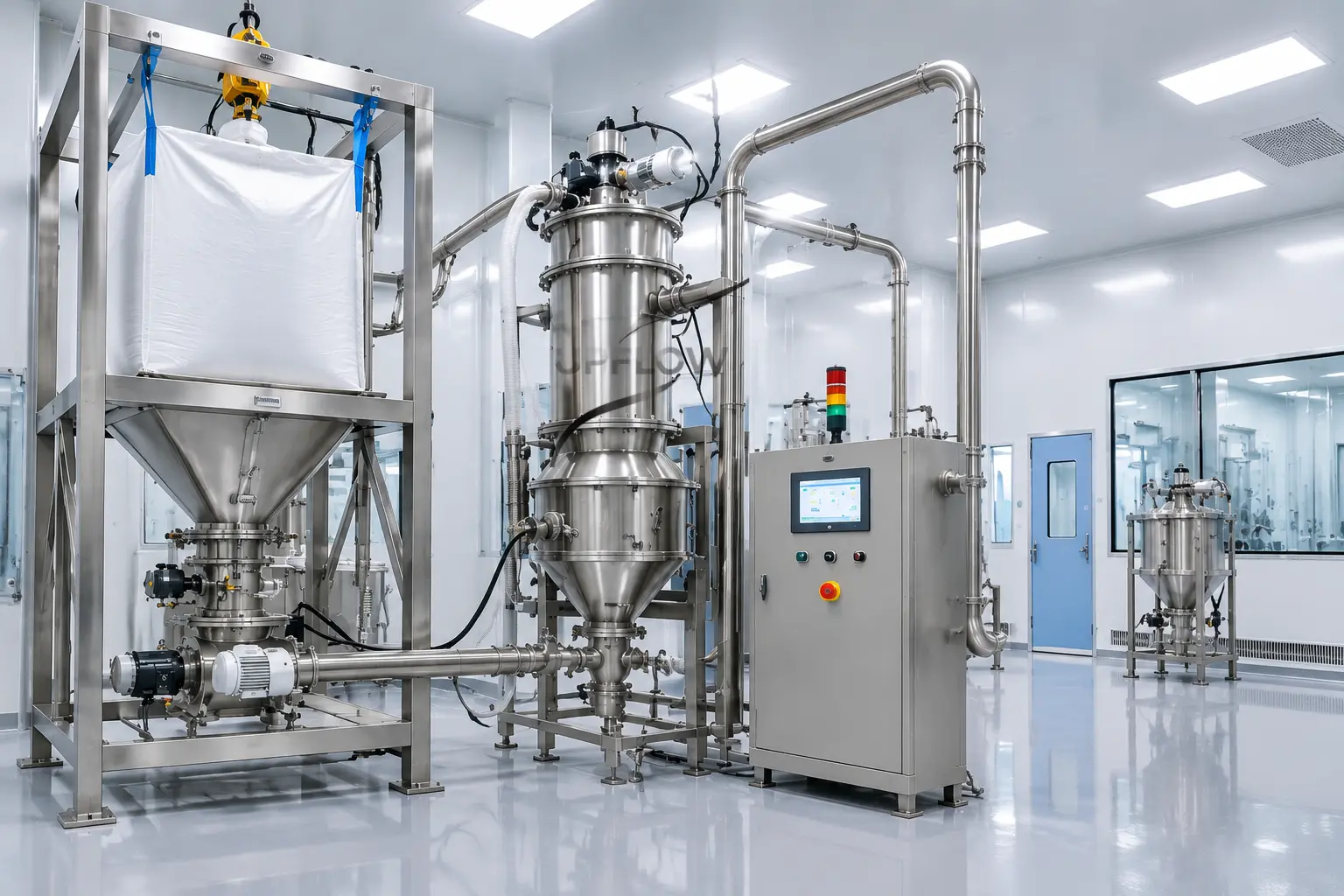
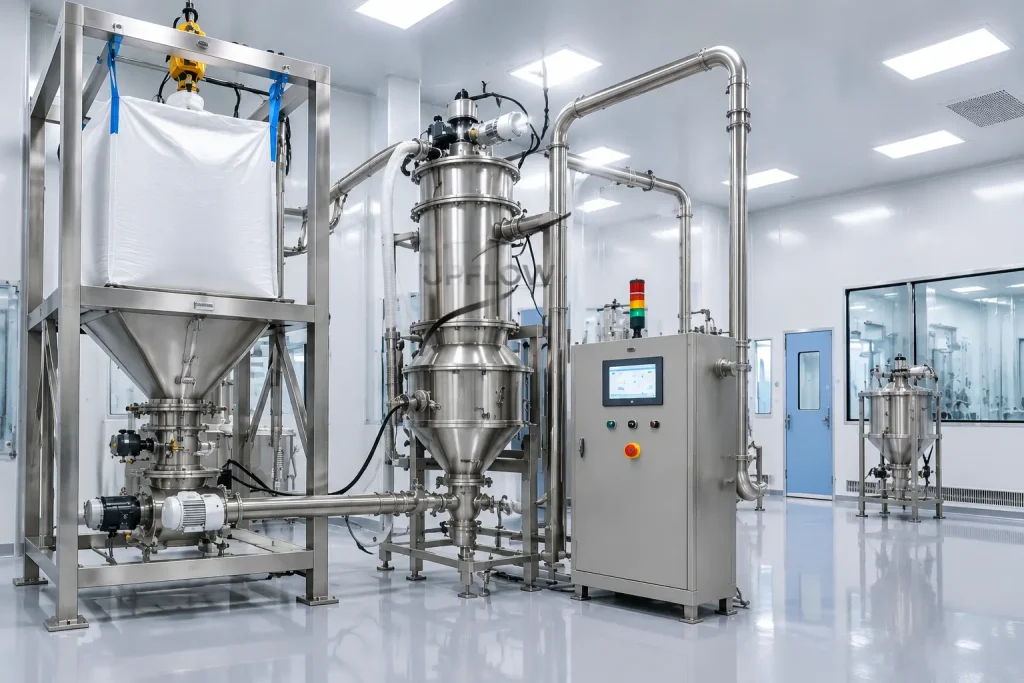
Depending on production requirements, a customized MCC conveying solution may include vacuum conveyors, powder receivers, storage hoppers, feeding devices, filtration systems and automatic control components. The final system configuration is normally determined according to MCC properties, required conveying capacity, conveying distance, installation environment and production process requirements.
A properly engineered Microcrystalline Cellulose Pneumatic Conveying System can therefore provide pharmaceutical manufacturers with a reliable method for transferring MCC powder while maintaining product quality and improving operational efficiency.
Working Principle of MCC Powder Pneumatic Conveying System
A pneumatic conveying system for MCC powder works by creating a controlled pressure difference between the material feeding point and discharge point, allowing airflow to carry powder particles through a sealed pipeline.
For pharmaceutical applications, vacuum conveying is commonly selected because the negative pressure environment helps prevent powder leakage from the conveying line into the surrounding production area. During operation, MCC powder is introduced into the conveying equipment, transported through stainless steel pipelines under controlled airflow conditions and finally discharged into the required process equipment.
In applications where longer conveying distances or higher transfer capacities are required, positive pressure conveying systems may also be considered because they can provide efficient material transportation over extended pipeline layouts.
The selection between vacuum conveying and positive pressure conveying depends on several engineering factors, including:
Conveying distance
Required throughput
Powder flow characteristics
Production layout
Cleanliness requirements
Therefore, the design of an MCC powder transfer system should always be based on actual process conditions rather than using a standard equipment model.
Key Design Considerations for MCC Powder Handling Systems
Designing a reliable Microcrystalline Cellulose Pneumatic Conveying System requires comprehensive evaluation of material characteristics and pharmaceutical production requirements.
Hygienic Equipment Construction
Pharmaceutical powder handling applications usually require equipment constructed from suitable stainless steel materials with smooth surfaces and easy-cleaning structures. These design features help reduce powder accumulation and support hygienic production environments.
Powder Characteristics Evaluation
Before designing a conveying system, engineers normally analyze important MCC characteristics, including:
Bulk density
Particle size distribution
Flowability
Moisture sensitivity
Conveying capacity requirements
Because different MCC grades may behave differently during transportation, conveying parameters must be optimized according to actual material performance.
Integration with Pharmaceutical Processes
A complete pharmaceutical powder handling solution may connect MCC conveying equipment with bag unloading stations, storage vessels, weighing systems, mixing equipment and capsule filling machines, allowing manufacturers to achieve automated ingredient transfer and improve production consistency.
Applications of Microcrystalline Cellulose Pneumatic Conveying Systems
Microcrystalline cellulose is widely used in pharmaceutical manufacturing as an important excipient, and its powder conveying systems are commonly applied in tablet production, capsule manufacturing and pharmaceutical formulation processes.
In large-scale pharmaceutical facilities, an automated Microcrystalline Cellulose Pneumatic Conveying System can help transfer MCC powder from raw material storage areas to production equipment while maintaining stable feeding performance and reducing manual handling requirements.
Besides MCC, similar powder handling requirements can also be found in other pharmaceutical materials, including API powders, plant extract powders, biological powders and other sensitive pharmaceutical ingredients, where contamination control and enclosed transportation are equally important.
UPFLOW Solution for Microcrystalline Cellulose Powder Handling
UPFLOW provides customized Microcrystalline Cellulose Pneumatic Conveying Systems and pharmaceutical powder handling solutions for manufacturers requiring safe, clean and automated powder transportation.
Before developing a conveying solution, UPFLOW engineers evaluate each project according to material properties, production capacity, conveying distance, factory layout and process requirements. Based on these factors, UPFLOW can provide customized solutions including vacuum conveying systems, positive pressure conveying systems, powder feeding equipment, batching integration and stainless steel powder handling equipment.
With experience in powder conveying applications across pharmaceutical, chemical, food and new energy industries, UPFLOW focuses on providing reliable material transfer solutions that improve production automation, reduce powder handling risks and support modern manufacturing processes.
Frequently Asked Questions (FAQ)
What is microcrystalline cellulose (MCC) used for in pharmaceutical manufacturing?
Microcrystalline cellulose is a pharmaceutical excipient commonly used as a binder, filler and compression aid in tablet and capsule production because of its excellent physical properties.
Why is pneumatic conveying suitable for MCC powder handling?
A pneumatic conveying system provides enclosed transportation, reduces dust generation and allows automated transfer of MCC powder between different pharmaceutical production processes.
Should MCC powder use vacuum conveying or positive pressure conveying?
The selection depends on conveying distance, production capacity, powder characteristics and cleanliness requirements. Vacuum conveying is commonly used for pharmaceutical powder applications requiring higher containment.
Can UPFLOW customize an MCC powder conveying system?
Yes. UPFLOW designs customized pharmaceutical powder handling solutions according to material characteristics, production requirements and factory layout.