
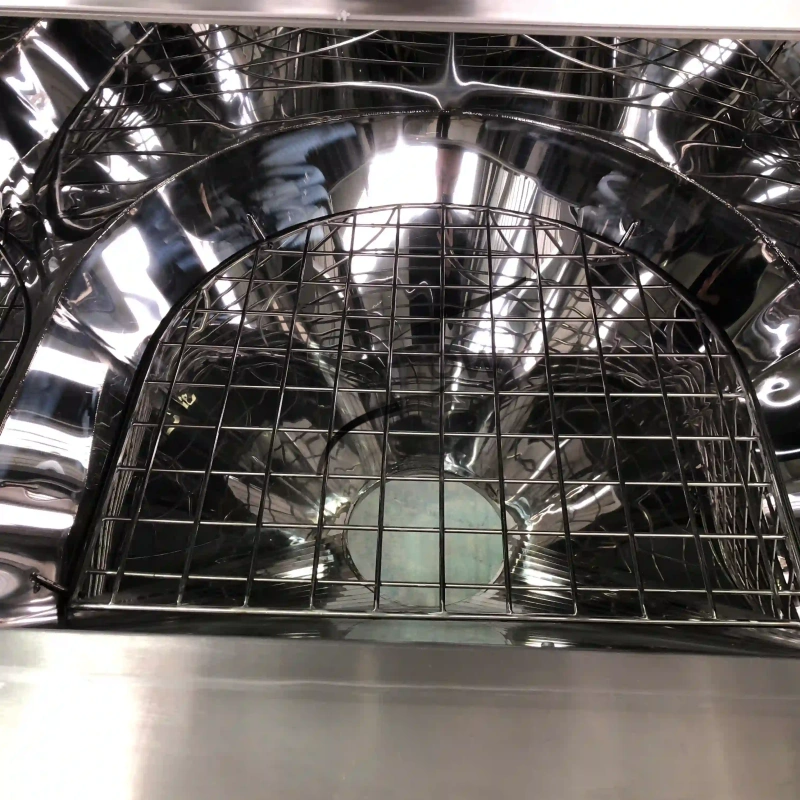
When designing an industrial bag emptying station, the grille installed inside the receiving hopper is an important component because it provides a supporting surface for bag opening and material discharge while helping prevent oversized packaging pieces or other unwanted objects from entering the downstream powder handling equipment.
However, selecting a suitable bag dump station grille requires more than choosing a standard mesh size, since different powder bags vary in packaging dimensions, material weight, opening methods and discharge characteristics, while the grille itself must also meet the requirements for structural strength, operator access, material flow and equipment cleaning.
For manufacturers handling 20 kg, 25 kg or 50 kg bags containing chemical powders, food ingredients, mineral materials or plastic additives, the grille configuration should be considered together with the receiving hopper, dust collection system and downstream feeding equipment rather than treated as an interchangeable accessory.
This article explains the main factors to consider when selecting a bag support grate for different powder packaging formats, including opening dimensions, load capacity, material compatibility, safety and maintenance requirements.
1. What Is the Function of a Bag Dump Station Grille?
A bag dump station grille, also referred to as a bag support grate or hopper safety grate, is installed inside the feeding opening of a bag emptying station to provide a stable working surface where operators can position, open and empty powder bags.
Depending on the equipment design, the grille may also help prevent large packaging fragments, foreign objects or unsuitable oversized materials from falling directly into the receiving hopper.
Its main functions include:
Supporting powder bags during manual opening and emptying.
Providing a stable working surface for different packaging sizes.
Allowing discharged powder to pass into the receiving hopper.
Preventing selected oversized objects from entering downstream equipment.
Helping maintain a defined separation between the operator’s working area and the hopper interior.
Supporting an organized material feeding process.
The grille opening must be selected according to the material and packaging requirements, because openings that are too large may allow packaging fragments to enter the hopper, while openings that are too small may restrict material discharge or become blocked by cohesive powders.
It is also important to understand that a standard bag support grille does not automatically provide the screening performance of a vibrating sieve, since its primary purpose is to support bag handling and provide an appropriate material passage rather than separate particles according to a defined mesh size.
2. How Do Different Powder Bag Sizes Affect Grille Selection?
Bag dimensions and packaging weight are two of the first parameters that should be confirmed when designing a bag dumping station, because they determine the available working area, supporting structure and operator access requirements.
2.1 Small Bags: 10–20 kg
Small packaging formats are commonly used for specialty chemicals, pharmaceutical ingredients, food additives and certain high-value industrial powders.
For these applications, the grille should provide sufficient space for operators to position and open the bags without requiring excessive movement or awkward handling.
Important considerations include:
Suitable grille dimensions for the actual bag footprint.
A stable supporting surface during bag opening.
Appropriate openings that allow powder to discharge without unnecessary accumulation.
Smooth surfaces that are easier to inspect and clean.
Suitable access for removing packaging remnants.
For smaller bags containing fine powders, the grille should also be coordinated with the local dust extraction arrangement to reduce airborne material during tipping.
2.2 Standard Industrial Bags: 25 kg
The 25 kg bag is a common packaging format in many chemical, mineral, plastic and food ingredient applications, making it an important reference when configuring a general-purpose bag emptying station.
The supporting grille should accommodate the bag dimensions while providing sufficient structural strength for the actual operating load, including the possibility of operators placing the package temporarily on the supporting surface.
The design should also allow the operator to open the bag and distribute the material into the hopper without creating excessive accumulation around the grille openings.
2.3 Heavy Bags: 40–50 kg
Heavier packaging formats require additional attention to the structural strength of the grille and the overall working arrangement, because the supporting structure must withstand the actual load and repeated handling during normal operation.
The design should consider:
Maximum expected bag weight.
Grille support spacing and structural rigidity.
Potential impact loads during bag placement.
Operator access and ergonomic working height.
Lifting assistance where required.
Safe removal of empty packaging.
For applications involving frequent handling of heavy bags, the feeding station may also require a suitable working platform or mechanical handling assistance rather than relying entirely on manual lifting.
3. How to Choose the Grille Opening Size?
The opening size of a bag dump station grille influences both material discharge and the retention of unwanted packaging fragments, so the selection should be based on the powder characteristics and the actual bag opening procedure.
A grille with relatively large openings may allow packaging fragments or foreign objects to pass into the receiving hopper, while a grille with very small openings may restrict powder discharge, especially when the material contains agglomerates or has poor flowability.
The main considerations include:
Powder particle size: The grille should provide sufficient passage for the intended material without creating unnecessary restriction during bag emptying.
Material flowability: Cohesive powders may accumulate around the openings, particularly when moisture or electrostatic effects influence their flow behavior.
Packaging fragments: The opening arrangement should consider the possibility of bag liners, plastic strips or other packaging remnants entering the hopper.
Cleaning requirements: The grille should allow operators to remove accumulated powder and inspect the supporting surface without difficult disassembly.
Downstream equipment protection: Where foreign material or oversized particles could damage a screw feeder, rotary valve or conveying pipeline, a separate screening stage may be required.
The exact opening dimensions should be determined according to the material and packaging conditions rather than applying one standard grille specification to every application.
4. Which Grille Material Is Suitable for Different Powder Applications?
The material used to fabricate the grille should be compatible with the processed material, operating environment and required cleaning procedure.
For many industrial powder feeding applications, stainless steel and carbon steel are both possible options, but the final selection depends on corrosion resistance, mechanical strength, contamination requirements and project specifications.
4.1 Stainless Steel Grille
Stainless steel is frequently considered for applications involving food ingredients, pharmaceutical powders, chemical additives and other materials where corrosion resistance and cleanability are important.
SUS304 may be suitable for many general industrial powder handling applications, while SUS316L may be evaluated where the chemical environment or cleaning requirements justify a higher level of corrosion resistance.
The final grade should always be confirmed according to the actual material composition, moisture conditions, cleaning chemicals and operating temperature.
4.2 Carbon Steel Grille
Carbon steel may be considered for general industrial applications involving suitable non-corrosive materials where the customer prioritizes structural strength and equipment cost.
The surface treatment and protective coating should be selected according to the operating environment, and the possibility of coating damage or material contamination should be considered when the grille comes into contact with sensitive powders.
4.3 Surface Finish and Cleaning
The grille should have a surface finish appropriate for the material being handled, especially when powders may adhere to the supporting bars or accumulate around welded connections.
For food and pharmaceutical applications, the design may require additional attention to surface roughness, weld quality, accessibility and cleaning procedures.
A smooth and accessible construction can help reduce material retention and simplify routine inspection, although the final hygienic requirements must be defined by the customer’s production process.
5. Should You Choose a Fixed Grille or Removable Grille?
The choice between a fixed and removable bag support grille depends on the cleaning frequency, material changeover requirements, maintenance access and structural design of the feeding station.
5.1 Fixed Grille
A fixed grille is generally suitable when the feeding station handles the same or compatible materials over extended production periods and frequent internal access is not required.
Its advantages may include:
Relatively straightforward construction.
Stable installation within the hopper.
Fewer removable components.
Reduced risk of incorrect reinstallation.
However, cleaning and inspection may become more difficult if the grille covers a large area or if powder accumulates underneath the supporting bars.
5.2 Removable Grille
A removable grille may be more suitable when different materials are processed through the same feeding station or when regular internal cleaning and inspection are required.
Potential advantages include:
Easier access to the receiving hopper.
More convenient cleaning and maintenance.
Improved access for removing accumulated material.
Greater flexibility for certain production changeover procedures.
The removable arrangement should incorporate suitable positioning and retention features to prevent unintended movement during normal operation.
For applications involving sensitive materials or strict cleaning procedures, the grille design should be reviewed together with the hopper construction and the customer’s cleaning validation requirements.
6. Bag Support Grate vs. Vibrating Sieve: What Is the Difference?
A common mistake when selecting bag dumping equipment is assuming that the grille installed at the feeding opening can perform the same function as a vibrating screen.
Although both components may contain openings that allow powder to pass through, their engineering purposes are different.
| Comparison | Bag Support Grate | Vibrating Sieve |
| Main purpose | Supports bags during emptying | Separates particles by size |
| Material movement | Generally passive | Mechanically vibrated |
| Particle classification | Not its primary function | Designed for screening |
| Packaging support | Yes | Not normally intended |
| Oversized particle separation | Limited and design-dependent | Suitable when properly specified |
| Maintenance | Inspection and cleaning | Screen cleaning and mesh replacement |
| Typical application | Manual bag emptying | Powder screening and classification |
If the production process only requires operators to open bags and discharge material into a hopper, a suitable support grate may be sufficient.
However, when the powder requires separation of agglomerates, oversized particles or selected foreign materials, a vibrating sieve should be considered as an additional processing stage.
Read more: Bag Dump Station with Integrated Sifter: When Should Screening Be Added?.
7. How Does the Grille Connect with Dust Collection and Downstream Conveying?
The grille should not be selected independently of the complete powder feeding arrangement, because its design influences the available discharge area and the way operators introduce material into the receiving hopper.
7.1 Dust Collection at the Bag Opening
During manual bag opening, fine powders may become airborne as material falls through the grille into the hopper.
The bag dumping station should therefore include an appropriate enclosed feeding area and dust extraction arrangement, with airflow determined according to the opening geometry, material properties and actual operating conditions.
The grille itself should not obstruct the intended extraction airflow or make routine cleaning unnecessarily difficult.
For further guidance, read Bag Dump Station Dust Collector Sizing: Airflow and Filter Selection.
7.2 Connection with Screw Feeding Equipment
After powder passes through the support grate, it may enter a receiving hopper connected to a screw feeder or another controlled discharge device.
The hopper outlet and screw feeder should be coordinated according to material flowability and the required feeding rate, because an unsuitable discharge arrangement may cause material accumulation even when the grille itself provides sufficient open area.
7.3 Connection with Pneumatic Conveying
For applications where powder needs to be transferred from the bag emptying station to remote production equipment, a suitable receiving hopper and feeding interface can connect the station to a vacuum or other pneumatic conveying arrangement.
The overall configuration should account for material characteristics, conveying capacity, pipeline layout and the requirements of the receiving equipment.
Explore the UPFLOW Pneumatic Conveying System for enclosed powder transfer applications.
8. Project References: Customized Powder Feeding Equipment
8.1 Magnesium Silicate Pneumatic Conveying and Batching Project
UPFLOW supplied a customized magnesium silicate conveying and batching system for an overseas industrial customer, integrating manual bag dumping, pneumatic conveying, weighing hoppers, screw feeding equipment, storage and centralized control.
The project demonstrates how the bag feeding stage can be integrated with downstream conveying and batching equipment according to the material characteristics and production requirements.
Although the published project does not establish a specific grille opening size or structural specification, it provides a practical reference for designing the complete powder handling arrangement around a manual feeding point.
Read more about the Magnesium Silicate Pneumatic Conveying and Batching System Project.
8.2 PVC Powder Feeding and Vacuum Conveying Project
For a new materials manufacturer, UPFLOW supplied a customized PVC powder feeding and vacuum conveying system incorporating bag unloading equipment, vacuum conveying units, stainless steel pipelines, receiving hopper modifications, dust collection connections and centralized electrical control.
The project demonstrates how bag unloading equipment can be connected with enclosed conveying pipelines and multiple downstream receiving points according to the factory layout.
For customers handling plastic powders and other industrial raw materials, the project provides a relevant example of customized feeding and conveying integration, although its published specifications should not be interpreted as a grille performance test.
Read more about the PVC Powder Feeding and Vacuum Conveying System Project.
9. What Information Should Buyers Provide When Ordering a Bag Dump Grille?
Before selecting a bag support grate, buyers should provide sufficient information about the packaging, powder characteristics and operating conditions so that the equipment supplier can evaluate the appropriate structure and opening arrangement.
| Information | Details required | Design purpose |
| Bag weight | 10 kg, 20 kg, 25 kg, 50 kg or other | Structural load assessment |
| Bag dimensions | Length, width and height | Grille working area |
| Bag material | Paper, woven PP, plastic liner or composite | Opening and emptying procedure |
| Powder name | Chemical, food, mineral or plastic powder | Material compatibility |
| Particle size | Particle size distribution | Opening selection |
| Bulk density | kg/m³ or t/m³ | Hopper and feeding design |
| Material flowability | Free-flowing or cohesive | Discharge assessment |
| Grille material | SUS304, SUS316L or carbon steel | Corrosion and contamination requirements |
| Cleaning requirements | Manual cleaning or other procedure | Fixed or removable design |
| Downstream equipment | Screw feeder, vacuum conveyor or mixer | Complete system integration |
Providing photographs of the actual bags, material specifications and the receiving hopper arrangement can help the supplier develop a more suitable grille configuration.
10. Frequently Asked Questions
Q1. What is a bag dump station grille used for?
A bag dump station grille provides a supporting surface for opening and emptying powder bags while allowing the material to enter the receiving hopper. Depending on its design, it may also help prevent selected packaging fragments or oversized objects from entering downstream equipment.
Q2. What is the difference between a bag support grate and a vibrating screen?
A bag support grate is primarily designed to support packaging during material discharge, whereas a vibrating screen separates particles according to a specified screening requirement. A support grate should not be treated as a substitute for a properly designed screening system.
Q3. What opening size should a powder feeding grille have?
The appropriate opening size depends on the powder particle characteristics, packaging fragments that need to be retained, required discharge rate and downstream equipment requirements. There is no universal opening dimension suitable for every powder handling application.
Q4. Should a bag dump station grille be removable?
A removable grille may be useful when the feeding station handles multiple materials or requires frequent internal cleaning and inspection. A fixed grille may be suitable for simpler applications where cleaning access and maintenance requirements can be adequately addressed through the equipment design.
Q5. Which material is suitable for a bag emptying grate?
Stainless steel such as SUS304 or SUS316L may be considered for applications requiring corrosion resistance and appropriate cleanability, while carbon steel may be suitable for certain general industrial applications. The final choice depends on material compatibility and customer specifications.
Q6. Can a bag dumping station grille be customized for different bag sizes?
Yes. The grille dimensions, supporting structure and opening arrangement can be customized according to the packaging dimensions, bag weight, material characteristics and operating requirements.
Q7. Can a bag dump station include both a support grille and a vibrating sieve?
Yes. A customized feeding station can incorporate a support grate for bag handling together with a separate vibrating screening unit for particle separation, provided that the equipment layout and maintenance access are properly designed.
Conclusion: Select the Bag Support Grate According to the Complete Feeding Process
Selecting a suitable bag dump station grille requires consideration of packaging dimensions, bag weight, powder characteristics, structural strength, opening arrangement and cleaning requirements, because these factors determine whether the supporting structure can accommodate the actual operating conditions while allowing material to enter the receiving hopper consistently.
For manufacturers handling different powder bags across chemical, food, pharmaceutical, mineral and plastic processing industries, the grille should be designed as part of the complete bag emptying and powder feeding system rather than selected as a standard accessory without considering the downstream process.
UPFLOW provides customized bag dumping equipment, powder feeding stations, dust collection arrangements, vibrating screening units and pneumatic conveying connections according to customer material specifications and factory layouts.
Planning a customized bag emptying station for different powder bags? Send UPFLOW your bag dimensions, packaging weight, material characteristics and equipment requirements so that our engineering team can evaluate a suitable grille and hopper configuration.
Explore the UPFLOW Manual Bag Dump Station and Pneumatic Conveying System, or contact our engineering team to discuss your project requirements.