
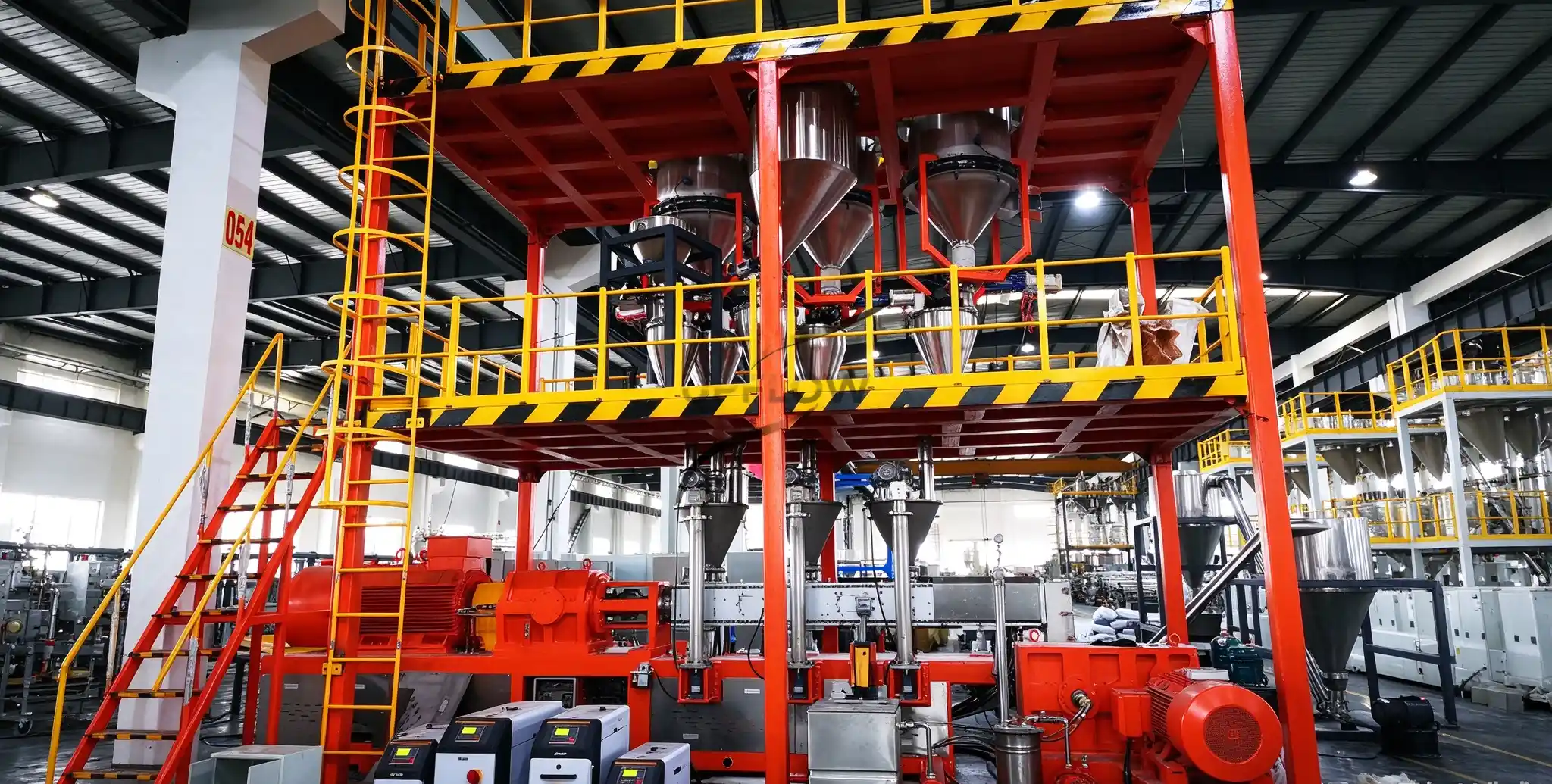
Many industrial manufacturers still rely on manual bag unloading, powder feeding and material transfer, even when production volumes and batching requirements have increased. As labor costs rise and production processes become more demanding, upgrading to an automated powder handling system can become an important investment decision.
However, purchasing an automatic powder feeding or pneumatic conveying system involves more than comparing equipment prices. Manufacturers need to evaluate how automation affects labor requirements, material losses, production downtime, maintenance expenses and overall operating costs.
A systematic powder handling automation ROI calculation helps companies determine whether the investment can generate sufficient financial benefits and how long it may take to recover the initial equipment cost.
This article explains how to evaluate the return on investment of industrial powder handling automation using three major factors: labor savings, material waste reduction and downtime costs.
1. Calculate Labor Cost Savings
Manual powder handling often requires operators to unload bags, transport materials, feed mixers, clean equipment and monitor material quantities.
When production involves multiple raw materials or frequent batching cycles, these activities can require considerable labor hours.
An automated powder handling system may integrate bag unloading stations, pneumatic conveying equipment, storage hoppers, weighing feeders and PLC control to reduce repetitive manual operations.
To calculate potential labor savings, manufacturers should compare the labor hours required before and after automation.
Annual Labor Savings = (Current Labor Hours − Automated Labor Hours) × Loaded Labor Cost per Hour
For example, consider a production line that currently requires four operators working eight hours per day for 250 working days per year.
If automation reduces the direct labor requirement to two operators under the same production schedule, the annual labor hours saved would be:
2 operators × 8 hours × 250 days = 4,000 hours.
If the fully loaded labor cost is USD 15 per hour, the theoretical annual labor cost reduction would be:
4,000 × USD 15 = USD 60,000.
This is an illustrative calculation rather than a guaranteed saving. Actual financial benefits depend on whether staffing levels, overtime or outsourced labor expenses can genuinely be reduced. If employees are reassigned to other production activities, the benefit may instead be measured as additional production capacity.
2. Evaluate Material Waste Reduction
Material loss is another important factor when evaluating powder handling automation.
During manual bag emptying and material transfer, powder may escape into the surrounding environment, remain inside packaging or equipment, or be lost during repeated handling and cleaning operations.
A properly designed enclosed powder handling system can help reduce these losses through suitable bag discharge connections, dust collection, sealed conveying pipelines and controlled material feeding.
The potential annual material savings can be estimated using:
Annual Material Savings = Annual Material Consumption × Reduction in Material Loss Rate × Material Cost per Unit
For example, assume a factory processes 1,000 tonnes of powder annually, with a material cost of USD 500 per tonne.
If the measured material loss rate decreases from 1.0% to 0.5% after automation, the estimated annual material savings would be:
1,000 × (1.0% − 0.5%) × USD 500 = USD 2,500.
The actual reduction must be verified through material input and output records, dust collection measurements and cleaning waste records.
It is also important to distinguish between recoverable powder collected by a dust collector and material that is genuinely lost from the production process.
3. Calculate Production Downtime Costs
Manual powder feeding can interrupt production when operators need to replace bags, prepare materials, clean feeding equipment or wait for raw materials to become available.
In automated production lines, enclosed conveying, intermediate storage hoppers and coordinated feeding sequences may help reduce some of these interruptions.
To evaluate the financial impact, manufacturers should record the actual production downtime associated with material handling.
Annual Downtime Savings = Annual Downtime Hours Reduced × Financial Loss per Downtime Hour
For example, if material handling interruptions decrease by 40 hours per year and the verified financial impact is USD 300 per downtime hour, the estimated annual downtime savings would be:
40 × USD 300 = USD 12,000.
The downtime cost should preferably reflect lost contribution margin or other demonstrable incremental costs, rather than simply multiplying lost production hours by the product selling price.
Manufacturers should also avoid counting the same benefit twice when reduced downtime and labor savings overlap.
For further guidance on coordinating automatic material supply with production cycles, read our article on Powder Dosing into Mixers: How to Coordinate Feeding and Mixing Cycles.
4. Calculate the Total Annual Financial Benefit
After estimating labor savings, material waste reduction and downtime savings, the next step is to combine these figures and deduct the additional annual operating expenses associated with automation.
These expenses may include:
Electricity consumption for vacuum pumps, blowers and compressed air systems.
Filter replacement and dust collector maintenance.
Spare parts and routine equipment servicing.
Operator training and control system support.
Additional inspection and cleaning requirements.
A simplified calculation is:
Annual Net Benefit = Labor Savings + Material Savings + Downtime Savings − Additional Annual Operating Costs
For example, the following figures illustrate how an industrial manufacturer might evaluate a proposed powder handling automation project.
| Financial Item | Illustrative Annual Value |
| Labor savings | USD 60,000 |
| Material waste reduction | USD 2,500 |
| Downtime reduction | USD 12,000 |
| Additional operating costs | USD 9,500 |
| Annual net benefit | USD 65,000 |
These values are hypothetical and should be replaced with actual factory operating data before an investment decision is made.
5. Calculate Automation Payback Period and ROI
Once the annual net financial benefit has been estimated, manufacturers can compare it with the initial investment required for the automated powder handling system.
Two commonly used investment indicators are the simple payback period and annual ROI.
Simple Payback Period = Initial Investment ÷ Annual Net Benefit
Annual ROI = (Annual Net Benefit ÷ Initial Investment) × 100%
For example, assume the total initial investment for an automated powder handling line is USD 130,000 and the estimated annual net benefit is USD 65,000.
The simple payback period would be:
USD 130,000 ÷ USD 65,000 = 2 years.
The illustrative annual ROI would be:
(USD 65,000 ÷ USD 130,000) × 100% = 50%.
These calculations provide an initial investment comparison, but they do not account for financing costs, taxes, depreciation, equipment lifespan or changes in production volume. A detailed financial assessment may also require a discounted cash flow or net present value analysis.
6. Which Powder Handling Equipment Should Be Automated First?
Not every production line requires complete automation from the beginning. Manufacturers can prioritize equipment according to the main operational bottlenecks and the expected financial return.
Manual Bag Unloading: An enclosed bag dump station or bulk bag unloading system can reduce repetitive manual material handling and improve dust control.
Pneumatic Conveying: Automated vacuum or positive-pressure conveying can replace repeated manual material transportation between feeding points, storage hoppers and processing equipment.
Automatic Weighing and Batching: Load cells, weighing hoppers and controlled feeders can improve material dosing consistency and reduce dependence on manual weighing operations.
Mixer Feeding: Automated feeding sequences can coordinate material supply with mixer operation and help reduce unnecessary waiting time between production batches.
For many manufacturers, upgrading the most labor-intensive or production-critical stage first may provide a more manageable investment than replacing the entire material handling process at once.
Explore UPFLOW’s Big Bag Unloading System, Pneumatic Conveying System and Automatic Batching System for different levels of powder handling automation.
For manufacturers moving from manual 25 kg bag handling to automated production, our guide to Powder Handling Line from 25 kg Bags to Automatic Batching explains how bag unloading, conveying, storage and weighing equipment can be integrated.
7. UPFLOW Powder Handling and Automation Project References
UPFLOW provides customized powder feeding, pneumatic conveying and automatic batching solutions for industrial manufacturers seeking to improve material handling and production integration.
Kenya Magnesium Silicate Conveying and Batching Project
UPFLOW supplied a customized magnesium silicate pneumatic conveying and batching system for an industrial customer in Kenya.
The system integrated manual bag dumping, pneumatic conveying, weighing hoppers, screw feeding equipment, filtration and centralized control.
This project provides an engineering reference for connecting raw material unloading, enclosed transfer and downstream batching operations.
Read more about the Kenya Magnesium Silicate Conveying and Batching Project.
Artificial Graphite Airflow Mixing Project
UPFLOW supplied 12 airflow mixing machines to a battery material manufacturer through four separate contracts.
Each machine has a design volume of 60 m³ and a maximum loading weight of 30 tonnes per batch. The project integrated material feeding, weighing equipment, mixing equipment and centralized PLC/HMI control.
This project demonstrates the importance of coordinating material handling, weighing and mixing processes in large-scale industrial production.
Read more about the Artificial Graphite Airflow Mixing Project.
These projects illustrate different powder handling and process integration applications. Their published technical configurations should not be interpreted as verified labor savings, waste reduction or financial ROI results.
8. Frequently Asked Questions
Q1. How do you calculate the ROI of a powder handling automation system?
Calculate the annual labor savings, material waste reduction and downtime savings, subtract additional operating costs, and compare the resulting annual net benefit with the initial equipment investment.
Q2. How long does an automated powder handling system take to pay back?
The payback period depends on equipment investment, production volume, current labor costs, material prices, operating hours and actual efficiency improvements. It should be calculated using the customer’s own operating data.
Q3. Can pneumatic conveying reduce powder material losses?
An appropriately designed enclosed pneumatic conveying system can help reduce powder escape and handling losses, although the actual result depends on sealing, filtration, material properties and maintenance.
Q4. Is full automation always more economical than manual powder handling?
Not necessarily. Low-volume production or infrequent material handling may not justify a complete automated system. A partial automation solution may provide a more appropriate investment level.
Q5. What information is required to estimate powder handling automation costs?
Important information includes material types, bulk density, packaging format, production capacity, number of ingredients, conveying distance, batching accuracy, labor requirements and existing factory layout.
Conclusion
Evaluating powder handling automation ROI requires more than comparing manual labor with equipment purchase prices. Manufacturers should assess labor expenses, material losses, production downtime and additional operating costs together to understand the actual financial impact.
By collecting reliable production data and calculating annual net benefits and payback periods, companies can make more informed decisions about upgrading manual bag unloading, powder conveying, weighing and automatic batching processes.
UPFLOW provides customized powder handling, pneumatic conveying and automatic batching solutions for chemical, food, pharmaceutical, plastic, battery material and other industrial applications.
Considering an investment in powder handling automation? Contact UPFLOW with your current handling process, material specifications, production capacity and factory layout to discuss a suitable automation configuration.