
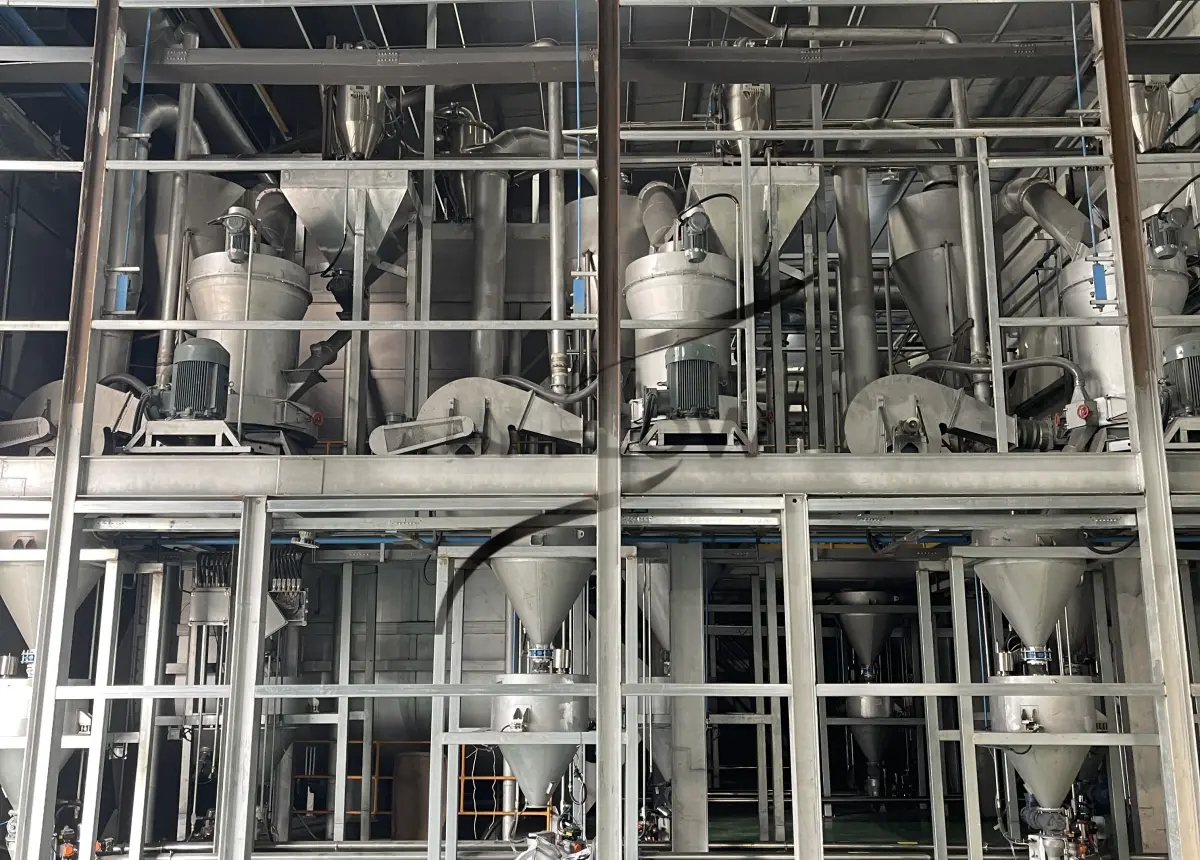
When planning an industrial powder handling project, manufacturers and EPC contractors must decide whether to purchase the complete system from one supplier or divide the equipment packages among several specialized manufacturers.
A single-supplier arrangement may simplify engineering coordination and equipment integration, while a multi-supplier procurement strategy can provide greater flexibility in equipment selection, pricing and vendor specialization. However, both approaches require careful management of mechanical interfaces, electrical connections, control systems, installation responsibilities and commissioning procedures.
For projects involving bulk bag unloading, pneumatic conveying, storage hoppers, weighing systems and automatic batching, unclear interfaces between suppliers can create installation delays, additional engineering costs and difficulties during system startup.
This article compares the two procurement approaches and explains how to reduce interface risks in industrial powder handling projects.
1. What Is a Single-Supplier Powder Handling Project?
In a single-supplier arrangement, one equipment manufacturer or system integrator is responsible for providing several connected components within an agreed powder handling package.
A typical scope may include:
Bulk bag unloading or manual bag dump stations.
Pneumatic conveying or vacuum feeding equipment.
Receiving hoppers and storage equipment.
Weighing and automatic batching systems.
Dust collection equipment.
PLC control and related electrical components.
The supplier coordinates the equipment configuration, mechanical connections and agreed control interfaces according to the customer’s process requirements.
This arrangement can simplify communication because the customer has one main technical contact for the supplied package.
However, the term single supplier does not automatically mean that every item in the production plant is included. Mixers, reactors, civil works, plant utilities, installation and commissioning may still belong to other contractors or the customer.
Therefore, the actual supply boundary must be clearly defined in the quotation and contract.
2. What Is a Multi-Supplier Procurement Strategy?
In a multi-supplier project, different equipment packages are purchased from separate manufacturers or specialist contractors.
For example, a chemical plant may purchase:
Bulk bag unloading stations from Supplier A.
Pneumatic conveying equipment from Supplier B.
Storage silos and hoppers from Supplier C.
Automatic weighing systems from Supplier D.
PLC control and electrical installation from Supplier E.
This approach allows the project owner or EPC contractor to select individual suppliers according to their technical specialization, commercial quotations and procurement requirements.
It may also be appropriate when the plant already has established equipment suppliers or when specialized machinery must come from a particular manufacturer.
However, dividing the equipment supply scope creates additional coordination responsibilities, particularly when each supplier designs its equipment independently.
3. Five Major Interface Risks in Multi-Supplier Projects
3.1 Mechanical Connection and Equipment Dimensions
One supplier may design a conveying receiver according to its standard discharge connection, while another supplier manufactures a hopper or mixer with different inlet dimensions.
Even if both machines meet their individual specifications, connecting them may require additional reducers, transition pieces, support structures or modifications.
The project team should confirm:
Equipment inlet and outlet dimensions.
Flange standards and connection types.
Pipeline diameters and material specifications.
Equipment elevations and centerline positions.
Supporting structures and installation clearances.
A coordinated General Arrangement drawing and interface drawing should be approved before manufacturing.
3.2 Material Transfer Capacity and Equipment Compatibility
A conveying system may be designed for a particular transfer rate, but the downstream receiving hopper or production equipment may not accept material at the same rate.
For example, if a vacuum conveying receiver discharges more slowly than the upstream material supply process, material accumulation may affect the operating cycle.
Similarly, a screw feeder and weighing hopper must be coordinated according to the required dosing quantity and feeding sequence.
The engineering team should verify the operating capacity of the complete material transfer route rather than evaluating each machine independently.
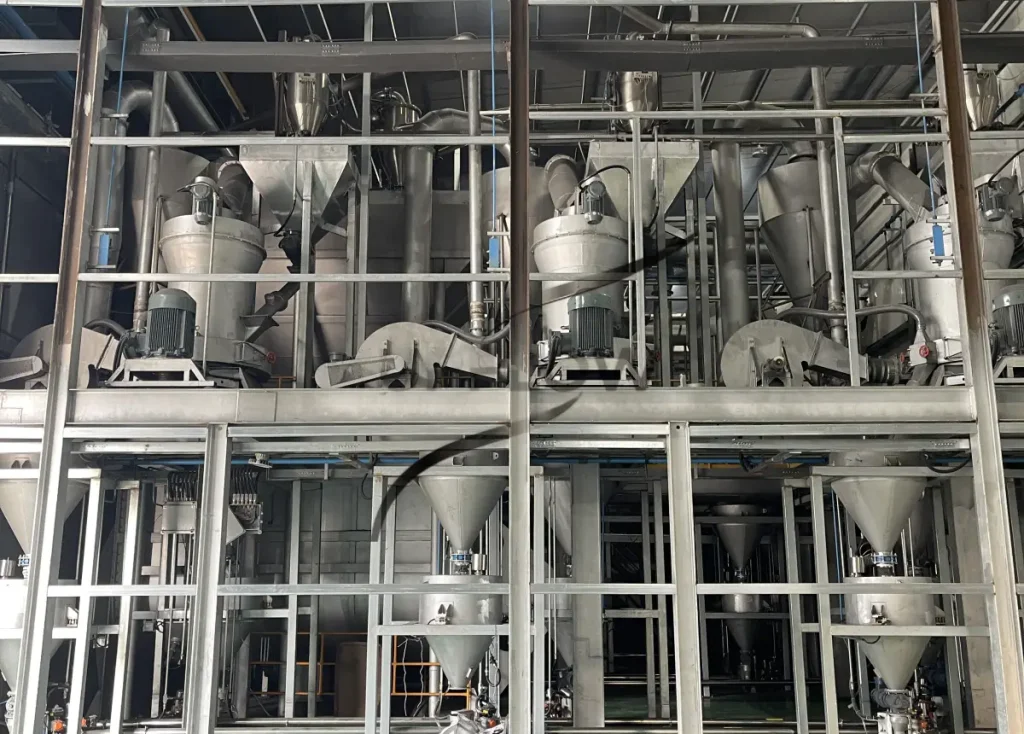
3.3 PLC and Electrical Communication
Control integration is one of the most important issues in multi-supplier projects.
A bag unloading station, vacuum conveyor, receiving hopper and automatic batching system may each have separate electrical control arrangements.
If the suppliers do not agree on signal definitions and operating sequences, the EPC contractor may encounter missing signals, incompatible communication settings or unclear interlock responsibilities during commissioning.
The project should define:
PLC and HMI responsibilities.
Digital and analog signal lists.
Motor and valve control signals.
Equipment running and fault feedback.
Hopper level detection.
Emergency stop interfaces.
Communication protocols.
Startup and shutdown sequences.
A common control philosophy and approved I/O list should be established before electrical integration begins.
3.4 Installation and Commissioning Responsibility
When equipment comes from different manufacturers, each supplier may focus on its own machine rather than the performance of the complete powder handling line.
If a pipeline blockage, unstable material feeding cycle or incorrect discharge sequence occurs during commissioning, determining which equipment or interface is responsible may take additional time.
The project contract should identify who is responsible for:
Equipment installation and positioning.
Pipeline connection and alignment.
Electrical wiring and instrument installation.
PLC integration and programming.
Individual equipment testing.
Complete system commissioning.
Performance verification and final handover.
Without this responsibility matrix, problems can be delayed by disagreements between different suppliers.
3.5 After-Sales Service and Warranty Boundaries
When multiple suppliers are involved, each manufacturer generally provides warranty support for its own supplied equipment according to the agreed contract.
However, a system-level problem may involve several components working together.
For example, unstable conveying performance may be associated with the material feeding arrangement, pipeline design, air supply, receiver filtration or discharge valve sequence.
The project should therefore establish a clear procedure for technical troubleshooting, supplier coordination, warranty claims and system-level support.
4. Single Supplier vs Multiple Suppliers: Practical Comparison
The following table summarizes the main differences between the two procurement strategies.
| Evaluation Factor | Single Supplier | Multiple Suppliers |
| Engineering coordination | Fewer package interfaces | More coordination required |
| Equipment selection | Depends on supplier capabilities | Greater vendor flexibility |
| Mechanical integration | Can be coordinated centrally | Requires interface management |
| PLC integration | One package-level control contact | Requires cross-vendor coordination |
| Procurement | Potentially simpler | More individual purchase contracts |
| Price comparison | Package-based quotation | Easier to compare individual packages |
| Installation | Responsibilities must still be defined | More contractor coordination |
| Commissioning | Potentially fewer supplier interfaces | More complex responsibility allocation |
| After-sales | One main package contact | Multiple warranty contacts |
Neither model guarantees lower total project cost or better technical performance.
A single-supplier package may simplify coordination, but its technical scope and subcontracting arrangements still need to be reviewed. Multi-supplier procurement can be effective when the EPC contractor has sufficient engineering and project management resources to coordinate the interfaces.
5. How to Reduce Interface Risks Before Procurement
Regardless of the procurement strategy, several engineering documents should be prepared before issuing RFQs.
Process Flow Diagram (PFD): Defines material flow from unloading and conveying to storage, weighing and downstream production equipment.
General Arrangement Drawing: Shows the physical positions, dimensions and elevations of the connected equipment.
Equipment Supply Scope Matrix: Identifies which supplier provides each machine, component, valve, pipeline and accessory.
Mechanical Interface List: Defines equipment connections, dimensions, flange standards and supporting requirements.
Electrical I/O List: Identifies control signals, communication requirements, alarms and equipment interlocks.
Utility Consumption List: Defines compressed air, electrical power and other required plant utilities.
Commissioning Responsibility Matrix: Establishes who performs individual equipment testing, system integration, troubleshooting and acceptance.
These documents help the owner and EPC contractor compare supplier quotations on a consistent technical basis rather than focusing only on the initial equipment price.
For additional guidance on defining procurement and engineering responsibilities, see our article on Powder Handling System for a New Chemical Plant: Engineering Scope Checklist.
6. When Should You Choose Each Procurement Model?
A single-supplier package may be worth considering when several powder handling components must operate as one coordinated process, especially when the project requires integrated unloading, conveying, weighing and automated feeding.
A multi-supplier strategy may be more appropriate when the project involves specialized equipment, an established approved vendor list, existing framework agreements or an EPC contractor with strong system integration capabilities.
For some projects, a hybrid procurement strategy can also be effective.
For example, the main powder handling package may be supplied by one system integrator, while specialized mixers, reactors, silos or plant-wide control systems are purchased separately.
The most important requirement is to appoint a clearly identified party responsible for coordinating the package interfaces and resolving integration issues.
7. UPFLOW Powder Handling and System Integration Experience
UPFLOW provides customized powder unloading, pneumatic conveying, vacuum feeding and automatic batching equipment for industrial production lines.
PVC Powder Feeding and Vacuum Conveying System Project
For a new materials manufacturer, UPFLOW supplied a customized PVC powder feeding and vacuum conveying system connecting the bag unloading area with multiple downstream receiving points.
The project included five UPFLOW-320 conveying units, approximately 30 meters of stainless steel conveying pipelines, bag unloading equipment, existing receiving hopper modifications, dust collection connections and centralized electrical control.
This project demonstrates how conveying equipment, pipeline arrangements, receiving hoppers and control components can be coordinated within one powder feeding package.
Read more about the PVC Powder Feeding and Vacuum Conveying System Project.
Kenya Magnesium Silicate Conveying and Batching Project
UPFLOW supplied a customized magnesium silicate pneumatic conveying and batching system integrating manual bag dumping, conveying equipment, storage, weighing hoppers, screw feeding equipment, filtration and centralized control.
The project provides another reference for coordinating multiple powder handling functions within an integrated equipment arrangement.
Read more about the Kenya Magnesium Silicate Conveying and Batching System Project.
These project references demonstrate UPFLOW’s experience in supplying and coordinating powder handling equipment. They do not imply that every plant-wide utility, mixer, civil work or electrical installation is automatically included in the supply scope.
8. Frequently Asked Questions
Q1. Is a single supplier always better for a powder handling project?
No. A single supplier may simplify package-level coordination, but its engineering capability, equipment scope and integration responsibilities must be evaluated. A qualified EPC contractor can also coordinate a successful multi-supplier project.
Q2. What is the biggest risk when purchasing equipment from multiple suppliers?
Unclear mechanical, electrical and process interfaces are among the main risks, particularly when equipment dimensions, transfer capacities, control signals and commissioning responsibilities are not agreed before manufacturing.
Q3. Can different suppliers provide equipment for one automatic batching system?
Yes. However, weighing equipment, feeders, conveying systems and PLC controls must be coordinated through approved technical specifications, interface drawings and control documents.
Q4. Who should be responsible for system integration?
The responsibility should be explicitly assigned to the system integrator, EPC contractor or another agreed project party. The contract should identify who coordinates the interfaces and verifies complete system operation.
Q5. What documents should be requested before placing equipment orders?
Important documents include the PFD, equipment list, general arrangement drawings, equipment datasheets, mechanical interface list, electrical I/O list, utility requirements and commissioning responsibility matrix.
Conclusion
Choosing between a single-supplier and multi-supplier procurement strategy is an important decision in industrial powder handling projects, but the number of suppliers alone does not determine project success.
The most important factors are clearly defined equipment boundaries, compatible mechanical connections, coordinated control systems, agreed installation responsibilities and a practical commissioning plan.
Whether the project uses one integrated equipment package or several specialized manufacturers, early interface management can help reduce engineering conflicts, avoid unnecessary modifications and improve project execution.
UPFLOW provides customized powder handling, pneumatic conveying and automatic batching solutions for chemical, food, pharmaceutical, battery material and other industrial applications.
Planning a powder handling project involving multiple equipment packages? Contact UPFLOW with your process flow, equipment list, layout drawings and supply scope requirements to discuss a suitable system integration approach.