
- admin
- Sep 14, 2026
- Custom Fabrication
In modern industrial manufacturing, companies often need metal components that fit specific equipment designs, production requirements, and operating environments. While standard parts are widely available and convenient for many applications, they may not always provide the exact dimensions, performance, or integration required for specialized equipment. This is why many OEM manufacturers choose customized solutions when developing industrial products.
Understanding the difference between Custom Stainless Steel Parts vs. Standard Parts helps engineers and purchasing teams determine which option provides better value based on application requirements, production volume, performance expectations, and long-term business goals.
What Are Standard Parts?
Standard parts are components produced according to commonly used specifications, dimensions, and industry requirements.
They are usually manufactured in large quantities and designed to meet general application needs. Examples include standard brackets, fasteners, fittings, covers, panels, and commonly used mechanical components.
The main advantage of standard parts is availability. Because they are mass-produced, they can usually be purchased quickly and at a lower unit cost compared with customized components.
For simple applications where the equipment design does not require special dimensions or unique features, standard parts can be an efficient solution.
However, standard parts also have limitations because they are designed for general purposes rather than specific equipment requirements.
What Are Custom Stainless Steel Parts?
Custom stainless steel parts are components designed and manufactured according to specific customer requirements, engineering drawings, or application needs.
Unlike standard products, custom parts can be produced with specific dimensions, shapes, mounting positions, material requirements, surface finishes, and functional features.
For OEM equipment manufacturers, customized components are often necessary because every machine or production system may have unique structural requirements.
Custom Stainless Steel Parts vs. Standard Parts is an important consideration when developing specialized equipment because customized components can provide better integration, improved performance, and greater design flexibility.
Design Flexibility and Equipment Integration
One of the biggest differences between custom and standard components is design flexibility.
Standard parts require manufacturers to adapt their equipment design around existing component specifications. This approach may work for simple systems but can create limitations when developing advanced machinery or specialized equipment.
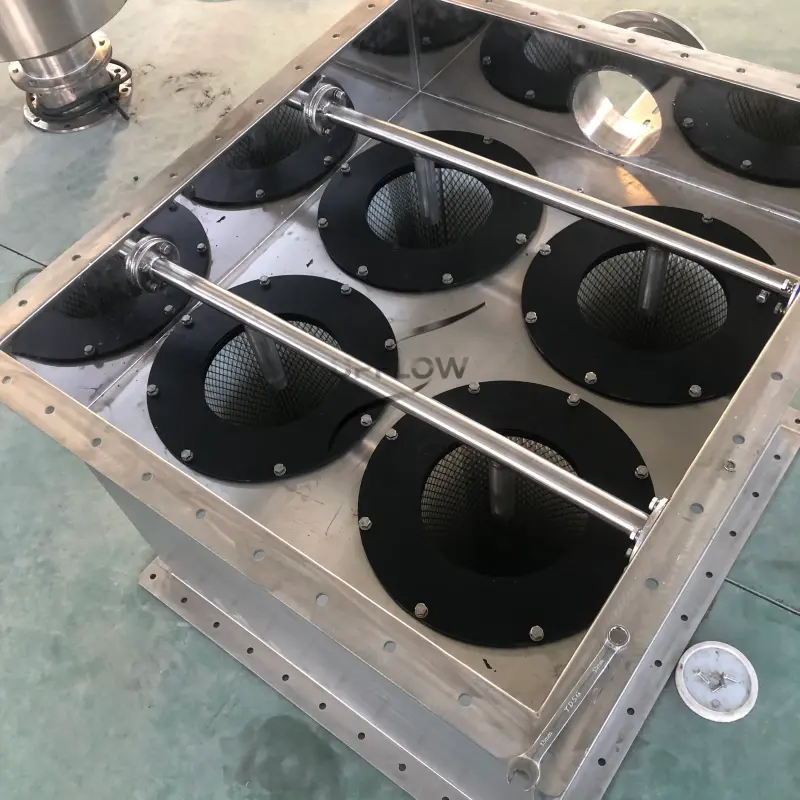
Custom stainless steel parts allow engineers to design components according to the actual equipment structure, including exact dimensions, connection points, mounting holes, cable routing features, and assembly requirements.
This is especially valuable for industries such as automation, industrial equipment manufacturing, chemical processing, food equipment, and data center hardware, where space optimization and precise integration are often critical.
Material Selection and Performance Requirements
Material selection is another important difference between customized and standard components.
Standard parts are usually produced from commonly used materials selected for general applications. However, some industrial environments require specific material properties, such as corrosion resistance, strength, cleanliness, or temperature resistance.
Custom stainless steel parts can be manufactured using suitable materials according to the operating environment.
For example:
304 stainless steel may be selected for general industrial applications
316 stainless steel may be considered for more corrosive environments
Different thicknesses and structures can be selected according to strength requirements
When comparing Custom Stainless Steel Parts vs. Standard Parts, material flexibility is one of the main advantages of custom manufacturing.
Accuracy and Quality Control
Precision is often a key factor in industrial equipment manufacturing.
Standard components are produced according to fixed specifications, but they may not always achieve the exact requirements of specialized equipment designs.
Custom fabrication allows manufacturers to control dimensions, tolerances, surface quality, welding requirements, and inspection standards according to customer drawings.
For OEM manufacturers, this level of control helps ensure that components fit correctly during assembly and reduces problems during equipment installation.
Precision is especially important for products such as equipment housings, machine frames, brackets, server chassis, and other fabricated metal assemblies.
Cost Considerations: Custom vs. Standard Parts
At first glance, standard parts may appear to be more economical because they are produced in large quantities.
However, the lowest initial purchase price does not always represent the lowest overall cost.
Using standard parts may require additional modifications, adapters, redesign work, or extra assembly steps to make them fit a specific application.
Custom parts may have a higher initial manufacturing cost, but they can reduce assembly complexity, improve equipment performance, and provide better long-term value.
The correct choice depends on production quantity, design requirements, equipment complexity, and expected product lifespan.
Production Volume and Lead Time
Production volume is another important factor when deciding between custom and standard components.
Standard parts are usually suitable for companies that need immediate availability and large quantities of common components.
Custom stainless steel parts are often preferred for OEM projects, prototypes, specialized equipment, and applications where unique specifications are required.
With modern CNC machining, laser cutting, sheet metal fabrication, and digital manufacturing technologies, custom production has become more efficient and accessible even for small and medium production quantities.
Applications of Custom Stainless Steel Parts
Custom stainless steel components are widely used in many industrial applications, including:
Equipment enclosures
AI server chassis
Machine frames
Support structures
Storage tanks and silos
Industrial brackets
OEM equipment components
Automation machinery parts
These applications often require components that cannot be fully satisfied by standard products.
For OEM manufacturers, custom fabrication provides the ability to develop equipment solutions that match specific customer requirements.
Choosing the Right Manufacturing Solution
The decision between custom and standard components should be based on the actual application rather than simply comparing purchase prices.
Standard parts may be suitable when:
Dimensions are common
Performance requirements are simple
Fast delivery is important
Large quantities are required
Custom stainless steel parts may be more suitable when:
Equipment designs are unique
Precise dimensions are required
Material performance is critical
Integration with other systems is necessary
Long-term reliability is important
Understanding Custom Stainless Steel Parts vs. Standard Parts allows companies to select the right manufacturing approach for their specific needs.
Working with a Custom Fabrication Partner
For OEM companies, choosing the right fabrication partner can significantly influence product quality and production efficiency.
An experienced supplier should be able to support engineering review, material selection, cutting, bending, welding, machining, surface treatment, inspection, and final delivery.
A reliable manufacturer can help customers transform engineering concepts into practical components while maintaining consistency across different production batches.
This is especially important for companies that require repeat orders of customized stainless steel components.
Conclusion
Both standard parts and custom components have their own advantages, and the right choice depends on product requirements, application conditions, production volume, and long-term objectives.
While standard parts provide convenience and lower initial cost for general applications, Custom Stainless Steel Parts vs. Standard Parts often becomes the preferred solution when equipment requires precise dimensions, specialized materials, and reliable integration.
UPFLOW provides custom stainless steel fabrication solutions for OEM parts, equipment enclosures, machine frames, tanks, AI server chassis, and industrial components according to customer drawings and project requirements.
If you need customized stainless steel components for your equipment or production system, contact UPFLOW for engineering review and fabrication support.