
Material Profile: Properties and Types of Aluminum Powder
Aluminum powder, also known as aluminum metal powder, Al powder, or atomized aluminum powder, is widely used in industries such as aerospace, automotive, electronics, coatings, and construction due to its lightweight structure, high strength, and excellent conductivity.
In practical applications, aluminum powder is typically handled as a fine or ultra-fine powder, with a bulk density ranging from approximately 0.8 to 1.5 g/cm³, depending on particle size and processing method. It is characterized by high reactivity, strong dusting tendency, and explosion risk when dispersed in air, which makes safe and controlled conveying essential. Aluminum powder can be classified into atomized aluminum powder, flake aluminum powder, spherical aluminum powder, and ultra-fine aluminum powder, each requiring different conveying conditions.
What Is an Aluminum Powder Pneumatic Conveying System?
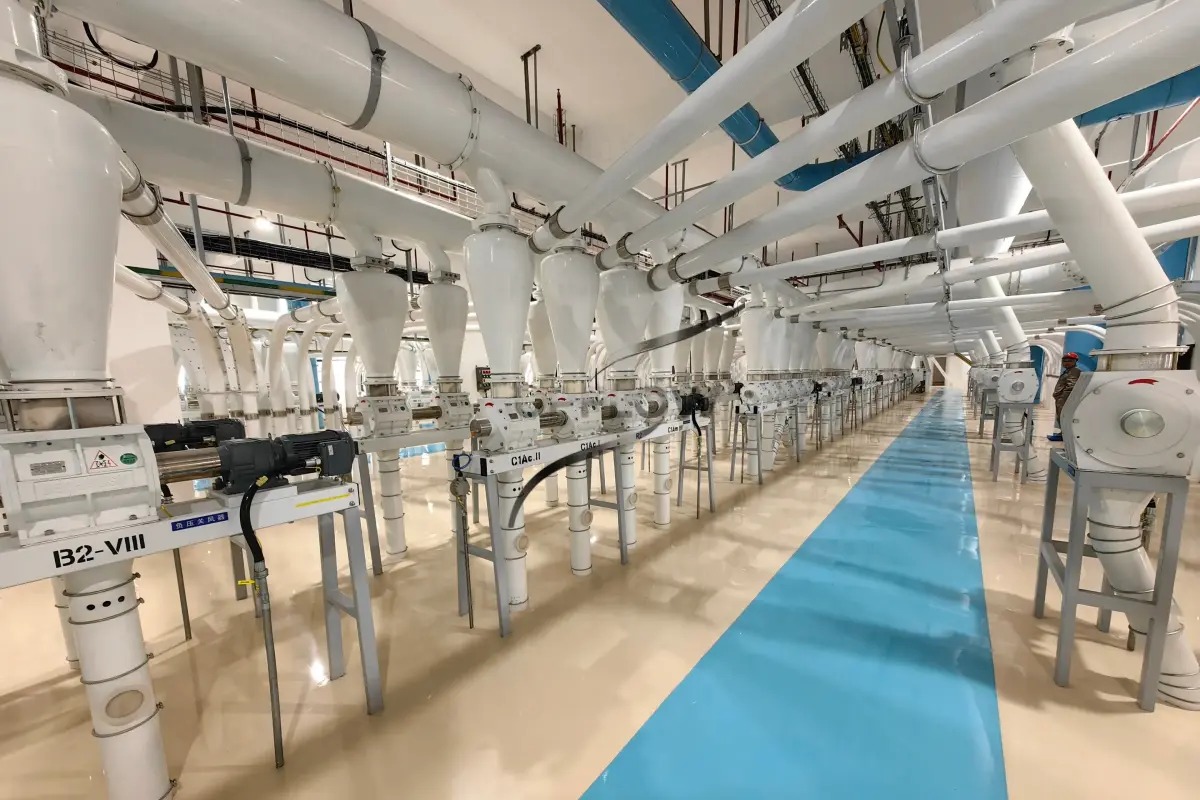
An aluminum powder pneumatic conveying system is an advanced material handling solution that uses compressed air or vacuum to transport aluminum powder through enclosed pipelines, ensuring efficient, dust-free, and automated transfer.
In industrial scenarios, it is also referred to as a powder automatic conveying system for aluminum powder, a fully automatic conveying system for aluminum materials, or a high-airflow pneumatic conveying system for metal powders, depending on system design. This material pneumatic conveying system for aluminum powder enables continuous and stable transport across production lines.
Conveying Principle and Operation
The aluminum powder pneumatic conveying system operates based on airflow energy, where compressed air or vacuum creates a controlled gas flow inside pipelines, carrying aluminum powder particles from one point to another.
During conveying, particles are suspended or move in clusters, forming a stable flow that ensures continuous transport. As a fully enclosed powder automatic conveying system for aluminum powder materials, it prevents dust leakage and reduces material loss while maintaining operational safety.
Key Advantages of Aluminum Powder Conveying Systems
The aluminum powder pneumatic conveying system offers several important advantages.
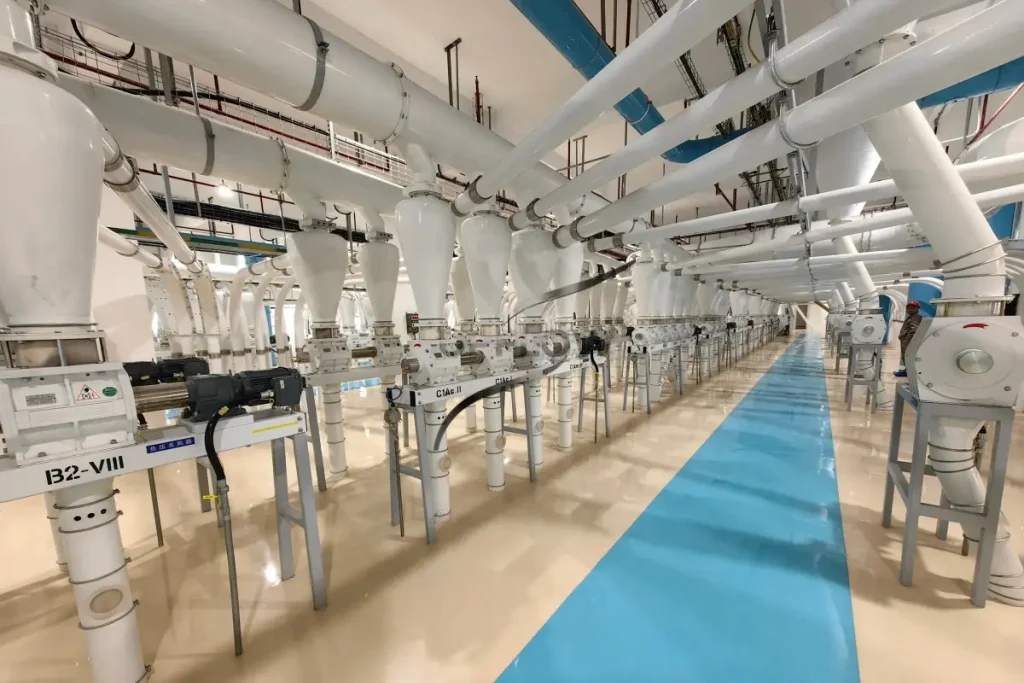
As a fully automatic conveying system for aluminum powder, it significantly improves production efficiency by enabling long-distance and high-speed transport, while reducing manual handling. In addition, the enclosed design ensures a dust-free conveying process, which protects worker health and minimizes environmental impact.
The system also integrates advanced automation and control technology, allowing real-time monitoring of airflow, pressure, and feeding rates, ensuring accurate dosing and consistent product quality.
Safety and Flexibility in Industrial Applications
Due to the reactive nature of aluminum powder, safety is a critical factor. The pneumatic conveying system for aluminum powder materials is designed with explosion protection, anti-static grounding, and enclosed pipelines, ensuring safe operation under industrial conditions.
Furthermore, the system offers flexible configuration, allowing customization based on plant layout, conveying distance, and material characteristics, making it suitable for handling both fine and coarse aluminum powders.
Conclusion
The aluminum powder pneumatic conveying system provides a safe, efficient, and modern solution for handling metal powders. By integrating powder automatic conveying systems, fully automatic conveying systems, and high-airflow pneumatic conveying technologies for aluminum powder, manufacturers can achieve improved efficiency, reduced dust emission, and enhanced safety in industrial production environments.