
Introduction
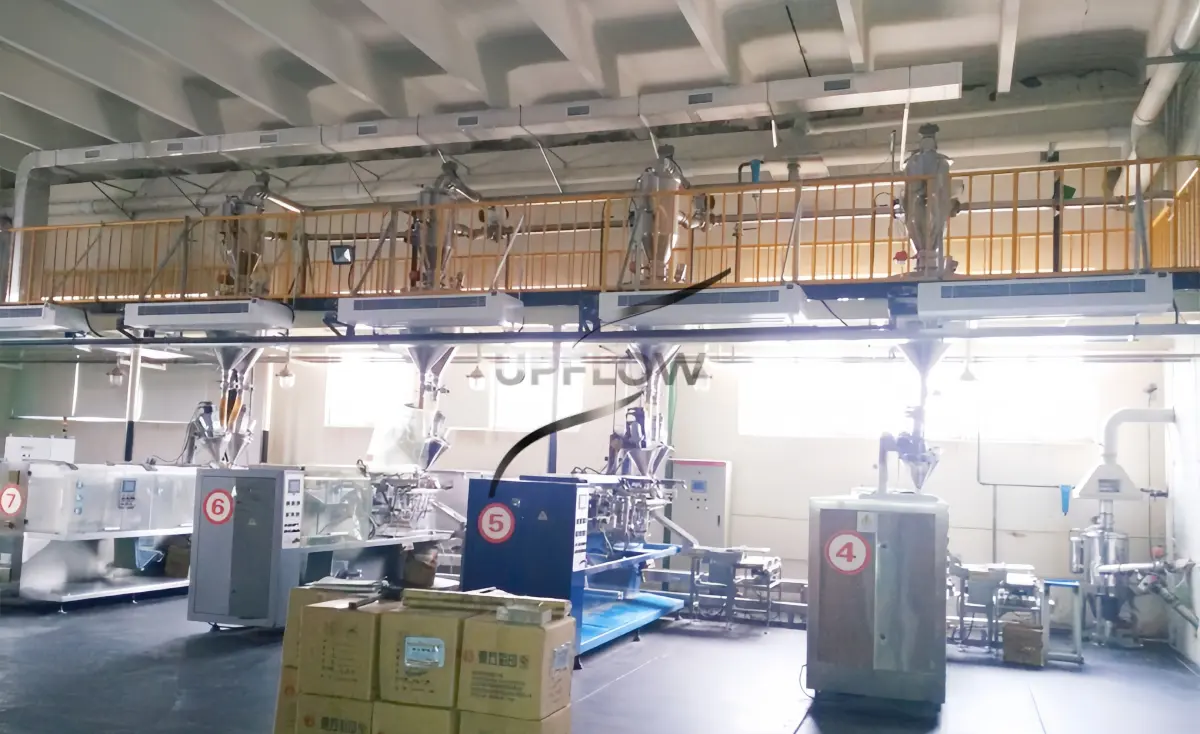
The calcium chloride pneumatic conveying system uses airflow as the driving force to transport calcium chloride particles from one location to another through pipelines. The material is suspended in the airflow and transported with it, forming a stable and continuous conveying process, significantly improving the efficiency and cleanliness of industrial production.
Material Introduction
Calcium chloride (CaCl₂) is odorless, highly hygroscopic, white, and easily deliquescent (in crystals, granules, lumps, or flakes). It is a widely used inorganic salt, commonly used in road de-icing, food processing, dust control, and chemical production. It usually exists as powder, flakes, or granules, with a bulk density of approximately 0.8–1.2 t/m³, depending on its morphology. Due to its exothermic properties, it can absorb moisture from the air and environment, making it highly hygroscopic and prone to agglomeration during handling. Calcium chloride powder desiccant has a high absorption rate and is mainly used to reduce air humidity during transportation or storage, ensuring the material remains intact. A reliable closed-loop conveying system is crucial for maintaining stable material flow and preventing contamination.
System Composition
The calcium chloride pneumatic conveying system mainly consists of the following parts: First, the storage and feeding section transports calcium chloride from the raw material storage silo to the intermediate silo. Second, the conveying section uses airflow to transport the material from the silo to the desired location.
The air supply system provides high-pressure gas as the power source for conveying. The conveying pipeline is usually made of corrosion-resistant materials and serves as both the airflow channel and the material conveying channel.
The conveying device controls the speed and direction of the airflow, while the control system monitors and regulates the entire process to ensure stable and reliable operation. These components together constitute a highly efficient automated powder conveying system.
Pneumatic Conveying Methods
Depending on process requirements, there are several conveying methods available for calcium chloride. In negative pressure conveying systems, the material is drawn into the pipeline and conveyed under vacuum conditions, suitable for clean and dust-sensitive environments.
Positive pressure conveying uses compressed air to propel particles through the pipeline. Dilute-phase conveying suspends particles in a relatively low-concentration airflow, enabling high-speed transport; while dense-phase conveying transports materials in a more compact form to reduce wear and degradation. Furthermore, hybrid systems combine multiple conveying principles to meet diverse operational needs.
Advantages of Calcium Chloride Pneumatic Conveying Systems
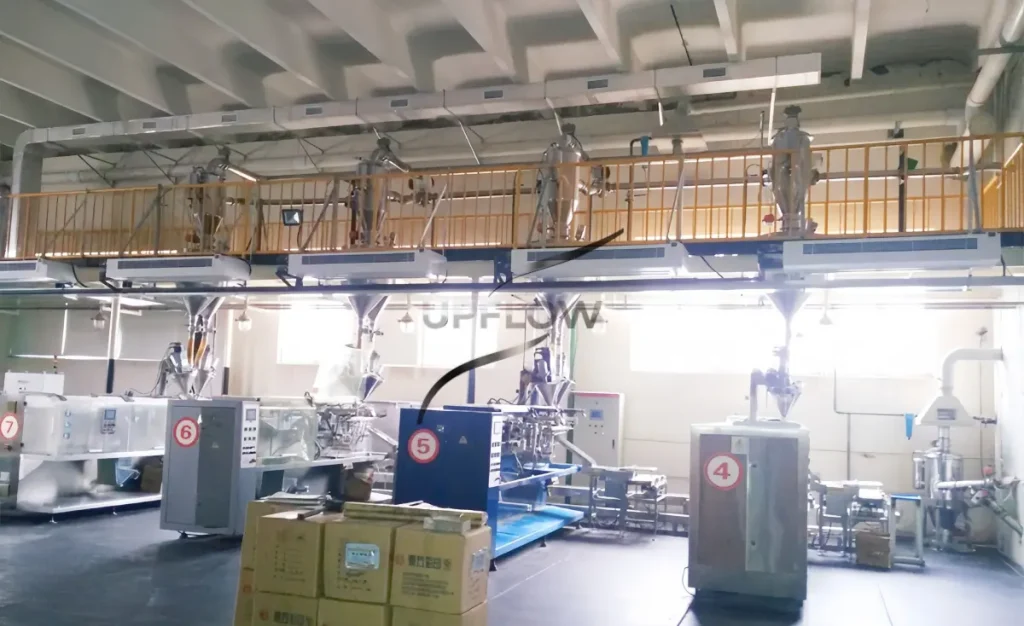
Compared to traditional mechanical conveying methods, calcium chloride pneumatic conveying systems offer numerous advantages. They utilize airflow to rapidly and continuously transport materials, improving conveying efficiency, reducing energy consumption, and increasing productivity.
The system operates stably and reliably, minimizing blockages and ensuring stable material flow. It also allows for flexible adjustment of conveying speed and pressure, adapting to various materials and conveying distances.
Furthermore, the enclosed design effectively reduces dust emissions and noise, contributing to environmental protection and a safer working environment. As a modern pneumatic conveying system, it supports automation, reducing manual intervention.
Applications and Market Demand
With the rapid development of industrial production and logistics technologies, the demand for calcium chloride conveying solutions continues to grow. Calcium chloride pneumatic conveying systems are widely used in road de-icing material conveying, food processing, and chemical production.
Continuous technological advancements have improved system stability, automation levels, and safety performance. Simultaneously, the growing demand for customized solutions reflects the necessity of systems tailored to specific industrial scenarios.
Conclusion
In summary, the calcium chloride pneumatic conveying system is a highly efficient, safe, and environmentally friendly material handling technology. It integrates the advantages of negative pressure conveying systems, enclosed conveying systems, and advanced automated powder conveying systems, providing a reliable solution for modern industry and continuing to play a vital role in future industrial development.