
Introduction
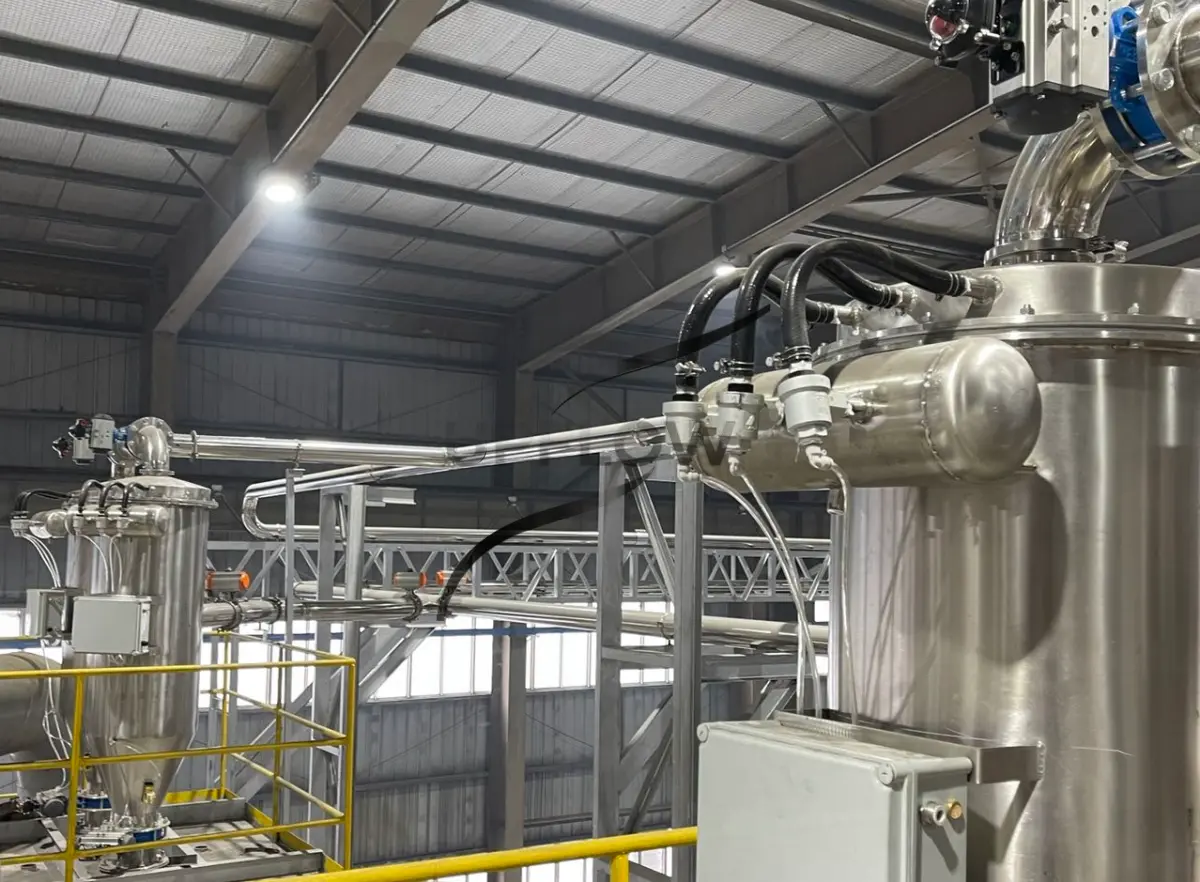
A calcium oxide pneumatic conveying system is an advanced and efficient material handling solution that uses airflow as the conveying medium to transport lime powder or granules through enclosed pipelines, and it is widely applied in industries such as steelmaking, cement production, and glass manufacturing where stable, dust-free, and automated material transfer is essential. By precisely controlling airflow velocity and pressure, this type of system enables continuous and reliable conveying from one point to another, significantly improving production efficiency while reducing environmental impact.
Calcium Oxide Material Characteristics
Calcium oxide (chemical formula: CaO), commonly known as quicklime or burnt lime, is a white or off-white inorganic powder with strong alkalinity and high hygroscopicity, meaning it readily absorbs moisture from the air and may react to form calcium hydroxide. It typically has a bulk density of approximately 0.9–1.2 t/m³ depending on particle size and processing conditions.
Due to its fine particle size and moisture sensitivity, calcium oxide can easily generate dust and may form agglomerates or blockages if exposed to humid environments, making it essential to use a well-designed calcium oxide pneumatic conveying system to ensure closed, stable, and efficient material transport.
Different Conveying Methods and Their Impact
A calcium oxide pneumatic conveying system can be designed using various conveying methods, and each method has a different impact on system performance and production efficiency.
Positive pressure conveying is suitable for long-distance and high-capacity material transfer, improving overall production efficiency.
Negative pressure conveying is ideal for low-pressure environments and helps reduce energy consumption while maintaining clean operation.
Dilute phase conveying is commonly used for fine particles and can minimize dust-related issues during transport.
Dense phase conveying is suitable for larger particles and slower conveying velocity, improving system stability and reducing wear.
Combined conveying systems integrate the advantages of different methods, making them suitable for complex industrial applications with varying process requirements.
Key Features and Advantages
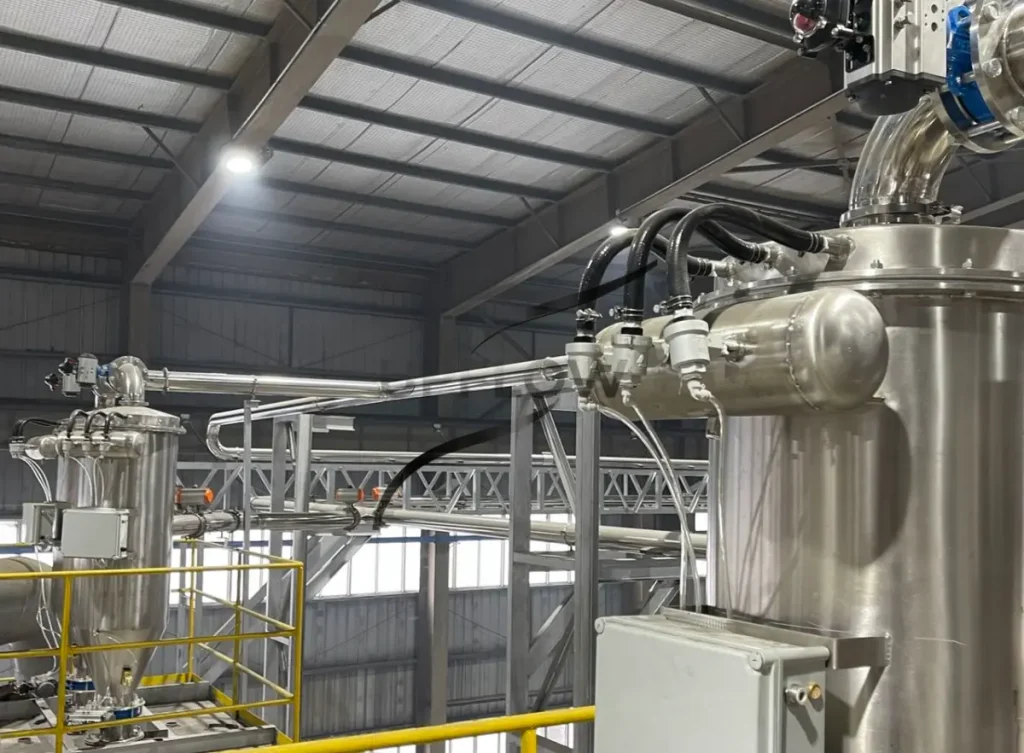
A well-designed calcium oxide pneumatic conveying system offers multiple advantages that make it a preferred choice in modern industrial production. It enables fast and efficient material transfer, significantly improving production throughput while maintaining consistent quality.
The system is highly adaptable and can handle calcium oxide materials with different particle sizes and forms, making it suitable for diverse production processes. In addition, it ensures safe and reliable operation through advanced control technologies, minimizing risks associated with material handling.
From an environmental perspective, the system features low energy consumption and reduced reliance on additional mechanical equipment, helping companies achieve energy savings and sustainable production. Moreover, with the integration of automated control systems, real-time monitoring and intelligent management of the conveying process can be achieved, further enhancing operational efficiency.
Market Demand and Future Trends
With the continuous advancement of industrial automation and increasing environmental regulations, the demand for calcium oxide pneumatic conveying systems is steadily growing. Future systems are expected to become more intelligent, energy-efficient, and adaptable to complex production environments.
As emerging industries and advanced technologies continue to develop, pneumatic conveying solutions will be applied in a wider range of fields, providing more efficient and reliable material handling solutions. Overall, with its advantages of efficiency, flexibility, safety, and energy savings, the calcium oxide pneumatic conveying system will play an increasingly important role in promoting intelligent and high-efficiency industrial production.