
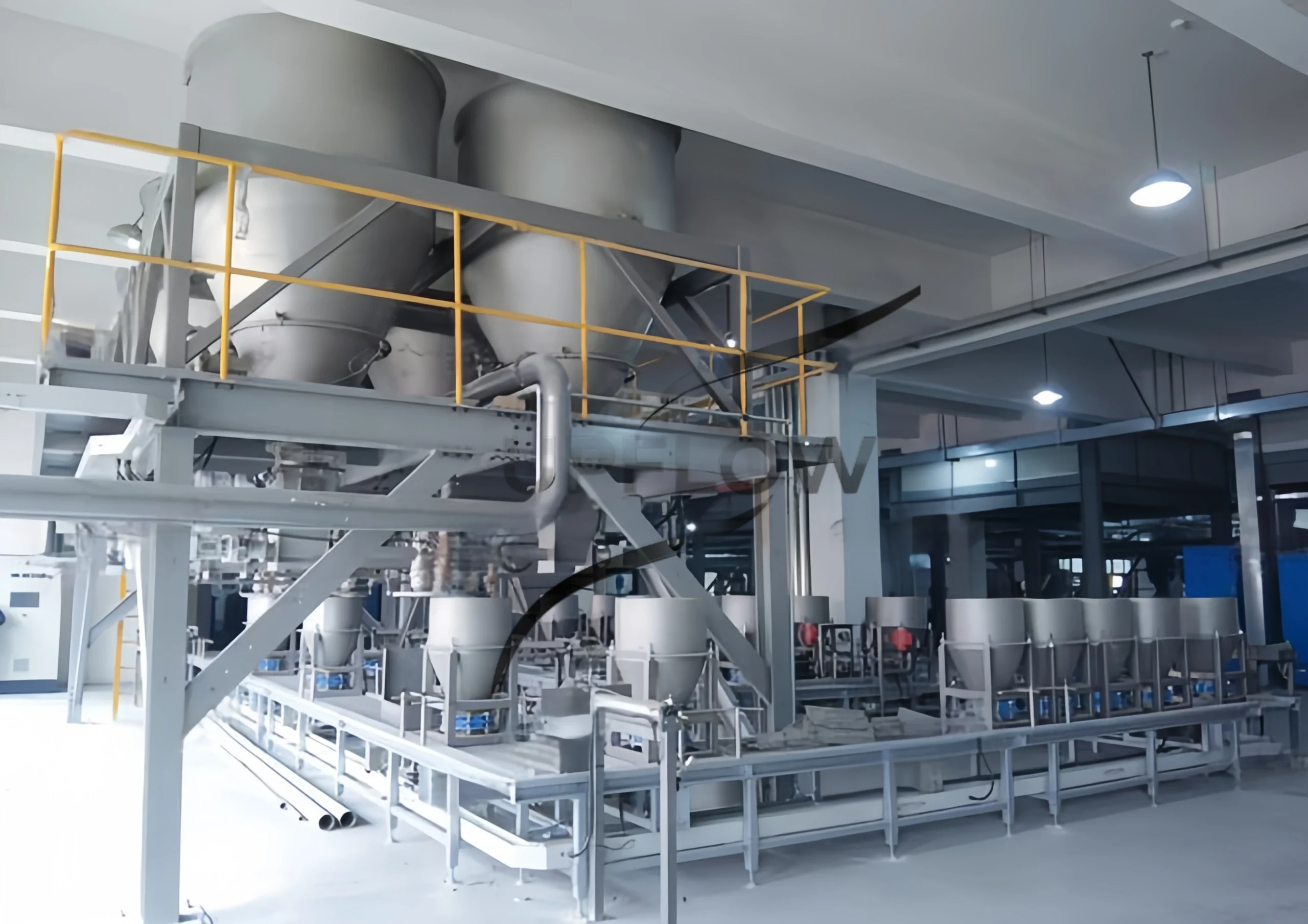
Introduction: Handling One of the Most Challenging Powders in Industry
A pneumatic conveying system for carbon black handling is widely recognized as one of the most reliable solutions for transporting ultra-fine powders in industrial production, especially in applications where dust control, process stability, and environmental protection are critical. Carbon black is an extremely light and fine material, and its tendency to disperse easily into the air makes conventional conveying methods inefficient and unsafe, which is why enclosed pneumatic systems have become the preferred choice in modern plants.
Compared with traditional mechanical equipment, this type of conveying system provides a sealed and automated solution that significantly reduces material loss while improving operational consistency, making it an essential component of advanced powder handling systems.
Material Characteristics of Carbon Black and Conveying Challenges
Designing a pneumatic conveying system for carbon black handling requires a deep understanding of the unique physical characteristics of carbon black, as these properties directly influence system performance and reliability. Carbon black particles are extremely fine, often in the micron range, and have very low bulk density, which makes them highly prone to dust generation and airborne dispersion during handling.
In addition, carbon black exhibits strong cohesion and a tendency to agglomerate, which can lead to unstable flow behavior and pipeline blockages if not properly managed, while its slightly abrasive nature can cause wear in pipelines and equipment over time. These combined challenges require a carefully engineered conveying solution that ensures stable material flow without compromising system durability.
System Configuration: Dense Phase and High-Pressure Conveying
A high-performance pneumatic conveying system for carbon black handling typically adopts a dense phase conveying system, which operates at relatively low velocities but higher pressures, allowing materials to move in compact plugs rather than dispersed particles. This conveying mode significantly reduces dust generation, minimizes pipeline wear, and ensures more stable and controlled material transport compared to dilute phase systems.
For large-scale industrial applications, a high-pressure conveying system combined with a positive pressure blowing system is often used to achieve reliable long-distance transport, especially when materials need to be conveyed across multiple production units or storage areas within the plant. This approach provides both high capacity and operational stability, making it suitable for continuous production environments.
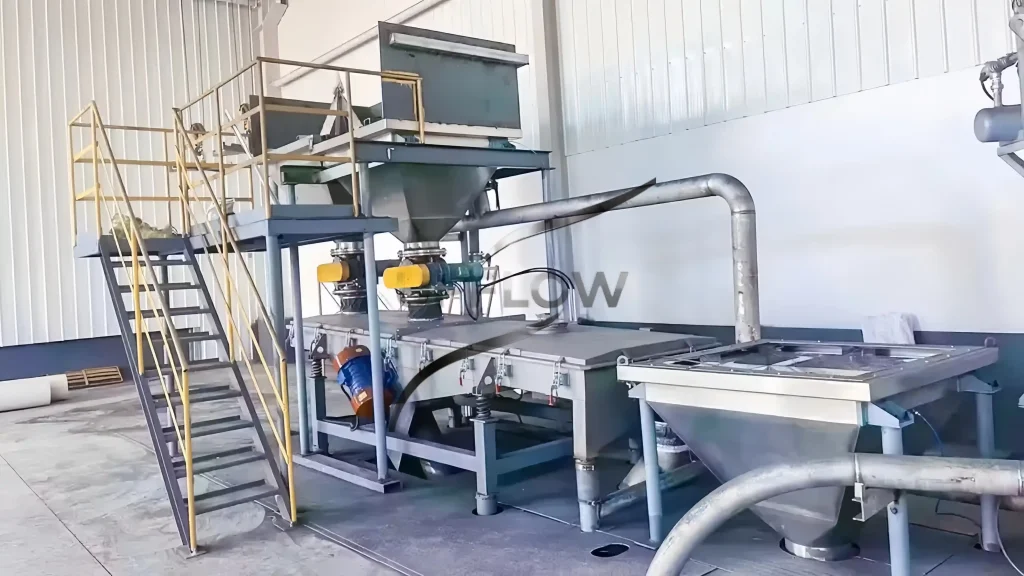
Long-Distance and Centralized Material Distribution
In modern factories, the pneumatic conveying system for carbon black handling is frequently designed as a long-distance pipeline conveying system, enabling materials to be transferred efficiently over distances of tens or even hundreds of meters without intermediate handling. This not only improves efficiency but also reduces contamination risks and simplifies plant layout.
At the same time, many production lines adopt a centralized feeding system, where carbon black is stored in a central location and then distributed to multiple process points through a network of pipelines, ensuring consistent material supply and reducing the number of feeding stations required. This centralized approach enhances process control and supports scalable production expansion.
Anti-Blocking Design and Operational Stability
Maintaining stable operation is one of the most critical aspects of a pneumatic conveying system for carbon black handling, as the material’s tendency to agglomerate can easily lead to pipeline blockage or inconsistent flow. To address this issue, advanced systems incorporate optimized airflow control, pressure regulation, and auxiliary air injection techniques that help break up material plugs and maintain continuous conveying.
In addition, intelligent monitoring systems track key parameters such as pressure, flow rate, and material levels in real time, allowing operators to identify potential issues early and ensure smooth system performance, which is essential for maintaining productivity in high-demand industrial environments.
Dust Control and Safety Considerations
A major advantage of a pneumatic conveying system for carbon black handling is its ability to provide fully enclosed, dust-free operation, which is essential for both environmental protection and workplace safety. Carbon black dust can pose serious health and explosion risks if not properly controlled, making sealed conveying systems a necessity rather than an option.
To further enhance safety, systems are designed with anti-static materials, explosion-proof components, and high-efficiency filtration units, ensuring that dust is effectively captured and contained while maintaining compliance with industrial safety standards. These features help create a safer and cleaner production environment.
Conclusion: A Reliable Solution for High-Difficulty Powder Handling
A well-designed pneumatic conveying system for carbon black handling provides an efficient, stable, and dust-free solution for transporting one of the most challenging industrial powders, combining advanced conveying technology with intelligent system design to overcome issues related to dust, blockage, and material loss. By adopting dense phase and high-pressure conveying methods along with centralized distribution systems, manufacturers can achieve improved efficiency, enhanced safety, and consistent product quality in modern industrial production.