
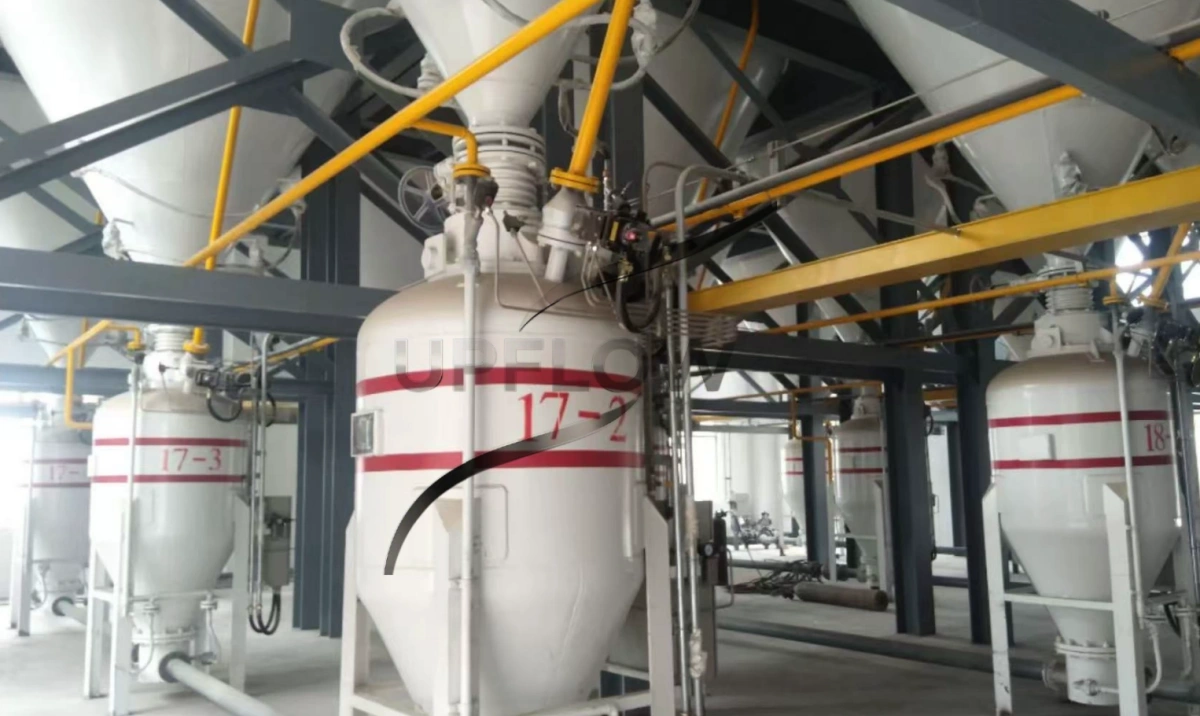
A chemical powder conveying system is essential for modern industrial production, especially in automated manufacturing environments. By adopting pneumatic conveying chemical powder, companies can achieve efficient, dust-free, and safe material handling throughout the production process. As chemical plants increasingly move toward automation and environmental compliance, pneumatic conveying systems have become a key solution for improving productivity and ensuring consistent product quality.
Challenges in Chemical Powder Handling
Handling chemical powders presents several challenges that traditional conveying systems struggle to address:
Dust generation and environmental pollution
Material contamination risks
Health and safety concerns for workers
Inconsistent feeding affecting production quality
High labor dependency
Fine powders, such as calcium carbonate, additives, pigments, and resins, require controlled and enclosed handling systems to maintain stability and safety.
Learn more: How to Reduce Dust Emissions in Pneumatic Conveying Systems for Powder Handling
What Is a Pneumatic Conveying System for Chemical Powders?
A pneumatic conveying system uses airflow (vacuum or pressure) to transport powders through sealed pipelines. It is widely used in chemical production lines due to its flexibility and efficiency.
Learn more:What Is a Pneumatic Conveying System and How Does It Work?
Compared with mechanical conveying systems, pneumatic conveying offers:
Enclosed transport (no dust leakage)
Flexible routing across complex layouts
Reduced maintenance requirements
Improved hygiene and safety
Typical Technical Parameters for Chemical Powder Conveying Systems
A well-designed system typically includes the following specifications:
Capacity: 0.5–20 ton/h
Conveying Distance: 20–300 m
Material: Chemical powders (CaCO₃, additives, pigments, resins)
Conveying Type: Vacuum / Positive pressure conveying
Pipeline Diameter: DN25–DN150
Control System: PLC automatic control
Filtration System: High-efficiency dust collector
Explosion Protection: ATEX-compliant (if required)
Parameters can be customized based on material properties and plant conditions.
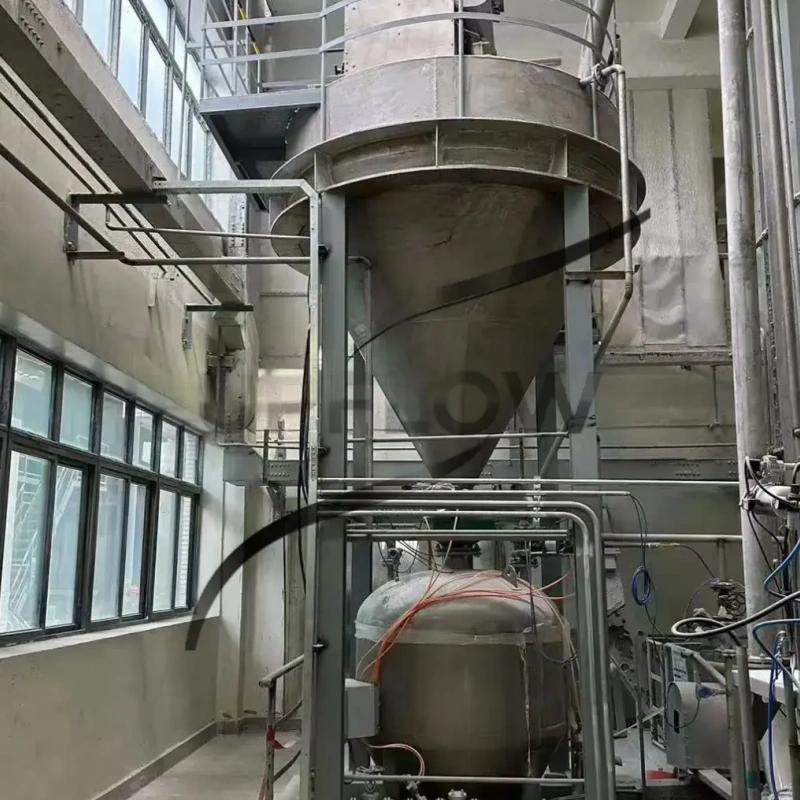
Key Components of a Chemical Powder Conveying System
1. Air Source Unit
Roots blower or vacuum pump
Provides stable conveying airflow
2. Feeding Station
Chemical powders can be fed via:
Manual bag dumping stations
Automatic feeding systems
Related equipment:Automatic Bag Emptying Machine for Powder Handling
3. Pipeline System
Stainless steel pipelines
Designed for corrosion resistance and minimal pressure loss
4. Separation & Filtration System
Cyclone separators
Filter receivers
Pulse-jet dust collectors
These components ensure clean air discharge and efficient powder recovery.
5. Receiving Units
Installed at mixers, reactors, or storage silos
Ensure continuous material supply
Related solution:Vacuum Feeder for Powder Conveying Systems
Advantages of Pneumatic Conveying for Chemical Powders
1. Dust-Free and Safe Operation
Chemical powders can be hazardous if exposed to air. Pneumatic conveying systems operate in closed pipelines, preventing dust emission and protecting workers.
According to the Occupational Safety and Health Administration, controlling airborne dust is essential for workplace safety and regulatory compliance.
2. Improved Production Efficiency
Continuous conveying
Reduced downtime
Automated feeding process
Production efficiency can increase by up to 40–60%.
3. Flexible System Design
Pneumatic conveying systems can:
Connect multiple feeding and discharge points
Adapt to complex plant layouts
Handle long-distance conveying
4. Reduced Contamination Risk
Sealed conveying ensures product purity, which is critical for chemical production.
5. Lower Labor Costs
Automation significantly reduces manual handling, lowering labor requirements and operational costs.
Applications in Chemical Production Lines
Chemical powder conveying systems are widely used in:
Additive production lines
Pigment processing plants
Resin manufacturing
Fertilizer production
Fine chemical industries
These systems ensure stable and efficient material transfer across all stages of production.
System Design Considerations
1. Material Characteristics
Particle size
Bulk density
Flowability
Moisture sensitivity
Abrasiveness
2. Conveying Method Selection
Dilute phase conveying: suitable for general powders
Dense phase conveying: ideal for fragile or abrasive materials
Learn more:Dense Phase vs Dilute Phase Pneumatic Conveying: Key Differences and How to Choose
3. Safety Requirements
Explosion-proof design (ATEX)
Anti-static pipelines
Dust control systems
4. Environmental Conditions
Temperature
Humidity
Corrosive environments
Why Choose a Customized Chemical Powder Conveying System?
Each production line has unique requirements. A customized system ensures:
Optimal pipeline layout
Energy efficiency
Compatibility with existing equipment
Scalable design for future expansion
Customized solutions also improve ROI by balancing performance and cost.
Future Trends in Chemical Powder Conveying
Smart control systems (Industry 4.0)
Remote monitoring and diagnostics
Energy-efficient conveying technology
Fully automated material handling systems
These innovations are transforming chemical production into intelligent manufacturing systems.
Conclusion
A chemical powder conveying system is essential for modern production lines. By adopting pneumatic conveying chemical powder, manufacturers can improve efficiency, ensure safety, and maintain product quality.
With increasing demand for automation and environmental compliance, pneumatic conveying systems are becoming the standard solution for chemical powder handling.
Looking for a reliable chemical powder conveying system for your production line?
Contact us today for a customized pneumatic conveying chemical powder solution tailored to your:
We provide:
✔ Free technical consultation
✔ Customized system design
✔ Turnkey installation support
Send your requirements now and get a professional solution within 24 hours!