
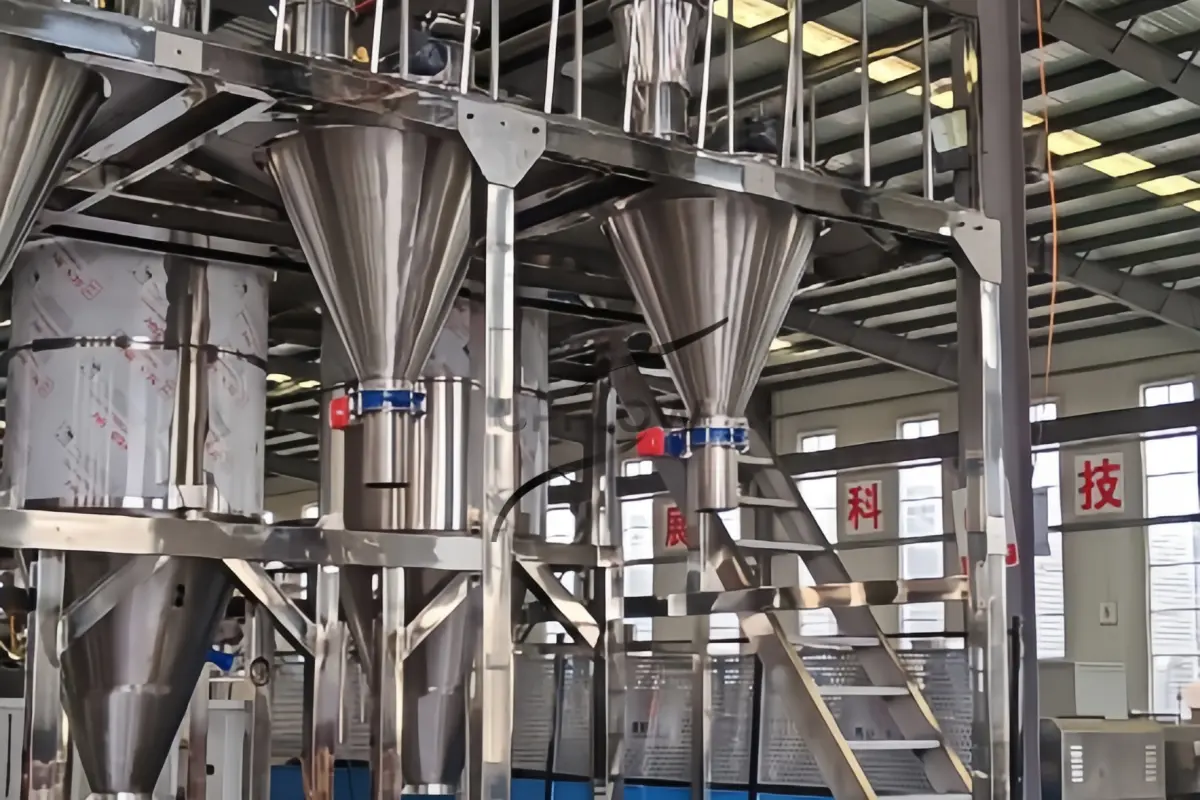
With the rapid development of battery materials, powder metallurgy, and advanced chemical processing industries, the demand for efficient and environmentally friendly powder handling technologies continues to increase. Among various bulk material handling solutions, the Cobalt Powder Pneumatic Conveying System has become an important conveying method for transferring fine metal powders safely, continuously, and automatically within modern industrial production lines.
Since cobalt powder is a fine metallic material with high density and strong dispersibility, traditional mechanical conveying equipment often faces problems such as dust leakage, material residue, and pipeline contamination. Therefore, more manufacturers are adopting enclosed pneumatic conveying technologies to improve conveying efficiency while ensuring workplace safety and environmental protection.
Material Characteristics of Cobalt Powder
Cobalt powder is a gray metallic powder widely used in lithium battery manufacturing, hard alloy production, magnetic materials, aerospace components, catalysts, and powder metallurgy industries. Due to its excellent magnetic properties, high temperature resistance, and corrosion resistance, cobalt powder has become an important raw material in many high-tech industrial applications.
The true density of cobalt powder is approximately 8.9 g/cm³, while the bulk density generally ranges from 1.5 to 3.5 t/m³ depending on particle size distribution and processing conditions. Compared with ordinary chemical powders, cobalt powder has relatively high specific gravity, fine particle size, and strong floating characteristics during transportation, which means the conveying system must maintain stable airflow and reliable sealing performance.
In addition, fine cobalt powder may generate dust during handling processes, and long-term exposure can affect the working environment. For this reason, a fully enclosed cobalt powder feeding system is often required in modern factories to reduce dust emission and improve production cleanliness.
Working Principle of a Cobalt Powder Pneumatic Conveying System
A Cobalt Powder Pneumatic Conveying System uses airflow energy to transport cobalt powder particles continuously through sealed conveying pipelines. During operation, compressed air or vacuum airflow suspends the powder particles inside the pipeline, allowing the material to move steadily from the feeding point to the receiving equipment.
Inside the conveying line, the interaction between airflow velocity, pipeline pressure, and particle movement keeps the cobalt powder in a suspended conveying state, which helps achieve stable and continuous powder transfer even in complex factory layouts.
Compared with conventional screw conveyors or bucket elevators, pneumatic conveying systems can provide cleaner conveying conditions while reducing material contamination and mechanical wear.
Main Components of a Cobalt Powder Feeding System
A modern cobalt powder pneumatic conveying system usually consists of several important components, including the air source unit, feeding device, conveying pipeline, powder separation equipment, and intelligent control system.
The air source system commonly uses Roots blowers, air compressors, or vacuum pumps to generate stable conveying airflow. Since cobalt powder has high density and fine particle characteristics, the airflow parameters must be carefully controlled to avoid excessive pipeline resistance or powder accumulation.
The feeding device is responsible for introducing cobalt powder into the conveying pipeline at a stable flow rate. Rotary valves, screw feeders, and vibrating feeders are commonly used in cobalt powder positive pressure conveying systems because they can maintain continuous feeding performance while reducing airflow fluctuation.
The conveying pipeline is generally manufactured from wear-resistant stainless steel materials, allowing the system to handle abrasive metallic powders under long-term operating conditions. At the end of the pipeline, cyclone separators or bag filter systems are installed to separate cobalt powder from conveying air efficiently.
Positive Pressure Conveying for Cobalt Powder Applications
Positive pressure conveying is one of the most commonly used conveying methods in cobalt powder handling applications. In a cobalt powder positive pressure conveying system, compressed air with pressure higher than atmospheric pressure pushes the material through the conveying pipeline toward the discharge point.
This conveying method is particularly suitable for short-distance and medium-capacity conveying conditions because it provides high conveying efficiency and relatively low energy consumption. In dense phase positive pressure conveying applications, the gas-solid ratio remains low while conveying velocity is controlled at a relatively slow speed, helping reduce material degradation and pipeline wear.
Positive pressure conveying systems are widely used for handling cobalt powder, calcium carbonate powder, metal powders, and other fine industrial materials that require stable and enclosed transportation.
Advantages of Negative Pressure Conveying Systems
For some applications requiring higher environmental cleanliness and flexible feeding positions, manufacturers may choose a negative pressure conveying solution for cobalt powder transfer. In a negative pressure conveying system, vacuum airflow generated inside the pipeline draws cobalt powder into the conveying line and transports it to the target location.
Because the entire conveying process operates under negative pressure conditions, powder leakage can be effectively minimized, making this conveying method especially suitable for battery material workshops and high-cleanliness production environments.
A cobalt powder negative pressure conveying system also offers advantages such as flexible equipment layout, improved dust control performance, and safer operation in enclosed production areas.
Features of a Fully Enclosed Cobalt Powder Conveying System
One of the biggest advantages of a closed cobalt powder conveying system is its ability to prevent powder leakage and environmental contamination during production. Since cobalt powder particles are transported entirely inside sealed pipelines, operators are exposed to less airborne dust, while the factory environment remains cleaner and safer.
In addition, enclosed conveying systems can improve material utilization rates by reducing powder loss during transportation. Combined with automatic PLC control systems and intelligent pressure monitoring devices, modern pneumatic conveying equipment can achieve continuous automated operation while lowering labor costs and maintenance frequency.
The flexible arrangement of conveying pipelines also allows the system to adapt to different factory layouts, which makes pneumatic conveying suitable for both new production lines and existing plant upgrades.
Industrial Applications of Cobalt Powder Pneumatic Conveying Systems
Today, cobalt powder pneumatic conveying systems are widely used in lithium battery manufacturing plants, powder metallurgy facilities, chemical processing industries, and advanced material production workshops.
In lithium battery production, cobalt powder feeding systems are commonly used to transport cathode material powders efficiently between storage silos, mixers, reactors, and packaging equipment. In powder metallurgy industries, enclosed powder conveying systems help maintain product purity while reducing dust contamination during production.
As industrial automation continues to develop, more manufacturers are investing in intelligent cobalt powder conveying technologies to improve production efficiency, reduce environmental impact, and support stable long-term operation.
Conclusion
The Cobalt Powder Pneumatic Conveying System is an efficient, environmentally friendly, and highly automated powder handling solution for modern industrial applications. By combining positive pressure conveying, negative pressure conveying, and fully enclosed powder transfer technology, manufacturers can achieve safer material handling, improved conveying efficiency, and cleaner production environments.
With the growing demand for advanced battery materials and fine metal powder processing, enclosed cobalt powder conveying systems will continue to play an increasingly important role in future industrial production lines.