
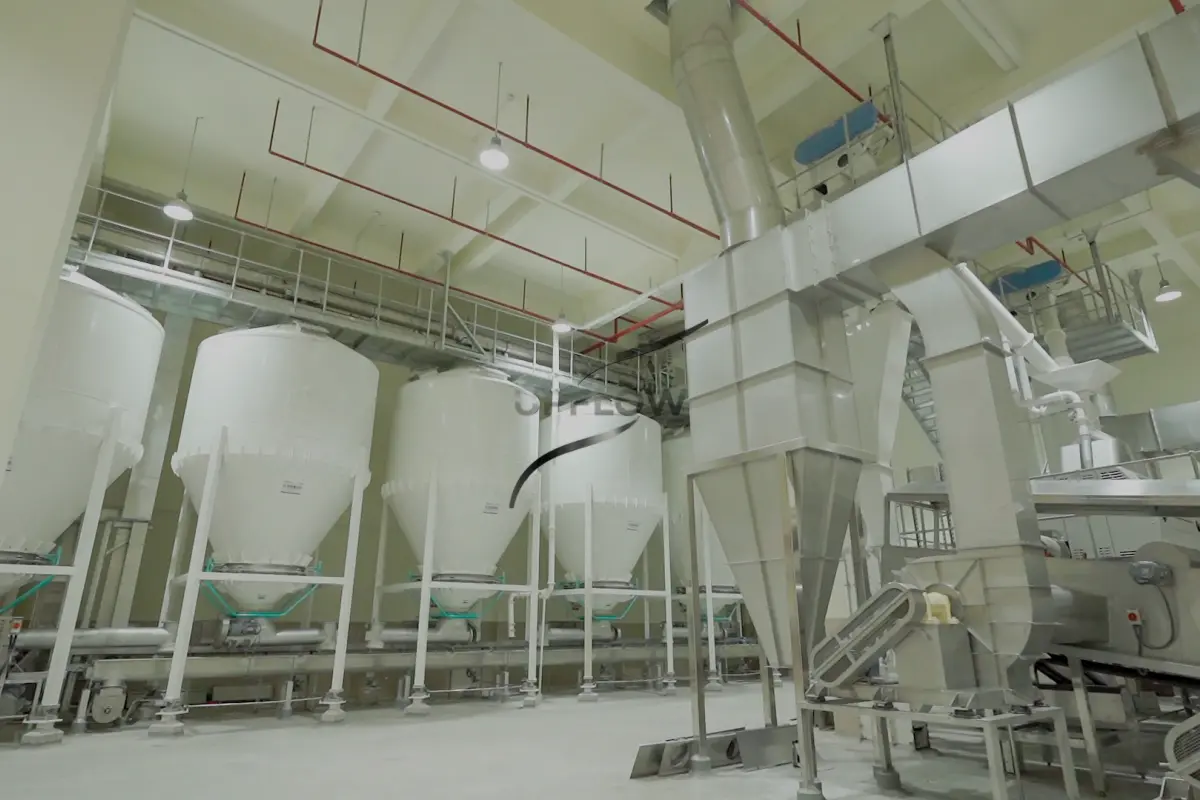
Understanding Titanium Dioxide Powder and Its Handling Challenges
Titanium dioxide (TiO₂), commonly known as titanium white, is one of the most widely used white pigments in the world. Due to its exceptional opacity, brightness, UV resistance, and weather durability, titanium dioxide powder is extensively applied in coatings, plastics, paper, inks, rubber products, and construction materials.
Material Characteristics
Titanium dioxide is generally available in two major grades: Rutile Titanium Dioxide and Anatase Titanium Dioxide. The bulk density of titanium dioxide powder typically ranges from 0.8 to 1.2 t/m³, depending on particle size and production process. Although TiO₂ is chemically stable and non-flammable, it is an extremely fine powder that can easily generate airborne dust during handling, making efficient and enclosed conveying an important requirement for manufacturers.
Why Choose a Titanium Dioxide Pneumatic Conveying System?
A titanium dioxide pneumatic conveying system is designed to transfer TiO₂ powder through enclosed pipelines using controlled airflow, eliminating many of the challenges associated with traditional mechanical conveying equipment.
Whether utilizing a positive pressure conveying system for titanium dioxide powder or a negative pressure conveying system for titanium dioxide materials, the objective remains the same: achieving clean, efficient, and reliable material transfer while protecting product quality.
Compared with conventional screw conveyors or bucket elevators, a titanium dioxide enclosed pneumatic conveying system significantly reduces material leakage and minimizes dust emissions throughout the production process.
Key Features of Titanium Dioxide Powder Conveying Systems
High-Efficiency Powder Transfer
A modern titanium dioxide pneumatic conveying system can move large quantities of powder over long distances while maintaining stable conveying performance. Through optimized airflow velocity and pipeline design, manufacturers can achieve continuous material feeding with minimal interruption.
Fully Enclosed and Dust-Free Operation
One of the most important advantages of a titanium dioxide powder pneumatic conveying system is its enclosed conveying design. Because the powder remains inside sealed pipelines throughout transportation, dust release into the workplace is greatly reduced, helping improve environmental performance and workplace safety.
Flexible Process Integration
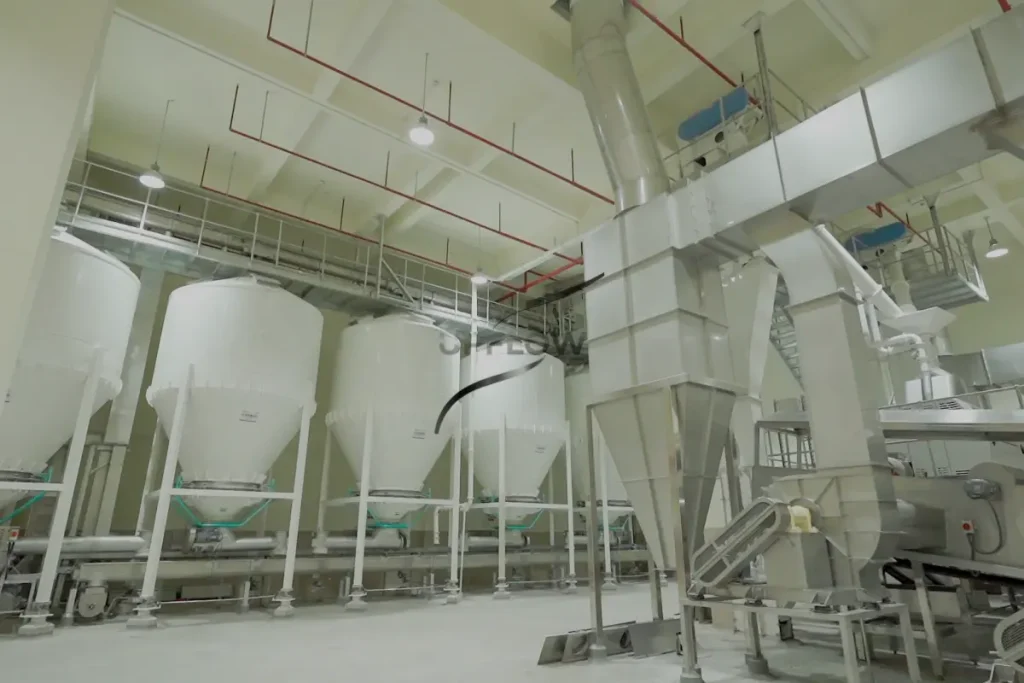
A positive pressure conveying system for titanium dioxide powder can be integrated with storage silos, mixers, packaging machines, batching systems, and production reactors. The flexible routing capability allows pipelines to travel horizontally, vertically, or around existing equipment, maximizing plant space utilization.
Reduced Maintenance Requirements
Unlike traditional mechanical conveying equipment that contains chains, belts, and rotating mechanical assemblies, a titanium dioxide pneumatic conveying system contains fewer moving parts. This results in lower maintenance costs, reduced downtime, and improved operational reliability.
Applications Across Multiple Industries
The titanium dioxide pneumatic conveying system is widely used in coating plants, plastic compounding facilities, paper manufacturing lines, rubber production factories, and pigment processing operations. As demand for cleaner manufacturing and automated material handling continues to increase, both negative pressure conveying systems for titanium dioxide powder and positive pressure pneumatic conveying systems for TiO₂ materials are becoming preferred solutions for modern industrial plants.
Conclusion
As titanium dioxide remains one of the most important industrial pigments worldwide, manufacturers are increasingly adopting advanced conveying technologies to improve productivity and environmental performance. A well-designed titanium dioxide pneumatic conveying system combines efficient material transfer, enclosed operation, low maintenance requirements, and flexible process integration, making it an ideal solution for handling titanium dioxide powder in modern production facilities.