
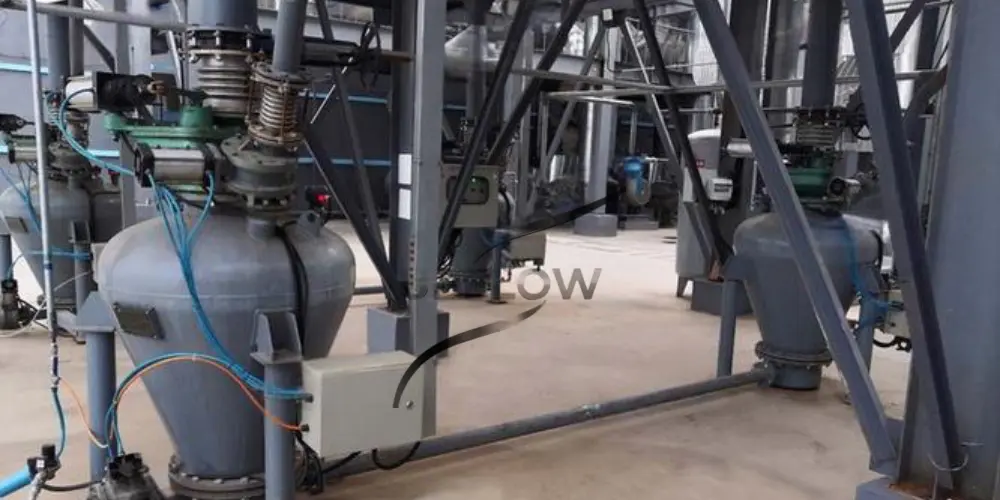
Introduction to Epoxy Resin Material Properties
Epoxy resin is a thermosetting polymer widely used in coatings, adhesives, composites, casting materials, electrical insulation, and injection molding products, due to its excellent mechanical strength, chemical resistance, and outstanding bonding performance with metals, ceramics, and other substrates. In industrial processing, epoxy resin is often handled in powdered, granular, or pre-polymer solid form, depending on production requirements and formulation design.
From a physical perspective, epoxy resin materials typically have a bulk density ranging from 0.9 to 1.4 g/cm³, and they are characterized by high adhesion tendency, sensitivity to temperature during processing, and relatively stable chemical structure under controlled conditions, although some formulations may become sticky or slightly agglomerated under humidity or heat exposure. These properties make controlled, enclosed, and automated handling systems essential for maintaining consistent production quality.
What Is an Epoxy Resin Pneumatic Conveying System?
An epoxy resin pneumatic conveying system is an advanced material transport solution that uses compressed air or controlled airflow to transfer epoxy resin powder or solid resin particles through sealed pipelines to reactors, mixers, or processing equipment.
In industrial applications, it is also referred to as a material automation system for epoxy resin powder, a high-speed airflow conveying system for epoxy resin materials, a powder conveying system for thermosetting resin handling, or a positive pressure conveying system for epoxy resin powder transport, depending on system configuration and production requirements.
By utilizing enclosed pipelines and controlled airflow, this system forms a stable gas-solid transport process, ensuring efficient, clean, and continuous material delivery in modern chemical and polymer production lines.
Compact System Design and Space Efficiency
One of the major advantages of an epoxy resin pneumatic conveying system is its compact design, which allows flexible pipeline routing and multiple feeding points within limited plant space.
Compared with traditional mechanical conveying systems, a material automation system for epoxy resin powder requires significantly less installation space while supporting longer conveying distances and more complex layouts, making it particularly suitable for modern high-density production facilities.
Easy Operation and Flexible Integration
Due to its relatively simple structural design, the epoxy resin pneumatic conveying system is easy to install, operate, and integrate with existing powder processing equipment.
As a positive pressure conveying system for epoxy resin materials, it can be quickly adapted to different production lines, offering a “plug-and-operate” style solution that reduces installation time and simplifies system expansion, especially when multiple reactors or mixing units are involved.
Hygienic and Fully Enclosed Transport Process
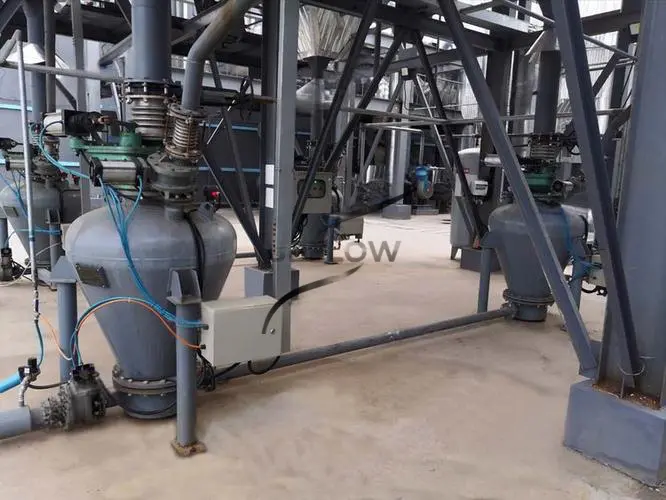
The epoxy resin pneumatic conveying system features a fully enclosed pipeline design, which ensures that materials are not exposed to external environments during transport, significantly reducing the risk of contamination.
This powder conveying system for epoxy resin materials helps maintain product purity, prevents leakage, and supports clean production standards, while stainless steel pipeline options and CIP (clean-in-place) capability further enhance hygiene performance in sensitive manufacturing environments.
Dust-Free and Safe Working Environment
Because epoxy resin is transported in a sealed pipeline system, the high-speed airflow conveying system for epoxy resin powder effectively eliminates dust emissions, creating a safer and cleaner working environment for operators.
This also removes the need for manual handling of bulk solid materials, reducing labor intensity while improving workplace safety in industrial production areas.
High Efficiency and Fast Material Transfer
Another key advantage of the epoxy resin pneumatic conveying system is its high-speed transfer capability, which is achieved through optimized airflow dynamics and compressed air driving force.
Compared with mechanical conveying, this positive pressure conveying system for epoxy resin powder materials significantly improves production efficiency by reducing transfer time between storage units and processing equipment, enabling continuous and automated feeding operations.
Low Maintenance and Long Equipment Lifespan
Since the system contains fewer moving mechanical parts, the epoxy resin pneumatic conveying system requires lower maintenance compared to traditional conveyors.
This material automation system for epoxy resin handling reduces wear on equipment such as mixers and seals, minimizes downtime, and extends overall system lifespan, making it a cost-effective solution for long-term industrial operation.
Improved Product Quality and Process Stability
By maintaining a fully enclosed transport environment, the epoxy resin pneumatic conveying system effectively prevents external contamination and material leakage, ensuring stable product quality throughout the production process.
As a powder conveying system for thermosetting epoxy resin materials, it helps manufacturers maintain consistent formulation accuracy, reduce batch variation, and improve final product performance in coatings, adhesives, and composite material applications.
Conclusion
The epoxy resin pneumatic conveying system provides a highly efficient, clean, and flexible solution for modern industrial material handling. By combining material automation systems, high-speed airflow conveying systems, powder conveying systems, and positive pressure conveying systems for epoxy resin materials, manufacturers can achieve improved production efficiency, reduced labor costs, enhanced product quality, and long-term operational stability in advanced chemical and polymer industries.