
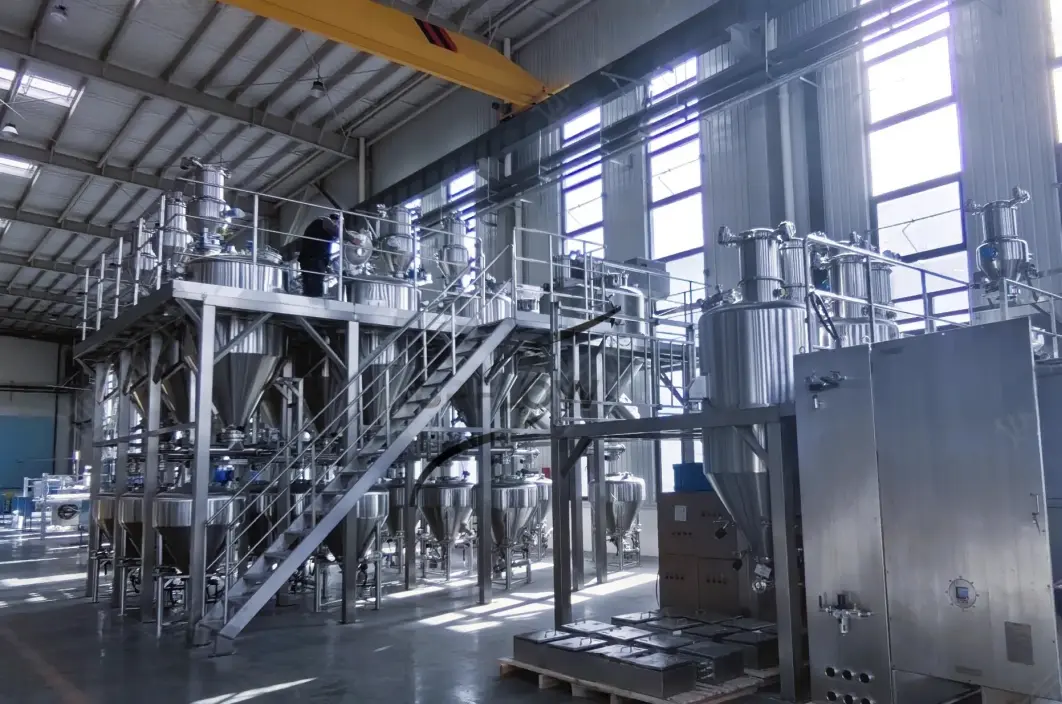
Material Overview: Properties of Phenolic Resin Powder
Phenolic resin powder is a widely used thermosetting polymer material in industries such as molding compounds, friction materials, insulation parts, and coatings, where it provides excellent heat resistance, flame retardancy, and mechanical strength after curing. In industrial processing, it is commonly handled as fine powder or micro-granular resin with additives, such as phenolic molding powder or modified phenolic resin compounds.
In terms of physical properties, phenolic resin powder typically has a bulk density ranging from 0.5 to 1.2 g/cm³, depending on formulation and filler content, and it is characterized by moderate flowability, slight hygroscopic behavior, dust generation during handling, and sensitivity to temperature and static accumulation, which makes controlled and enclosed conveying systems essential for safe and stable transport.
What Is a Phenolic Resin Powder Pneumatic Conveying System?
A phenolic resin powder pneumatic conveying system is an industrial material transport solution that uses compressed air or vacuum airflow to transfer phenolic resin powder through sealed pipelines to mixers, reactors, or storage silos.
In industrial practice, it is also referred to as a centralized conveying system for phenolic resin powder materials, a long-distance conveying system for phenolic molding powder handling, a powder conveying system manufacturer solution for thermosetting resin transport, or a pneumatic powder conveying system for phenolic resin automation, depending on system configuration and production scale.
This system forms a controlled gas-solid flow inside enclosed pipelines, enabling efficient, dust-free, and continuous transport across complex industrial layouts.
Material Characteristics and System Adaptation Requirements
When designing a phenolic resin powder pneumatic conveying system, understanding material behavior is critical for selecting between different conveying modes such as dilute phase, dense phase, or vacuum transport.
Fine phenolic resin powders tend to generate dust and are better suited for vacuum conveying systems or central powder conveying systems, especially in multi-point feeding applications. Slightly granular phenolic resin materials with better flowability can be handled using positive pressure conveying systems for long-distance transport, while sticky or modified resin powders may require dense phase conveying systems to reduce velocity and prevent pipe blockage.
These characteristics directly influence system design choices such as pipeline diameter, air velocity, and feeding equipment selection.
System Selection Based on Production Conditions
Choosing the right phenolic resin powder pneumatic conveying system depends heavily on process requirements such as conveying distance, throughput, and plant layout.
For short-distance and low-capacity operations, a vacuum conveying system for phenolic resin powder materials is commonly used due to its simplicity and dust-free operation. For medium to long-distance transport between workshops or storage areas, a long-distance conveying system for phenolic molding powder using positive pressure is more efficient and energy-saving.
In large-scale continuous production lines, a central powder conveying system for phenolic resin processing plants is often preferred because it supports multi-point feeding and automated distribution with higher stability and lower long-term operating costs.
Types of Pneumatic Conveying Systems for Phenolic Resin Powder
Different conveying technologies can be applied depending on production needs:
A vacuum conveying system for phenolic resin powder is ideal for multi-point feeding and clean environments, offering dust-free operation and simple structure, although it is limited in distance and capacity.
A positive pressure conveying system for phenolic resin materials provides higher capacity and longer conveying distances, making it suitable for centralized feeding and large-scale production lines.
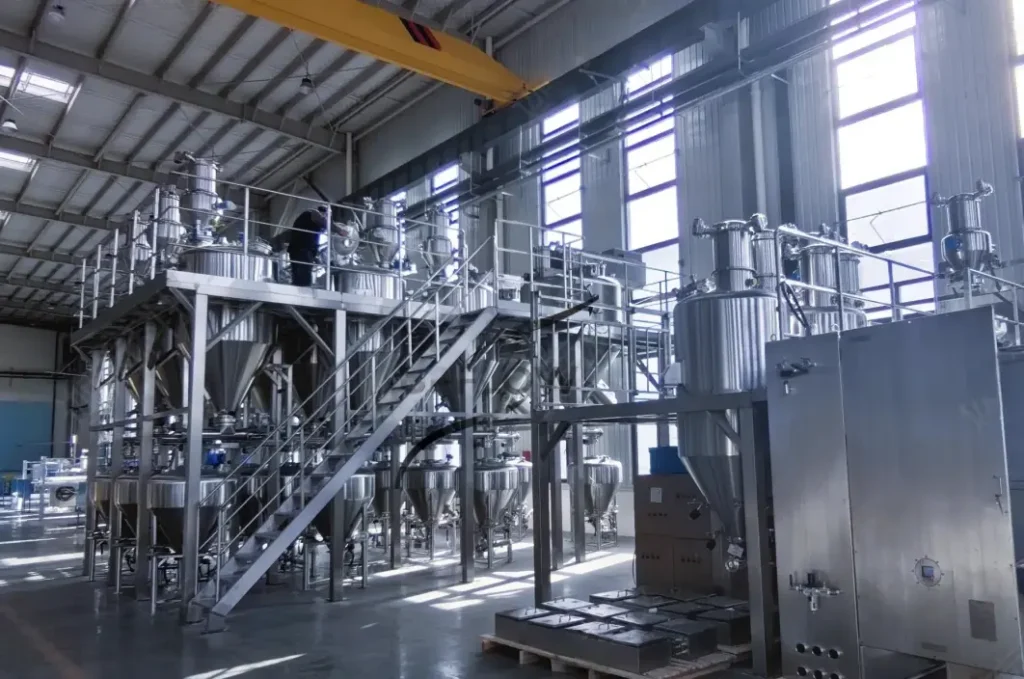
A dense phase conveying system for phenolic powder transport operates at low velocity, reducing pipe wear and improving stability, especially for high-density or modified resin powders.
A combined conveying system for phenolic resin powder materials integrates vacuum feeding and positive pressure transport, making it suitable for complex plant layouts and long-distance industrial applications.
Additional Engineering Considerations
When designing a phenolic resin powder pneumatic conveying system, environmental safety and operational reliability must be prioritized. Dust collection systems such as bag filters or cyclone separators are essential to ensure clean exhaust and regulatory compliance.
For explosive or static-sensitive phenolic resin powders, a powder conveying system manufacturer solution with explosion-proof design is required, including anti-static pipelines, explosion vents, and certified safety components.
Maintenance cost and system complexity should also be considered, where simpler vacuum conveying systems are preferred for small enterprises, while large-scale factories benefit more from energy-efficient dense phase systems provided by experienced pneumatic conveying system manufacturers.
Material Testing and System Optimization
For phenolic resin powders with uncertain flow properties, such as high viscosity or agglomeration tendency, it is highly recommended to conduct pilot testing with a professional phenolic resin powder pneumatic conveying system manufacturer before final system selection.
Through testing, key parameters such as air velocity, pipeline diameter, and blower capacity can be optimized to ensure stable operation and prevent issues such as blockage or excessive energy consumption. UPFLOW, as an experienced powder conveying system manufacturer, provides customized solutions for a wide range of industrial materials, ensuring efficient, stable, and cost-effective conveying performance.
Conclusion
The phenolic resin powder pneumatic conveying system provides a flexible and reliable solution for modern industrial material handling. By integrating centralized conveying systems, long-distance conveying systems, powder conveying systems, and vacuum conveying systems for phenolic resin powder materials, manufacturers can achieve optimized production efficiency, improved safety, and reduced operational costs in thermosetting resin processing industries.