
Introduction to Foaming Agent Materials
Foaming agents are widely used in the plastics, coatings, and construction materials industries, where they play a critical role in reducing material density, improving insulation performance, and lowering overall production costs. Common materials include azodicarbonamide (ADC) foaming agent powder, sodium bicarbonate-based foaming agents, and endothermic or exothermic foaming additives, which are typically handled in fine powder or micro-granular form.
From a physical perspective, foaming agents usually have a bulk density ranging from 0.3 to 0.8 g/cm³, depending on formulation and particle structure, and are characterized by low density, high dispersibility, and a tendency to agglomerate or generate dust during handling. These properties make traditional mechanical conveying less suitable, especially in large-scale automated production, where stable and clean material transfer is essential.
What Is a Foaming Agent Pneumatic Conveying System?
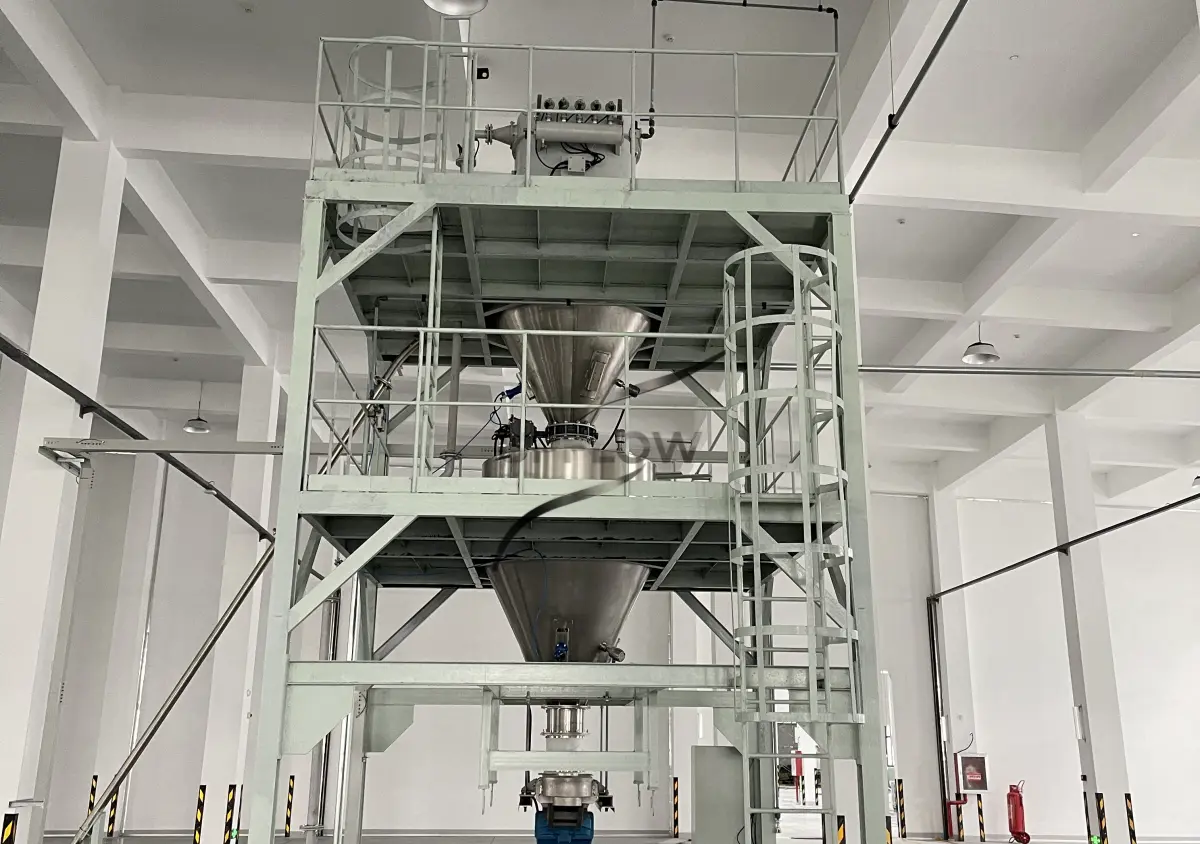
A foaming agent pneumatic conveying system is an advanced material handling solution that uses airflow to transport lightweight foaming agent powders such as ADC and sodium bicarbonate through enclosed pipelines from storage silos to mixers or processing units.
In industrial applications, it is also known as a particle conveying system for foaming agent granules, a powder conveying system for azodicarbonamide foaming agent materials, or an air-driven feeding system for plastic foaming additives, depending on system configuration and process requirements.
By forming a stable air-solid flow inside pipelines, this air conveying system for foaming agent powder materials enables continuous, efficient, and dust-free transport, ensuring product consistency and environmental compliance.
High-Efficiency Material Conveying Performance
One of the key advantages of a foaming agent pneumatic conveying system is its ability to achieve high conveying efficiency through optimized airflow dynamics. By using controlled high-speed air streams, foaming agent powders remain suspended within the pipeline, allowing rapid and continuous transfer to production lines.
Compared with conventional mechanical conveying, a powder conveying system for ADC foaming agent materials can handle long-distance transport with lower energy consumption and reduced time loss, making it particularly suitable for large-scale plastic manufacturing operations that require consistent and reliable feeding.
Preventing Material Loss and Contamination
Foaming agent powders are lightweight and prone to dust formation, which can lead to material loss and environmental contamination if not properly handled. A fully enclosed pneumatic conveying system for foaming agent powder effectively prevents material exposure to the external environment, ensuring that the entire conveying process remains clean and controlled.
This type of air conveying system for sodium bicarbonate foaming agent powder not only maintains material purity and performance but also significantly reduces dust emissions, helping manufacturers meet modern environmental and safety standards.
Precise Feeding and Process Control
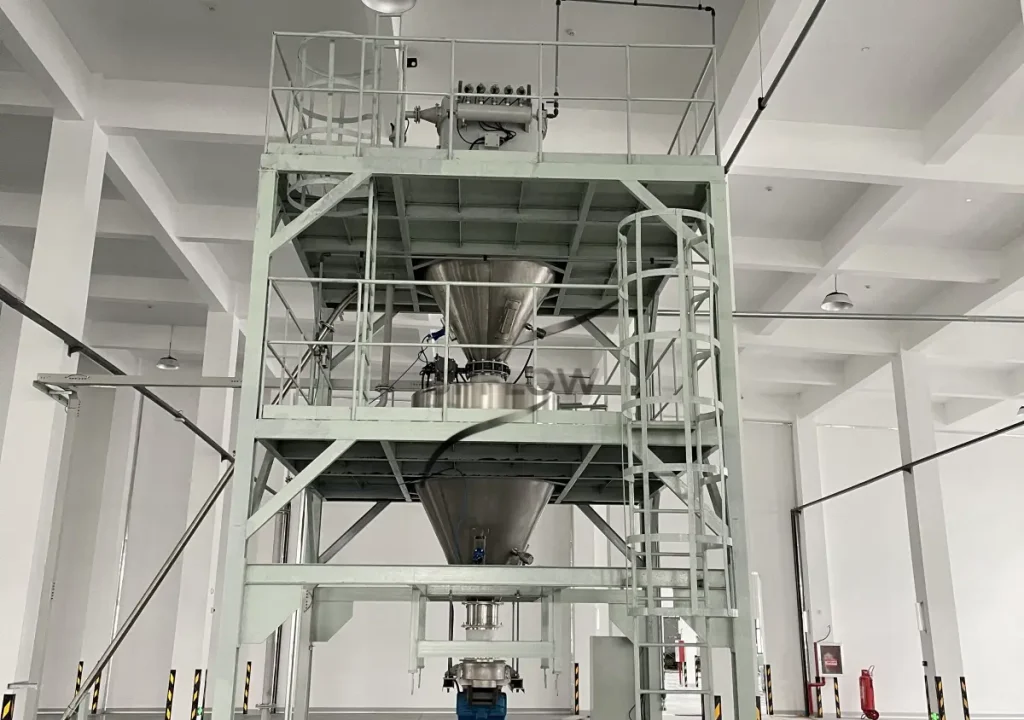
In plastic production, accurate dosing of foaming agents is essential for achieving consistent product quality. A foaming agent powder feeding system with pneumatic conveying technology integrates advanced automation and control systems, allowing precise adjustment of material flow based on real-time production requirements.
By monitoring parameters such as airflow velocity, pressure, and feed rate, the system ensures stable and uniform material delivery, avoiding issues caused by overfeeding or insufficient dosing in powder conveying systems for plastic foaming additives.
Reduced Labor Costs and Improved Safety
With increasing industrial automation, the foaming agent pneumatic conveying system reduces the need for manual handling, thereby lowering labor costs and minimizing human error. The enclosed and automated nature of the system also improves workplace safety by reducing operator exposure to fine powders and airborne dust.
As a modern feeding system for foaming agent powder materials, it supports safer working conditions while enhancing overall production efficiency in plastic manufacturing plants.
Conclusion
The foaming agent pneumatic conveying system offers a high-efficiency, environmentally friendly, and safe solution for handling lightweight chemical additives in the plastics industry. By combining particle conveying systems, powder conveying systems, air conveying systems, and automated feeding systems for foaming agent materials, manufacturers can achieve improved productivity, reduced material loss, and better process control, ultimately strengthening their competitiveness in an increasingly demanding market.