
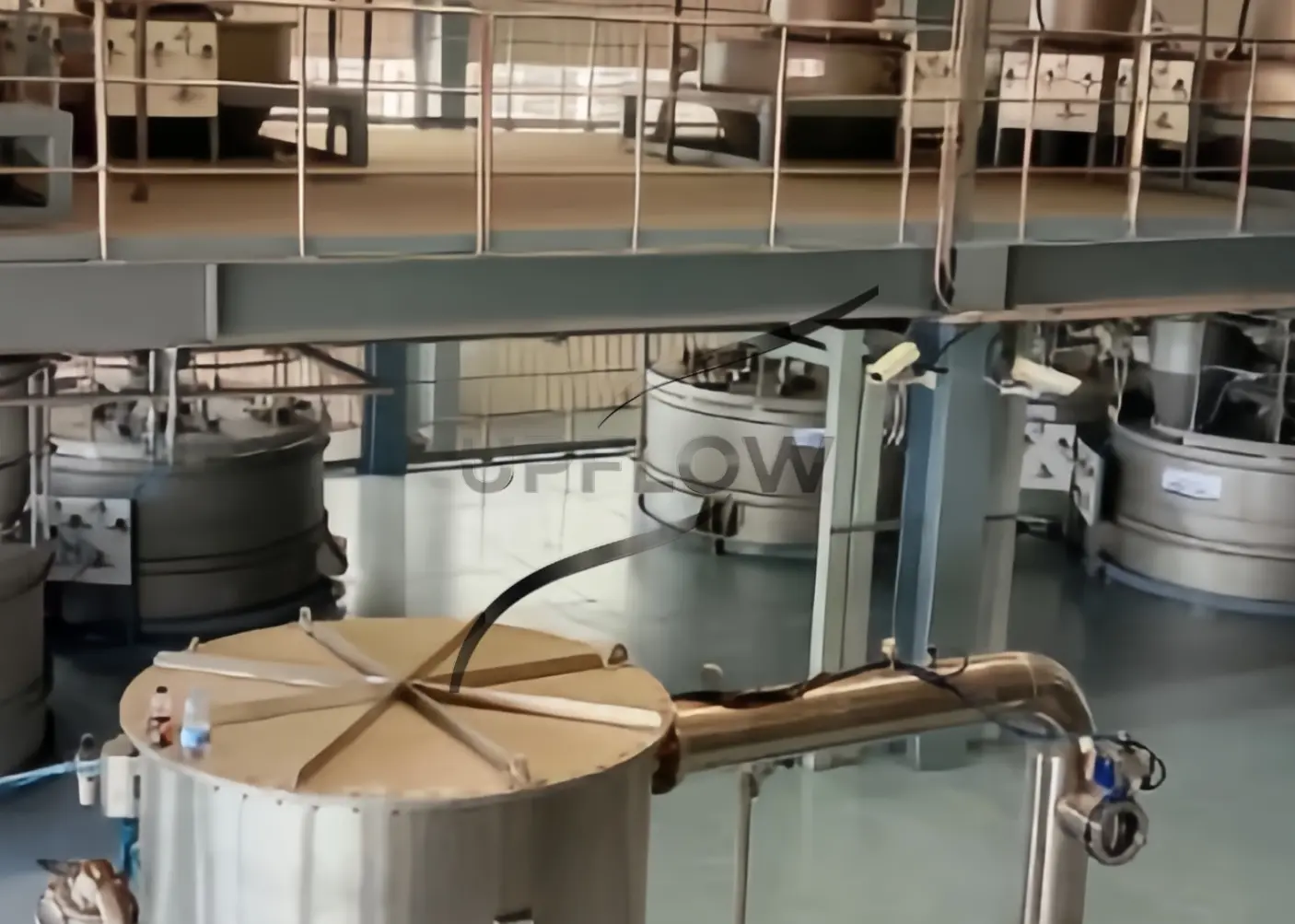
A properly designed lithium battery material conveying system is critical for preventing contamination and moisture during powder handling and transfer. In lithium battery manufacturing, materials such as lithium iron phosphate, NCM cathode powders, and graphite anodes are extremely sensitive to metal impurities, humidity, and environmental exposure. Even trace contamination or slight moisture ingress can reduce battery performance, affect consistency, and increase safety risks.
For this reason, conveying systems are no longer simple transport equipment—they are essential process systems that ensure material purity, dryness, and stability throughout production. This article explains how to design a lithium battery conveying system that minimizes contamination and moisture while improving efficiency and reliability.
Industry Background
The rapid growth of electric vehicles and energy storage has significantly increased demand for high-quality lithium battery materials. These powders must be processed under strict conditions to maintain chemical stability and performance consistency.
Unlike conventional bulk materials, lithium battery powders present several challenges:
Sensitivity to metal contamination: Iron, copper, and zinc particles must be strictly avoided
Moisture sensitivity: Water can degrade materials and trigger unwanted reactions
Fragility and abrasiveness: Powders may break under high velocity while also wearing equipment
Because of these factors, lithium battery plants are increasingly adopting fully enclosed, dust-free, and low-humidity conveying systems, similar to food and pharmaceutical production standards.
Recommended reading: Advanced Pneumatic Conveying System for Lithium Battery Materials
System Solution
A reliable lithium battery conveying system must combine multiple engineering strategies rather than relying on a single piece of equipment.
1. Fully Enclosed Conveying
All material transfer should take place in sealed pipelines and equipment to prevent:
External contamination
Dust leakage
Cross-contamination between batches
This is typically achieved using systems such as a Vacuum Conveyor or a customized Pneumatic Conveying System.
2. Moisture Control with Dry Gas
Moisture is one of the most critical risks in lithium battery production.
Effective solutions include:
Using dry nitrogen as the conveying medium
Implementing closed-loop gas circulation systems
Maintaining dew point below -40°C to -60°C
This ensures materials remain completely dry during transfer.
3. Anti-Metal Contamination Design
Preventing metal contamination requires careful material selection:
Use 304/316L stainless steel for contact parts
Apply ceramic lining in high-wear areas such as elbows
Avoid galvanized or zinc-coated components
Use special coatings or non-metallic interfaces where necessary
The goal is to eliminate any source of metal particle generation.
4. Low-Velocity Conveying
High-speed conveying can damage fragile powders and increase wear.
For lithium battery materials:
Dense phase or low-velocity conveying (2–8 m/s) is preferred
Reduces particle breakage
Minimizes pipeline wear
Improves product consistency
5. Intelligent Monitoring
Modern systems integrate automation to ensure stability:
Pressure and flow monitoring
Oxygen and humidity sensors
Alarm and interlock systems
Data logging for process control
Automation reduces manual intervention and improves reliability.
System Components
A complete lithium battery material conveying system includes several key components:
1. Bag Emptying System
Raw materials are often supplied in bags. A sealed feeding system such as an Automatic Bag Emptying Machine ensures:
Dust-free unloading
Reduced operator exposure
Stable feeding into the system
Related article: Automatic Bag Emptying and Feeding in Pneumatic Conveying Systems
2. Conveying Equipment
Depending on layout and capacity:
Vacuum Conveyor – ideal for short distances and high cleanliness
Pneumatic Conveying System – suitable for longer distances and centralized systems
3. Feeding and Dosing Units
Accurate batching is essential in lithium battery production. Systems often include:
Weighing hoppers
Screw feeders
Loss-in-weight feeders
High precision ensures consistent product quality.
4. Pipeline and Valves
These components must meet strict requirements:
Wear-resistant (ceramic or coated)
High sealing performance
Anti-static design
Corrosion resistance
5. Dust Collection and Filtration
To maintain a clean environment:
Cartridge filters or bag filters are used
Cyclone separators may be added
Central dust collection systems improve plant cleanliness
External standards such as Occupational Safety and Health Administration guidelines can help guide dust control design.
6. Drying and Gas Control Systems
For sensitive materials, systems may include:
Nitrogen supply units
Dew point control systems
Oxygen analyzers
Vacuum drying equipment
These components ensure a stable and dry conveying environment.
Design Considerations
Designing a lithium battery conveying system requires a detailed understanding of process conditions.
1. Material Properties
Key parameters include:
Particle size and shape
Bulk density
Moisture content
Flowability and abrasiveness
Fine powders require better sealing and filtration, while abrasive materials require wear-resistant design.
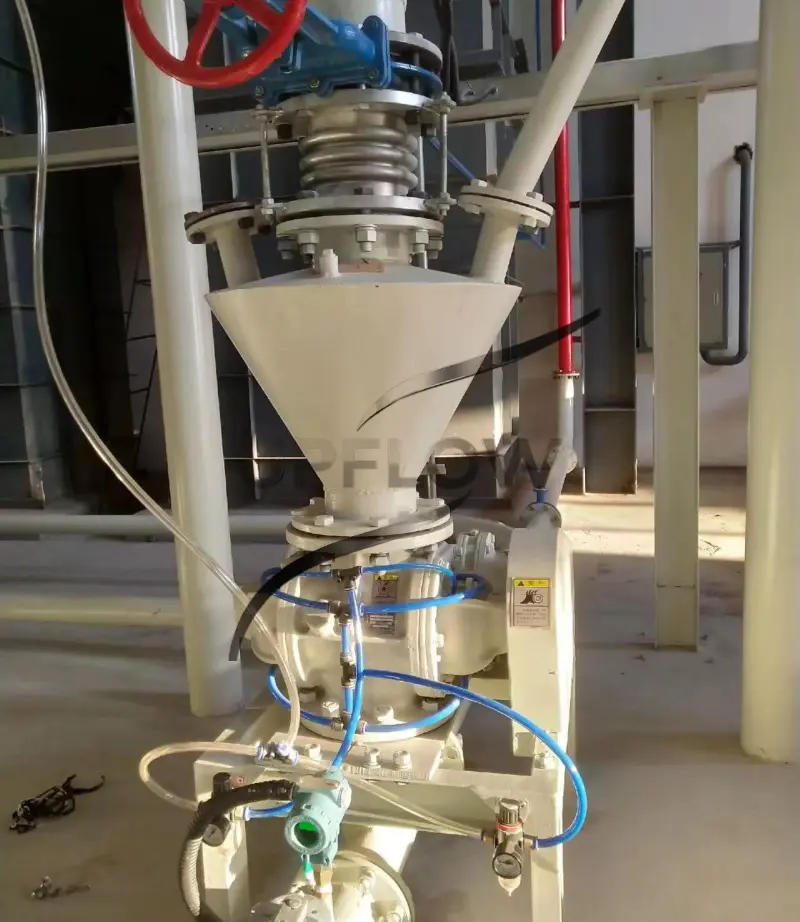
2. Conveying Distance and Capacity
System selection depends on layout:
Short distance: vacuum conveying
Medium to long distance: dense phase pneumatic conveying
High capacity: customized pressure systems
3. Environmental Requirements
Depending on the material:
Explosion-proof design may be required
Inert gas protection may be necessary
Humidity control is often critical
4. Purity Requirements
High-end battery materials require extremely low contamination levels, which affects:
Material selection
Surface treatment
Sealing design
Monitoring systems
5. System Testing
Material testing is strongly recommended before final design. This helps determine:
Optimal conveying velocity
Pipeline diameter
Gas flow requirements
Suggested reading:Dense Phase vs Dilute Phase Pneumatic Conveying: Key Differences and How to Choose
Case Example
A lithium battery cathode material manufacturer in Southeast Asia experienced quality issues caused by contamination and moisture.
Challenges
Dust leakage at feeding points
Metal contamination from worn pipelines
Moisture fluctuations affecting material quality
Solution
A customized conveying system was implemented with:
Enclosed pneumatic conveying system
Nitrogen-based dry conveying
Ceramic-lined pipelines
Automatic bag emptying station
Central dust collection system
PLC-based monitoring
Results
Contamination significantly reduced
Moisture-related defects eliminated
Production efficiency increased by over 30%
Maintenance requirements reduced
This case demonstrates that conveying system design directly impacts product quality in lithium battery production.
Conclusion
Designing a lithium battery material conveying system requires a balance between contamination control, moisture prevention, gentle material handling, and operational efficiency.
A well-designed system should:
Use fully enclosed conveying
Maintain low humidity conditions
Prevent metal contamination
Protect material integrity
Integrate intelligent monitoring
As lithium battery manufacturing continues to evolve, conveying systems will play an increasingly important role in ensuring product quality and process stability.
If you are planning a lithium battery production line or upgrading your material handling system, choosing the right conveying solution is essential.
At Upflow Industry, we provide customized solutions including:
Vacuum Conveyors
Pneumatic Conveying Systems
Automatic Bag Emptying Machines
Contact us today to discuss your project and get a tailored solution.