
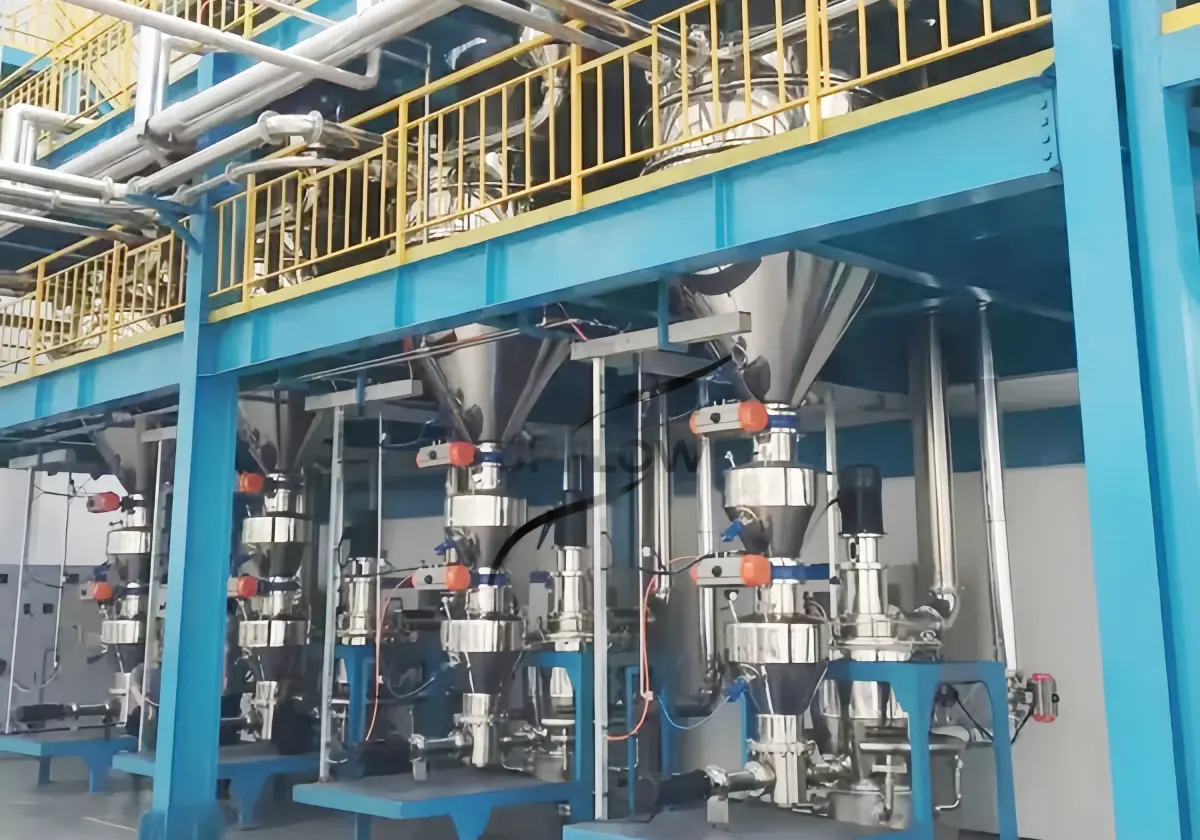
Material Profile: Lithium Cobalt Oxide (LCO) Characteristics and Classification
Lithium Cobalt Oxide (LCO), also known as LiCoO₂ or lithium cobaltate, is a high-value cathode material widely used in lithium-ion battery manufacturing, especially for consumer electronics and high-performance battery applications.
Due to its fine particle size, high material value, strict contamination requirements and sensitivity to process conditions, LCO powder requires a reliable and enclosed material transfer solution during battery production.
A properly designed Lithium Cobalt Oxide Pneumatic Conveying System helps manufacturers achieve clean, stable and automated powder transportation between storage, mixing, coating and production processes while reducing material loss and dust generation.
Challenges of Handling Lithium Cobalt Oxide Powder
Lithium cobalt oxide powder presents several challenges during industrial transportation.
Because LCO is a fine and valuable cathode material, traditional mechanical transfer methods may create risks including contamination, material loss and unstable feeding.
During battery production, manufacturers usually require:
Closed powder transfer
Low dust generation
Accurate feeding control
Minimal material degradation
Easy cleaning and maintenance
For these reasons, pneumatic conveying has become an effective solution for lithium battery material handling applications.
Overview of Lithium Cobalt Oxide Pneumatic Conveying System
A lithium cobalt oxide pneumatic conveying system is an advanced material handling solution that uses airflow energy to transport LCO powder through enclosed pipelines, ensuring efficient, safe, and automated material transfer.
In industrial applications, it is also known as a central conveying system for lithium cobalt oxide powder, a long-distance conveying system for LCO cathode materials, a powder transfer system for lithium cobalt oxide handling, or a pneumatic material conveying system for lithium battery production, depending on system design and process requirements.
By forming a stable gas-solid two-phase flow, this material conveying system for lithium cobalt oxide powder enables continuous, dust-free, and high-efficiency transport across various industrial processes.
How Does a Lithium Cobalt Oxide Pneumatic Conveying System Work?
Depending on production requirements, LCO powder conveying systems can be designed using vacuum conveying or positive pressure conveying technology.
Vacuum conveying is commonly selected for applications requiring clean operation, multiple feeding points and contamination control.
Positive pressure conveying is suitable for longer distances and higher capacity powder transfer.
The final conveying method depends on factors such as:
Conveying distance
Required capacity
Powder characteristics
Plant layout
Production process
System Design Considerations for LCO Powder Conveying
Designing a Lithium Cobalt Oxide Pneumatic Conveying System requires careful evaluation of material properties and production conditions.
Key design factors include:
Material Characteristics
Particle size, bulk density, moisture sensitivity and abrasiveness influence conveying performance.
Purity Requirements
Battery-grade LCO requires an enclosed conveying process to minimize contamination.
Feeding Accuracy
Stable feeding is essential for downstream mixing and coating processes.
Equipment Material Selection
Stainless steel construction and easy-clean design are commonly considered for battery material applications.
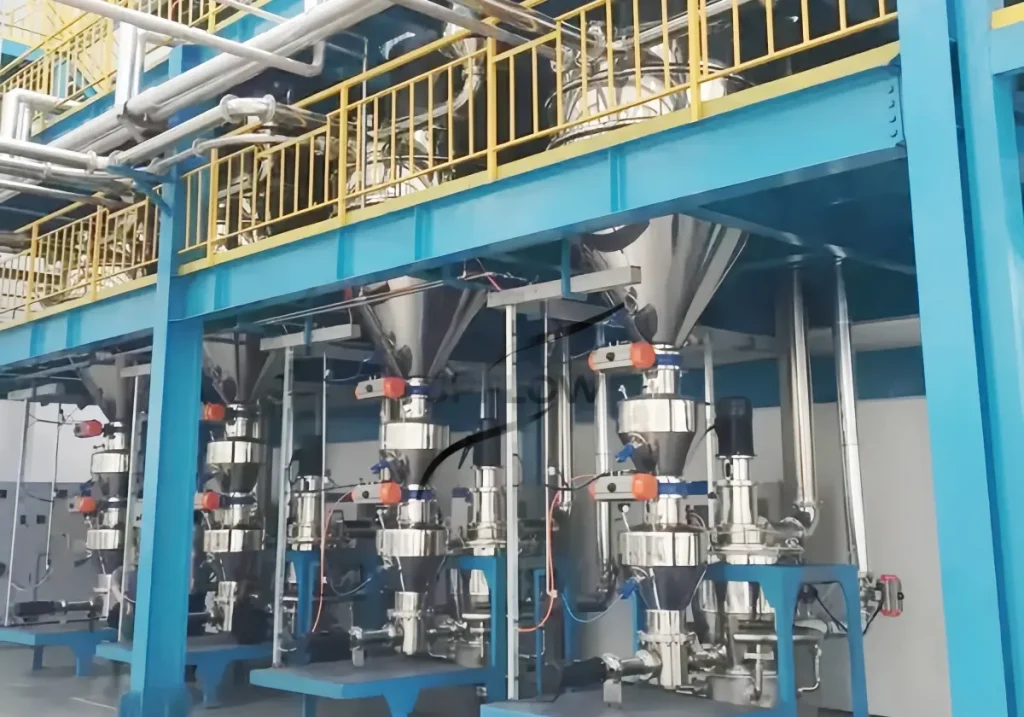
Application Scenarios Across Industries
The lithium cobalt oxide pneumatic conveying system is widely used in lithium battery manufacturing, where it supports the transport of cathode materials from storage silos to mixing, coating, or packaging processes.
Beyond battery production, this material conveying system for lithium cobalt oxide powder is also applied in chemical processing, energy storage systems, and even mining and metallurgical operations, where efficient and clean handling of fine powders is required.
As a central conveying system for LCO cathode powder, it enables automated feeding and precise dosing, improving production consistency and reducing manual intervention.
Key Advantages of LCO Pneumatic Conveying Systems
The lithium cobalt oxide pneumatic conveying system offers several advantages that make it a preferred choice for modern industrial material handling.
First, as a fully enclosed powder conveying system for lithium cobalt oxide materials, it ensures a dust-free environment, which is critical for maintaining product purity and protecting worker health. Second, the system provides high conveying efficiency, allowing rapid material transfer and improved production throughput.
In addition, as a long-distance conveying system for LCO powder, it offers flexible pipeline layout and reduced space requirements, making it suitable for complex plant designs. The system also supports automated operation, functioning as a powder transfer system for lithium cobalt oxide materials, which reduces labor costs and enhances process stability.
Sustainability and Future Development
The lithium cobalt oxide pneumatic conveying system contributes to more sustainable industrial operations by reducing material loss, lowering energy consumption, and minimizing environmental impact.
As lithium-ion battery demand continues to grow, particularly in consumer electronics and energy storage, the need for efficient and clean material handling solutions is increasing. Advanced systems are now evolving toward intelligent conveying technologies, integrating automation, real-time monitoring, and predictive maintenance.
Conclusion
The lithium cobalt oxide pneumatic conveying system provides a reliable, efficient, and environmentally friendly solution for transporting high-value cathode materials. By integrating central conveying systems, long-distance conveying systems, mixed conveying systems, and powder transfer systems for lithium cobalt oxide materials, manufacturers can achieve improved productivity, enhanced product quality, and optimized operational efficiency in modern industrial environments.
FAQ
What is lithium cobalt oxide (LCO)?
Lithium cobalt oxide (LCO), also called LiCoO₂ or lithium cobaltate, is a cathode material mainly used in lithium-ion batteries.
Why is pneumatic conveying suitable for LCO powder?
Pneumatic conveying provides enclosed transportation, reduced dust generation and flexible layout options for handling fine battery powders.
Which conveying system is better for LCO powder, vacuum or pressure conveying?
The selection depends on conveying distance, capacity requirements, material characteristics and production layout.
Can LCO conveying systems be integrated with battery production lines?
Yes. Pneumatic conveying systems can connect storage, feeding, weighing and mixing processes in battery manufacturing.