
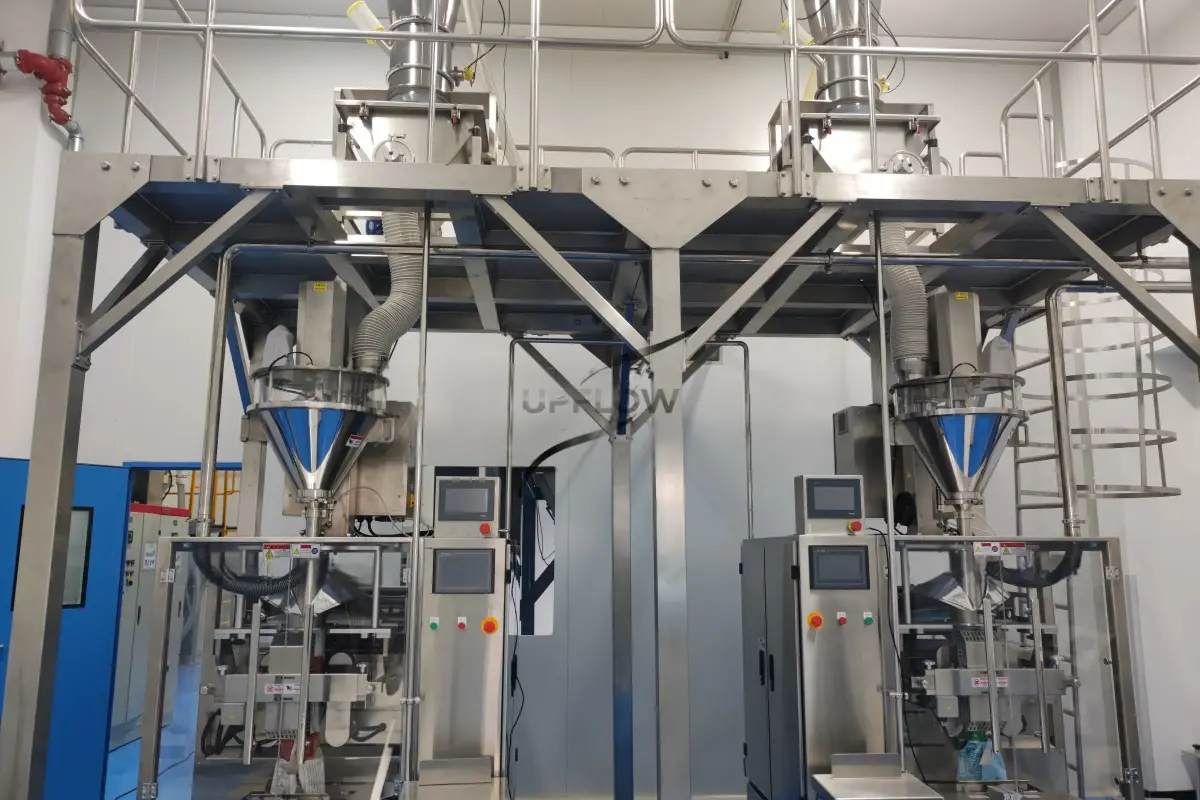
As pharmaceutical manufacturing continues to move toward higher levels of automation, containment, and regulatory compliance, the handling of pharmaceutical intermediates has become a critical factor influencing production efficiency, product quality, and workplace safety. In modern pharmaceutical plants, where contamination control and material traceability are mandatory requirements, the pharmaceutical intermediate pneumatic conveying system has emerged as an advanced solution for achieving enclosed, automated, and highly efficient powder transportation throughout the production process.
Pharmaceutical Intermediates Material Characteristics
Pharmaceutical intermediates, often referred to as drug intermediates, API intermediates, or pharmaceutical raw material intermediates, are chemical compounds produced during the synthesis of active pharmaceutical ingredients (APIs). These materials serve as essential transitional substances in pharmaceutical manufacturing and are subsequently converted into final active ingredients through further chemical reactions and purification processes.
Unlike standardized chemical products, pharmaceutical intermediates do not have a single universal chemical formula because their molecular structures vary depending on the target drug being manufactured. Common pharmaceutical intermediates may include heterocyclic compounds, amino acid derivatives, organic acids, esters, alcohols, and various fine chemical powders.
The bulk density of pharmaceutical intermediate powders typically ranges from 0.35 to 1.20 g/cm³ depending on particle size distribution, moisture content, and crystallization characteristics. These materials often exhibit properties such as fine particle size, dust generation tendency, electrostatic sensitivity, hygroscopic behavior, and strict contamination control requirements.
Because even minor contamination can compromise product quality and regulatory compliance, pharmaceutical manufacturers increasingly rely on a pharmaceutical intermediate pneumatic conveying system to ensure safe and controlled powder handling operations.
Why Pharmaceutical Intermediates Require Enclosed Conveying Technology
The transportation of pharmaceutical intermediates presents unique challenges compared with conventional industrial powders. Many intermediates are highly valuable, sensitive to environmental exposure, and subject to strict GMP regulations governing production conditions and operator safety.
Traditional mechanical conveying equipment may expose powders to the surrounding environment, increasing the risk of contamination, material loss, and cross-batch mixing. To address these challenges, the pharmaceutical intermediate pneumatic conveying system provides a fully enclosed transfer method that significantly improves hygiene and process control.
Many pharmaceutical facilities implement a pharmaceutical intermediate dust-free conveying system to eliminate airborne powder emissions and protect both products and operators. By maintaining complete containment during transportation, manufacturers can meet increasingly stringent environmental and occupational safety requirements.
At the same time, a pharmaceutical intermediate material conveying system enables seamless integration between reactors, dryers, mills, blenders, and packaging equipment, creating a fully automated production workflow.
Working Principle of a Pharmaceutical Intermediate Pneumatic Conveying System
The pharmaceutical intermediate pneumatic conveying system utilizes controlled airflow generated by vacuum pumps or low-pressure blowers to transport powders through enclosed stainless-steel pipelines. The system can be configured according to process requirements, powder characteristics, and containment levels.
In many pharmaceutical applications, a pharmaceutical intermediate dust-free conveying system is combined with high-efficiency filtration technology to prevent powder leakage and maximize material recovery. This approach ensures compliance with cleanroom standards while maintaining consistent product quality.
Meanwhile, the pharmaceutical intermediate powder transfer system facilitates the movement of intermediates between different processing stages without exposing the material to the surrounding environment. This not only reduces contamination risks but also improves operational efficiency.
A modern pharmaceutical intermediate automatic feeding system can further enhance productivity by automatically transferring powders to downstream equipment according to predefined production parameters, minimizing manual intervention and reducing the possibility of human error.
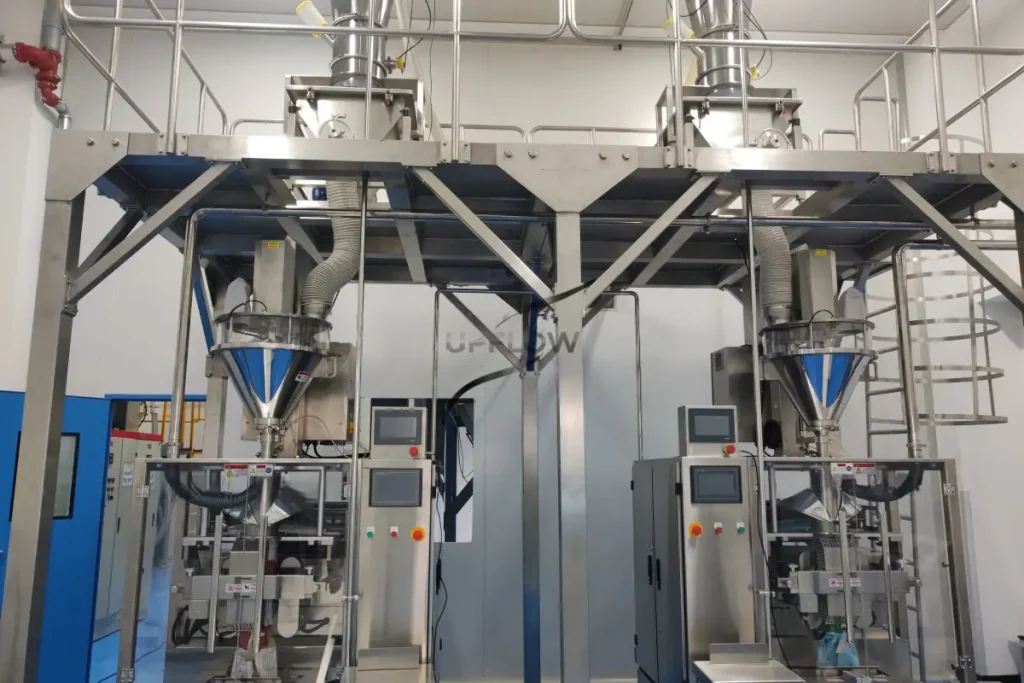
Key Components of a Pharmaceutical Intermediate Conveying Installation
A complete pharmaceutical intermediate pneumatic conveying system typically includes vacuum receivers, storage hoppers, feeding devices, transfer vessels, filtration units, conveying pipelines, dust collection systems, and intelligent control platforms.
The pharmaceutical intermediate material conveying system is engineered to maintain stable airflow and controlled material velocities while preventing segregation, blockage, and product degradation. Stainless-steel construction and sanitary design principles are commonly adopted to meet pharmaceutical industry standards.
The pharmaceutical intermediate automatic feeding system is often integrated with PLC and SCADA platforms, allowing operators to monitor and control material transfer operations in real time. This level of automation improves batch consistency and simplifies production management.
Furthermore, the pharmaceutical intermediate powder transfer system can be customized to accommodate varying production capacities, ensuring flexible operation across different pharmaceutical processes.
Advantages of Dust-Free and Automated Pharmaceutical Powder Conveying
The implementation of a pharmaceutical intermediate pneumatic conveying system provides significant advantages for pharmaceutical manufacturers seeking to optimize production efficiency and regulatory compliance.
One of the most important benefits is the use of a pharmaceutical intermediate dust-free conveying system, which minimizes airborne particulate emissions and reduces the risk of cross-contamination. This is particularly important when handling potent compounds or high-value pharmaceutical materials.
The pharmaceutical intermediate automatic feeding system reduces labor intensity and improves process repeatability, while the pharmaceutical intermediate powder transfer system ensures reliable material flow between critical production stages.
Additionally, the pharmaceutical intermediate material conveying system improves material utilization rates by reducing product loss and maintaining precise control over powder transportation throughout the manufacturing process.
Future Development of Pharmaceutical Intermediate Conveying Technology
As pharmaceutical production increasingly embraces Industry 4.0 concepts, future conveying systems will incorporate advanced automation, digital monitoring, predictive maintenance, and intelligent process control technologies.
The next generation of the pharmaceutical intermediate pneumatic conveying system is expected to integrate real-time powder flow monitoring, automated cleaning-in-place (CIP) systems, batch tracking capabilities, and advanced containment technologies. These innovations will further enhance the performance of the pharmaceutical intermediate dust-free conveying system, pharmaceutical intermediate automatic feeding system, pharmaceutical intermediate powder transfer system, and pharmaceutical intermediate material conveying system.
Such developments will enable pharmaceutical manufacturers to achieve greater production efficiency while maintaining the highest standards of product quality and regulatory compliance.
Conclusion
The pharmaceutical intermediate pneumatic conveying system has become an indispensable technology for modern pharmaceutical manufacturing facilities, providing safe, enclosed, and highly efficient transportation of valuable intermediate powders throughout the production process.
By integrating a pharmaceutical intermediate dust-free conveying system, pharmaceutical intermediate automatic feeding system, pharmaceutical intermediate powder transfer system, and pharmaceutical intermediate material conveying system, pharmaceutical companies can significantly improve process reliability, reduce contamination risks, enhance automation levels, and support sustainable long-term growth in an increasingly competitive industry.