
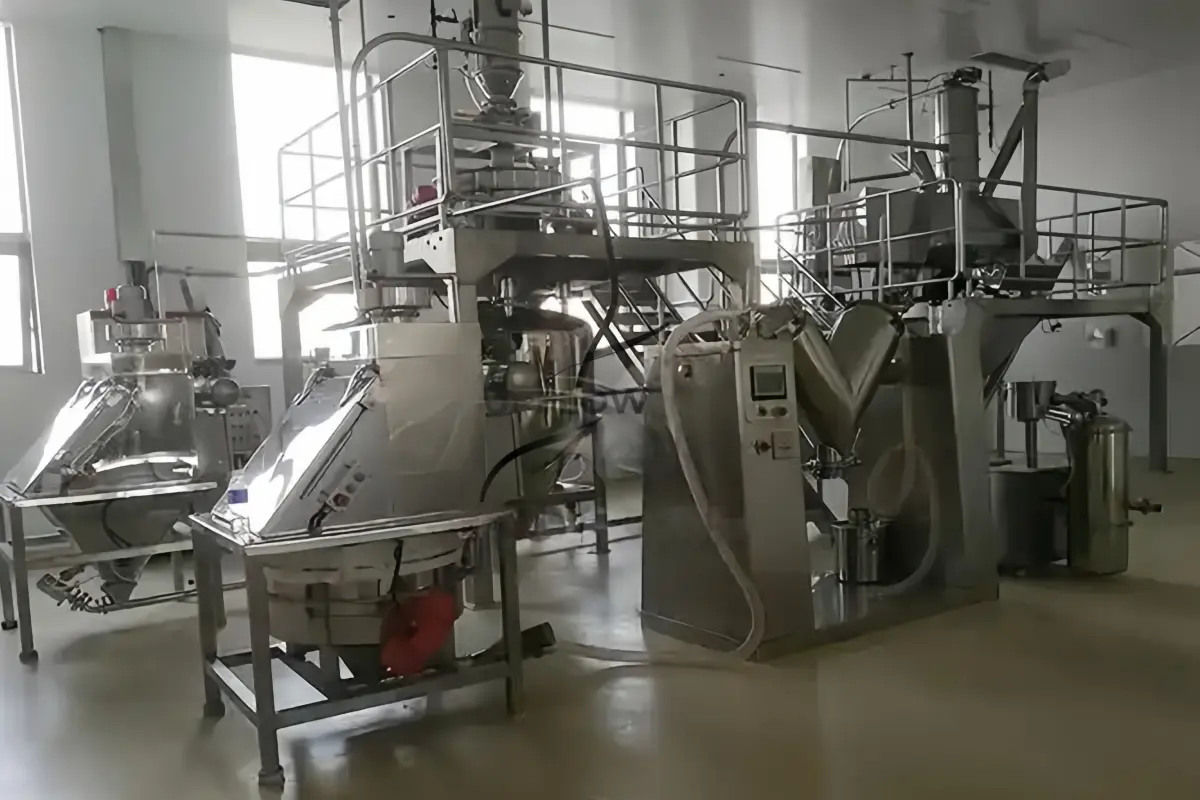
With the rapid development of pharmaceutical automation and increasingly stringent GMP requirements, manufacturers are continuously seeking advanced material handling technologies capable of ensuring hygienic production, minimizing contamination risks, and improving process efficiency. Among various pharmaceutical excipients, starch remains one of the most widely used ingredients in tablet manufacturing, capsule production, granulation processes, and drug formulation applications. As production capacities continue to increase, the pharmaceutical starch pneumatic conveying system has become an essential solution for achieving safe, enclosed, and highly efficient powder transportation throughout modern pharmaceutical facilities.
Pharmaceutical Starch Material Characteristics
Pharmaceutical starch, commonly referred to as medicinal starch, pharmaceutical-grade starch, or pharmaceutical excipient starch, is a naturally occurring polysaccharide widely used as a binder, filler, disintegrant, and carrier in pharmaceutical formulations. It is typically derived from corn, potato, rice, wheat, or tapioca through purification and pharmaceutical processing procedures.
The chemical formula of starch is generally represented as (C₆H₁₀O₅)n, reflecting its polymeric carbohydrate structure. Pharmaceutical starch usually exhibits a bulk density ranging from approximately 0.45 to 0.80 g/cm³ depending on particle size distribution, moisture content, and processing method.
Key material characteristics include low bulk density, excellent compressibility, moisture sensitivity, fine particle size, dust generation tendency, and susceptibility to electrostatic accumulation. These properties make the transportation of pharmaceutical starch particularly challenging in environments where hygiene and product integrity must be strictly maintained.
For this reason, pharmaceutical manufacturers increasingly adopt a pharmaceutical starch pneumatic conveying system to ensure contamination-free powder handling and consistent material flow throughout the production process.
Why Pharmaceutical Starch Requires Specialized Pneumatic Conveying Solutions
Unlike conventional food-grade starch applications, pharmaceutical starch must be handled under highly controlled conditions to comply with GMP standards and prevent cross-contamination. Manual handling methods may introduce contamination risks, inconsistent dosing, and unnecessary labor costs.
A modern pharmaceutical starch powder conveying system enables enclosed transportation between storage silos, weighing stations, blenders, granulators, and tablet production lines while maintaining product purity and process consistency.
At the same time, a pharmaceutical starch material automation system can significantly reduce manual intervention by integrating intelligent feeding, batching, and transfer operations into a centralized control platform.
Many pharmaceutical facilities also implement a pharmaceutical starch positive pressure conveying system to achieve stable long-distance transportation while maintaining continuous production efficiency and minimizing product exposure to the surrounding environment.
Working Principle of a Pharmaceutical Starch Pneumatic Conveying System
The pharmaceutical starch pneumatic conveying system operates by using compressed air generated by blowers or compressors to transport starch powder through fully enclosed stainless-steel pipelines. The system is specifically designed to meet pharmaceutical hygiene requirements while ensuring stable and reliable material movement.
Within the conveying process, the pharmaceutical starch positive pressure conveying system creates controlled airflow that carries powder particles from feeding stations to receiving equipment. This approach enables efficient transportation over extended distances without compromising product quality.
The pharmaceutical starch powder conveying system is engineered to prevent segregation, accumulation, and excessive mechanical stress that could negatively affect powder characteristics. Carefully controlled airflow velocities help maintain stable material suspension throughout the conveying process.
In addition, a modern pharmaceutical starch material automation system can automatically regulate feeding rates, conveying pressure, and production schedules, ensuring precise material management and consistent manufacturing performance.
Key Components of a Pharmaceutical Starch Conveying Installation
A complete pharmaceutical starch pneumatic conveying system typically includes storage silos, feeding hoppers, rotary valves, blowers, stainless-steel conveying pipelines, filtration units, dust collection systems, receiving vessels, and intelligent control systems.
The pharmaceutical starch powder conveying system relies on optimized pipeline design and airflow management to achieve efficient material transport while minimizing product degradation and dust generation. High-efficiency filtration systems are often installed to maximize product recovery and maintain cleanroom conditions.
The pharmaceutical starch positive pressure conveying system is particularly suitable for high-capacity production environments where continuous material supply is essential. Meanwhile, the pharmaceutical starch material automation system integrates real-time monitoring and process control functions that improve operational efficiency and production traceability.
When selecting equipment, many pharmaceutical manufacturers prefer working with an experienced pharmaceutical starch pneumatic conveying manufacturer capable of designing customized systems that meet specific GMP requirements and production objectives.
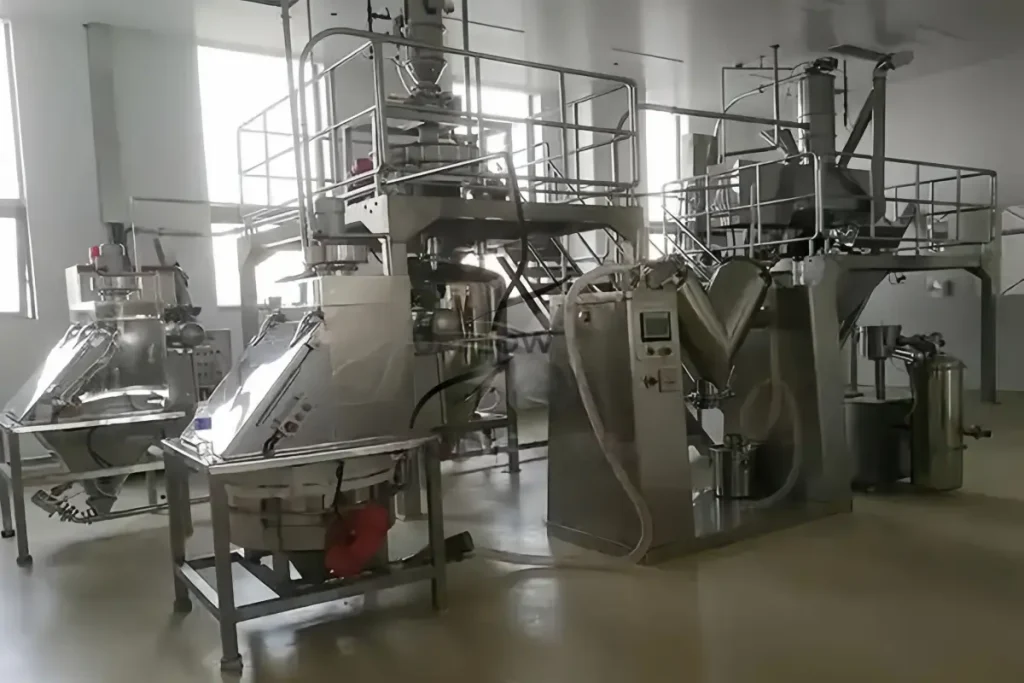
Benefits of Automated Pharmaceutical Starch Powder Handling
The implementation of a pharmaceutical starch pneumatic conveying system provides numerous advantages for pharmaceutical manufacturers seeking higher productivity and improved product quality.
First, the enclosed conveying process significantly reduces contamination risks and improves workplace cleanliness. Second, the pharmaceutical starch powder conveying system minimizes product loss while ensuring accurate and consistent material transfer.
The pharmaceutical starch material automation system improves operational efficiency by reducing labor requirements and eliminating many manual handling steps. At the same time, the pharmaceutical starch positive pressure conveying system enables stable and reliable long-distance transport throughout complex production facilities.
Furthermore, partnering with a qualified pharmaceutical starch pneumatic conveying manufacturer helps ensure optimal system performance, regulatory compliance, and long-term operational reliability.
Future Trends in Pharmaceutical Starch Conveying Technology
As pharmaceutical manufacturing increasingly adopts Industry 4.0 technologies, future powder handling systems will become more intelligent, automated, and data-driven. Advanced sensors, predictive maintenance software, automated cleaning systems, and real-time process analytics will further enhance the capabilities of the pharmaceutical starch pneumatic conveying system.
The next generation of the pharmaceutical starch material automation system will provide even greater production flexibility and operational visibility. Similarly, innovations in the pharmaceutical starch powder conveying system, pharmaceutical starch positive pressure conveying system, and solutions developed by leading pharmaceutical starch pneumatic conveying manufacturers will continue to improve efficiency, product quality, and regulatory compliance.
Conclusion
The pharmaceutical starch pneumatic conveying system has become a vital technology for modern pharmaceutical production facilities seeking hygienic, automated, and highly efficient powder transportation solutions.
By integrating a pharmaceutical starch material automation system, pharmaceutical starch powder conveying system, pharmaceutical starch positive pressure conveying system, and working with an experienced pharmaceutical starch pneumatic conveying manufacturer, pharmaceutical companies can achieve superior material handling performance, maintain strict GMP compliance, and support sustainable long-term production growth in an increasingly competitive industry.