
Introduction to Plasticizer Powder Materials and Properties
Plasticizer powders are widely used chemical additives in PVC processing, rubber manufacturing, coatings, and polymer modification industries, where they improve flexibility, reduce brittleness, and enhance material processing performance. Common materials include dioctyl phthalate (DOP) powder derivatives, dioctyl terephthalate (DOTP) powder, dibutyl phthalate (DBP) compounds, citric acid ester plasticizers, and polymer-based plasticizing agents, which are often processed into liquid-adjacent powders or adsorbed powder forms for easier dosing and transport.
From a physical perspective, plasticizer powders or powder-carrier forms typically have a bulk density ranging from approximately 0.6 to 1.1 g/cm³, and their properties may vary depending on formulation, carrier material, and temperature conditions. These materials can be slightly sticky, sensitive to temperature changes, and prone to adsorption or agglomeration, which makes stable and controlled conveying essential to avoid blockage, leakage, or dosing inconsistency in industrial production systems.
Overview of Plasticizer Powder Pneumatic Conveying System
A plasticizer powder pneumatic conveying system is an industrial material handling solution that uses controlled airflow to transport plasticizer materials such as DOTP powder, DOP-based additives, and DBP compound powders through fully enclosed pipelines to mixing, storage, or dosing equipment.
In industrial practice, this system is also referred to as a airflow conveying system for DOTP plasticizer powder, a pneumatic conveying system for dioctyl phthalate powder materials, or a fully enclosed powder conveying system for PVC plasticizer additives, depending on production conditions and system configuration.
The system works by forming a stable gas-solid flow inside pipelines, enabling continuous, dust-free, and precisely controlled transport while maintaining material stability and preventing contamination or volatilization during conveying.
System Design Considerations and Key Engineering Points
The design of a plasticizer powder pneumatic conveying system must ensure stable operation of airflow, precise control of conveying speed, and long-term reliability, especially when handling sensitive materials such as DOTP or DOP powder-based plasticizer additives.
A key requirement is maintaining stable conveying medium conditions, where compressed air or blower-generated airflow must remain consistent in pressure and flow rate to avoid fluctuations that could affect transport stability. Therefore, pressure regulation devices and flow control systems are essential in a positive pressure conveying system for DOTP plasticizer powder or a vacuum (negative pressure) conveying system for DOP powder materials, ensuring smooth and continuous operation.
Conveying speed must also be carefully controlled, as excessive airflow may cause material degradation or pipeline wear, while insufficient velocity may lead to material settling or blockage. Proper selection of pipeline diameter, layout design, and valve control strategy is therefore critical for maintaining an efficient airflow powder conveying system for plasticizer materials.
Pipeline Material Selection and Layout Optimization
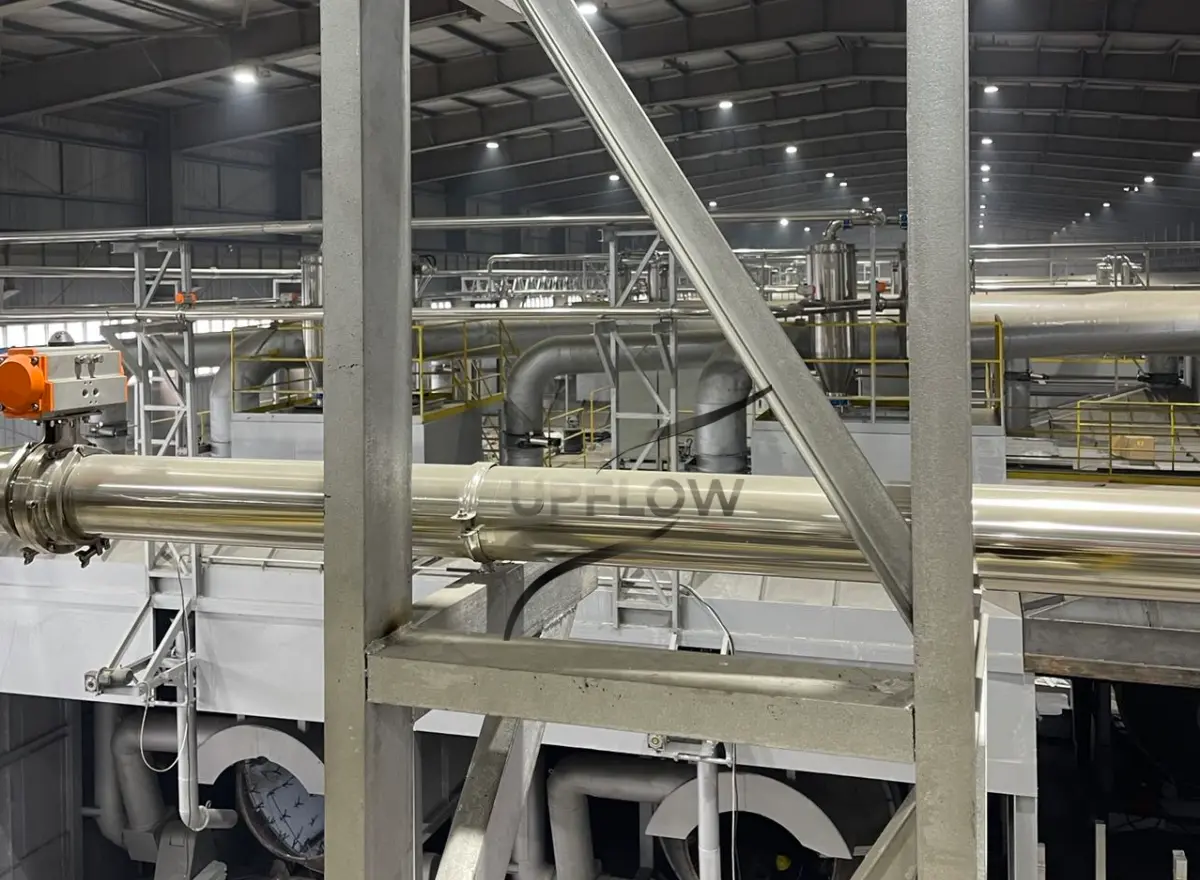
Pipeline material selection plays a crucial role in ensuring long-term system durability, especially when handling plasticizer powders that may exhibit mild corrosive or adhesive properties.
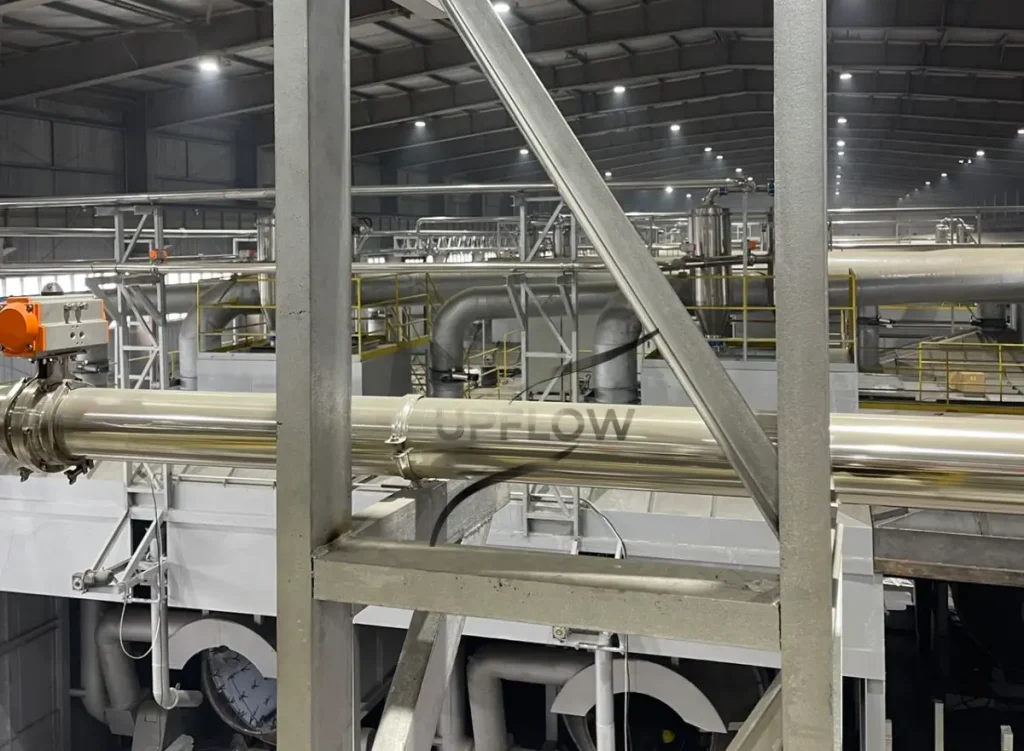
In most cases, pipelines are made of stainless steel or corrosion-resistant alloy materials, which provide both wear resistance and chemical stability during continuous operation. For special applications, anti-static coatings may also be applied to reduce particle adhesion and improve flow efficiency in a fully enclosed pneumatic conveying system for plasticizer powder materials.
Pipeline layout should be carefully designed to minimize excessive length, unnecessary bends, and complex routing, as these factors can increase pressure loss and reduce system efficiency. Large-radius bends and smooth transitions are preferred to ensure stable flow in both positive pressure and negative pressure powder conveying systems for plasticizer materials.
Maintenance, Cleaning, and Safety Design
To ensure long-term stable operation, the plasticizer powder pneumatic conveying system must include proper maintenance and cleaning strategies, as fine powder residues may accumulate inside pipelines over time and affect system performance.
Maintenance access points, cleaning ports, and inspection openings should be integrated into the system design, allowing operators to perform regular cleaning and prevent material buildup. This is especially important in continuous production environments where pneumatic powder conveying systems for DOTP and DOP plasticizer powders operate for long cycles without shutdown.
Safety design is also critical, and systems are typically equipped with pressure relief valves, safety valves, and overflow protection devices to prevent abnormal pressure buildup. In addition, proper grounding measures must be implemented to reduce static electricity accumulation, which may occur during high-speed airflow transport of fine plasticizer powders.
Industrial Applications of Plasticizer Powder Pneumatic Conveying System
The plasticizer powder pneumatic conveying system is widely used in PVC manufacturing plants, polymer modification industries, chemical processing facilities, and coating production lines, where precise dosing and stable transport of plasticizer additives such as DOTP, DOP, and DBP are required.
In PVC compounding systems, it is commonly used to transport plasticizer powders into mixers and extrusion systems, ensuring accurate formulation and consistent product performance. In chemical production environments, it supports automated feeding from storage tanks to reactors, improving production efficiency and reducing manual handling risks.
Conclusion
The plasticizer powder pneumatic conveying system provides a stable, efficient, and fully enclosed solution for transporting sensitive chemical additives such as DOTP, DOP, and DBP powders. By carefully controlling airflow stability, pipeline design, material selection, and safety systems, modern airflow conveying systems, powder conveying systems, and pneumatic conveying systems for plasticizer powder materials can achieve high reliability, long service life, and precise industrial performance, meeting the demanding requirements of modern chemical and polymer production industries.