
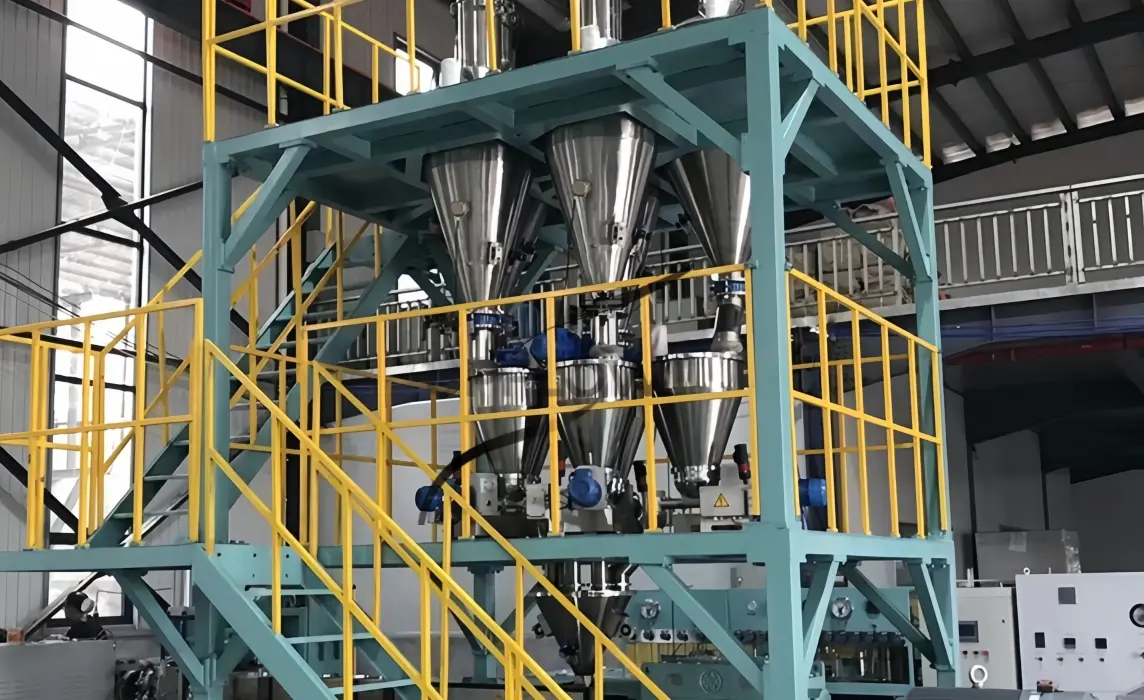
1.Baking Soda Material Characteristics
Sodium bicarbonate (chemical formula: NaHCO₃), commonly known as baking soda or bicarbonate of soda, is a widely used inorganic compound in industries such as food processing, pharmaceuticals, flue gas treatment, chemicals, and environmental applications. It is typically handled as a fine powder or micro-granular material.
The bulk density of sodium bicarbonate generally ranges from 0.8 to 1.2 t/m³, depending on particle size and processing method. Compared with soda ash (Na₂CO₃), it has a lower decomposition temperature and is more sensitive to heat and moisture.
In terms of classification, sodium bicarbonate can be divided into several types based on application, such as food-grade, industrial-grade, and pharmaceutical-grade products. It is also closely related to materials such as soda ash (Na₂CO₃) and other sodium-based salts used in similar processes.
From a handling perspective, sodium bicarbonate is relatively fine and can generate dust during conveying. It has moderate flowability but may become cohesive under humid conditions, leading to caking or buildup in hoppers and pipelines. In addition, due to its relatively soft particles, excessive conveying velocity may cause particle degradation or dust formation.
Therefore, when designing a pneumatic conveying system for sodium bicarbonate, it is important to ensure gentle conveying conditions, proper sealing, stable feeding, and effective dust collection to maintain material quality and system reliability.
Sodium bicarbonate can be conveyed using different methods such as screw conveying and pneumatic conveying, and the selection of a suitable conveying method should be based on factors including material characteristics, conveying capacity, conveying distance, and specific process requirements; screw conveying is typically suitable for short-distance and horizontal transport, whereas pneumatic conveying is more appropriate for long-distance, vertical, or enclosed conveying conditions, and it can significantly reduce dust generation during material handling.
2. Common Conveying Methods for Sodium Bicarbonate
The conveying methods of sodium bicarbonate are generally divided into mechanical conveying and pneumatic conveying, where mechanical conveying relies on moving mechanical components and is considered a traditional and basic solution suitable for short-distance, low-height, and small-capacity applications, including equipment such as screw conveyors that transport material through the rotation of helical blades, while pneumatic conveying utilizes airflow energy to move materials through enclosed pipelines and has become a key technology in material processing, storage, and packaging systems, allowing flexible selection based on material properties and improving both conveying efficiency and product quality.
3. Can Sodium Bicarbonate Be Conveyed Pneumatically?
Sodium bicarbonate is considered an ideal material for pneumatic conveying due to its fine particle size, relatively low density, good flowability under dry conditions, and low tendency to strongly adhere under proper handling conditions, making it well-suited for enclosed transport; a sodium bicarbonate pneumatic conveying system uses compressed air or vacuum as the driving force to generate airflow within pipelines, transporting material and then separating it from air through a separator, and depending on pressure conditions and system design, pneumatic conveying can be classified into vacuum (negative pressure), pressure (positive pressure), or combined systems, with dilute phase conveying commonly applied due to its suitability for fine powders.
4. Sodium Bicarbonate Pneumatic Conveying
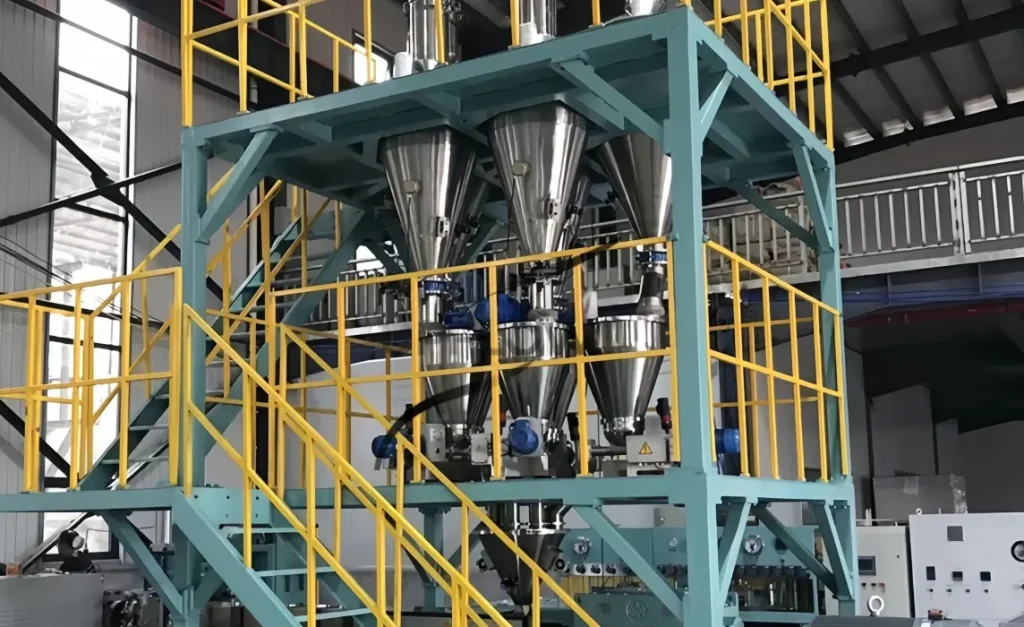
A sodium bicarbonate pneumatic conveying system is a technology that uses compressed air to transport powder or granular materials through pipelines to designated locations, where the material is introduced into the pipeline and driven by airflow to achieve fast and efficient conveying; this system is widely used in industries such as chemical processing, pharmaceuticals, food production, and building materials, offering advantages such as long conveying distance, large conveying capacity, stable operation, simple structure, and ease of operation.
5. Advantages of Sodium Bicarbonate Pneumatic Conveying
Sodium bicarbonate pneumatic conveying is an efficient, environmentally friendly, and energy-saving conveying method, and its advantages are mainly reflected in several aspects: firstly, sodium bicarbonate itself is non-toxic, odorless, non-flammable, and non-explosive, which meets environmental and safety requirements; secondly, the pneumatic conveying system features a relatively simple structure, convenient installation and commissioning, and easy operation, which helps reduce maintenance costs; furthermore, it enables continuous, stable, and high-efficiency conveying over long distances with large capacity; in addition, properly designed systems can reduce material buildup and blockage while improving conveying efficiency; finally, the system contributes to energy savings and reduced operational costs, thereby improving overall economic performance.
6. Key Considerations for Sodium Bicarbonate Pneumatic Conveying
When selecting a sodium bicarbonate pneumatic conveying system, several important factors must be considered, including the material properties such as particle size, moisture content, and flowability, as well as the selection of appropriate pipelines and conveying equipment to ensure smooth inner surfaces, stable operation, and high efficiency; it is also necessary to design the system layout reasonably, including pipeline routing, conveying velocity, and conveying capacity, while ensuring proper sealing and safety to prevent leakage, contamination, and environmental impact.
UPFLOW sodium bicarbonate pneumatic conveying systems demonstrate strong performance advantages due to their optimized design and adaptability to material characteristics, providing clean, efficient, and stable conveying solutions; during operation, the system can reduce friction, lower energy consumption, and improve conveying efficiency, while also minimizing equipment wear and extending service life, and with simple operation and low maintenance requirements, it offers users a reliable and cost-effective solution for powder handling.
Although sodium bicarbonate pneumatic conveying provides high efficiency, good conveying quality, and fast transport speed, it may also involve relatively higher energy consumption and requires proper system design to minimize environmental impact; with extensive industry experience, UPFLOW can provide customized conveying solutions for a wide range of materials, ensuring efficient and reliable system performance while simplifying the overall material handling process.