
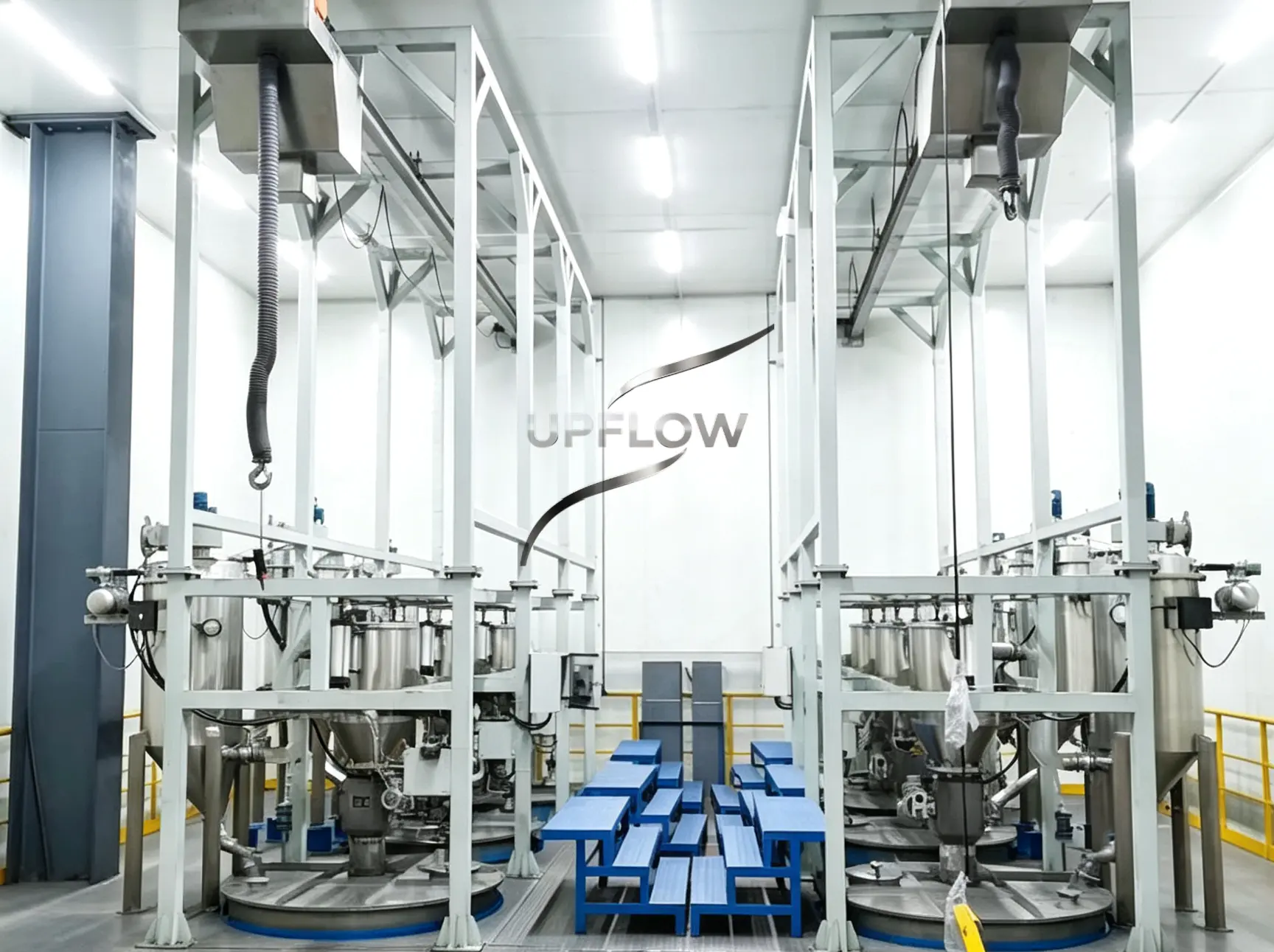
Bulk Bag Unloader Capacity: How to Size a System for 1–10 T/H
Selecting the right bulk bag unloader capacity requires more than matching a machine to a target tonnage. The actual unloading rate depends on material flowability, bulk bag weight, discharge spout design, hopper configuration, feeding equipment, bag replacement time, and downstream production requirements.
For industrial applications requiring 1–10 tonnes per hour (T/H), the unloading station should be designed as part of an integrated material handling process rather than treated as an isolated machine. A properly sized system should maintain a suitable material discharge rate while controlling dust, minimizing material accumulation, and providing a consistent supply to downstream equipment.
This guide explains how to calculate bulk bag unloading capacity, evaluate the main equipment selection factors, and configure a bulk bag unloading system for different industrial powder and bulk solid applications.
1. What Does Bulk Bag Unloader Capacity Mean?
Bulk bag unloader capacity refers to the amount of material that an unloading system can discharge within a specified period, normally expressed in tonnes per hour (T/H).
However, buyers should distinguish between instantaneous discharge capacity and actual average hourly throughput.
A bulk bag unloader may discharge material relatively quickly while a bag is connected and flowing, but the complete operating cycle also includes bag positioning, lifting, outlet connection, emptying, disconnection, and replacement.
Therefore, a system designed for 5 T/H must deliver an average of approximately 5 tonnes per operating hour, rather than simply achieving a short-duration discharge rate of 5 tonnes per hour.
The basic conversion is:
Required average material flow (kg/min) = Target capacity (T/H) × 1,000 ÷ 60
| Target capacity | Average material flow |
| 1 T/H | 16.7 kg/min |
| 2 T/H | 33.3 kg/min |
| 3 T/H | 50 kg/min |
| 5 T/H | 83.3 kg/min |
| 8 T/H | 133.3 kg/min |
| 10 T/H | 166.7 kg/min |
These values represent average throughput requirements. The actual discharge rate during bag emptying may need to be higher to compensate for bag replacement and other operating interruptions.
2. Calculate Capacity Based on Bulk Bag Weight and Unloading Cycle
One practical method of estimating bulk bag unloading requirements is to calculate the number of bags that must be emptied per hour.
Required bags per hour = Target material capacity (kg/h) ÷ Net material weight per bag (kg)
Assuming a net material weight of 1,000 kg per FIBC bulk bag:
| Target capacity | Bags required per hour |
| 1 T/H | 1 |
| 2 T/H | 2 |
| 3 T/H | 3 |
| 5 T/H | 5 |
| 8 T/H | 8 |
| 10 T/H | 10 |
These are illustrative calculations based on 1,000 kg bags, not guaranteed equipment performance.
The next step is to evaluate the complete unloading cycle, including:
Lifting and positioning the filled bulk bag.
Securing the bag on the supporting frame.
Connecting the discharge spout to the unloading outlet.
Opening the discharge arrangement and releasing material.
Emptying the bag and handling residual material.
Removing the empty bag and preparing for the next cycle.
For example, a 5 T/H application using 1,000 kg bags requires an average of five bags per hour. If the complete bag replacement and handling process cannot keep pace with this requirement, the actual production throughput may fall below the target.
For higher-capacity applications, buyers should evaluate whether faster bag handling, improved lifting arrangements, or alternative operating configurations are necessary.
3. Key Factors That Affect Bulk Bag Unloader Capacity
The same unloading station can achieve different discharge performance depending on material and operating conditions.
3.1 Material Flowability
Material flowability is one of the most important factors affecting unloading performance.
Free-flowing granules and some coarse powders generally discharge more easily than cohesive or poorly flowing fine powders.
Materials with poor flowability may form stable arches above the discharge outlet or develop ratholes inside the bulk bag, preventing consistent material movement.
Typical materials requiring careful evaluation include:
Calcium carbonate powder
Silica powder
Magnesium oxide
Fine mineral powders
Chemical additives
Hygroscopic and cohesive powders
For these applications, additional discharge assistance may be required, such as bag massage devices, vibration equipment, or specially designed hopper structures.
The appropriate configuration depends on actual material characteristics and should be evaluated through material testing when necessary.
3.2 Bulk Bag Size and Discharge Spout Design
Bulk bags are available in different dimensions, capacities, and discharge outlet configurations.
Bag dimensions determine the required lifting height, supporting frame dimensions, and installation space.
The discharge spout also affects how material enters the receiving hopper. A properly designed outlet connection helps maintain controlled discharge and minimize material leakage.
When selecting a bulk bag unloader, buyers should confirm:
Bulk bag dimensions and rated weight
Discharge spout diameter and length
Inner liner configuration
Outlet opening and closing arrangement
Connection compatibility with the receiving hopper
A discharge outlet that is too restrictive for the required material flow may become a bottleneck.
3.3 Discharge Hopper and Feeding Equipment
The hopper below the bulk bag should receive material without creating unnecessary restrictions.
Its geometry, outlet dimensions, and connection to downstream equipment all influence the overall discharge performance.
Depending on the application, a bulk bag unloading station may be integrated with:
Screw feeders
Storage hoppers
Weighing and batching equipment
For example, when a bulk bag unloader is connected to a screw feeder, the feeder must be capable of handling the required material flow without becoming a bottleneck.
Increasing the unloading station capacity alone will not improve overall production if downstream equipment cannot accept the same throughput.
For applications involving automated material transfer and different production stages, explore our Bulk Bag Unloading and Conveying System Guide.
3.4 Dust Control and Enclosed Discharge
Dust control is another important consideration, particularly when handling fine powders or materials with occupational exposure concerns.
A properly designed bulk bag unloading station can incorporate a sealed discharge connection, enclosed receiving hopper, and dust extraction system.
The discharge spout should connect securely to the receiving arrangement to minimize material leakage during operation.
For applications requiring a higher level of containment, the system design may also consider suitable sealing arrangements, dust collection, and appropriate cleaning procedures.
Dust control requirements should be determined according to material properties, process conditions, and applicable workplace safety requirements.
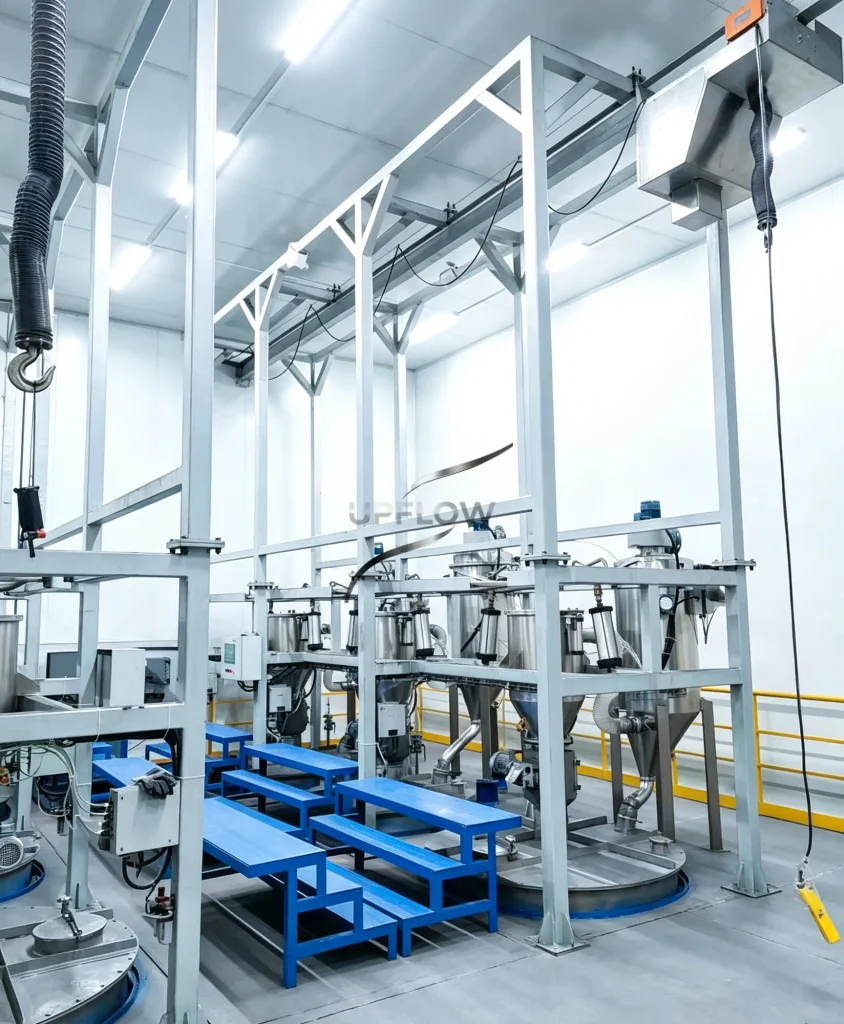
4. How to Configure a Bulk Bag Unloading System for 1–10 T/H
Different production capacities may require different equipment configurations. The following table provides a preliminary engineering selection framework.
| Target capacity | Main design considerations |
| 1–2 T/H | Standard supporting frame, controlled discharge hopper, and suitable downstream feeder |
| 2–5 T/H | Evaluate bag replacement time, discharge assistance, and continuous downstream feeding |
| 5–8 T/H | Consider optimized bag handling, receiving capacity, and coordinated feeding equipment |
| 8–10 T/H | Evaluate the complete unloading cycle, feeding capacity, and potential parallel operating arrangements |
These are preliminary engineering considerations rather than fixed equipment specifications. Final configuration must be determined from actual material properties, bag weight, operating schedule, and process requirements.
A typical integrated system may include:
FIBC Bulk Bag → Bulk Bag Unloading Station → Discharge Hopper → Screw Feeder or Rotary Valve → Pneumatic Conveying System → Storage Silo or Processing Equipment
For applications involving continuous production, the unloading station can be integrated with automatic conveying, weighing, and batching systems.
Explore UPFLOW’s Bulk Bag Unloading and Feeding Solutions for equipment configurations covering different bulk material discharge requirements.
When material transfer needs to be coordinated with downstream weighing and dosing operations, our Automatic Batching and Dosing Systems can also be considered as part of the complete process.
5. When Should You Consider Additional Discharge Assistance?
If the material does not discharge consistently, simply increasing the hopper size may not solve the problem.
Additional discharge assistance may be necessary when the material has poor flowability, tends to bridge, or remains inside the bulk bag after gravity discharge.
Common options include:
Bag Massage Devices
Pneumatic or mechanical massage pads apply controlled pressure to the sides of the bulk bag to encourage material movement toward the outlet.
Vibrating Devices
Vibration can assist material discharge in suitable applications, although the vibration method and installation position must be selected according to material characteristics and bag construction.
Improved Hopper Geometry
A suitable hopper design and outlet configuration can reduce material accumulation and improve discharge conditions.
Mechanical Feeding Equipment
A screw feeder or other suitable discharge device can provide more controlled material transfer to downstream equipment.
The best configuration depends on the material’s flow properties. More discharge assistance does not automatically mean higher capacity, and excessive vibration or compression may create additional operating problems.
For a related engineering discussion, see our guide to Anode Powder Bulk Bag Conveying System Supply Scope, which explains how bulk bag handling interfaces should be considered within a complete powder handling project.
6. Common Mistakes When Selecting Bulk Bag Unloader Capacity
Several selection mistakes can lead to insufficient unloading performance or unnecessary equipment investment.
Selecting equipment based only on target T/H
A nominal capacity does not account for bag replacement time, material characteristics, or downstream limitations.
Ignoring material flowability
Fine, cohesive, and moisture-sensitive powders may require additional discharge assistance and specific hopper design considerations.
Undersizing downstream equipment
A high-capacity unloading station cannot maintain the required production rate if the screw feeder, rotary valve, or conveying system is undersized.
Overlooking bag replacement time
The complete operating cycle must be included when calculating average hourly throughput.
Ignoring dust control
An inadequately designed discharge connection can cause material leakage and dust escape, creating housekeeping and occupational exposure concerns.
A successful system design should balance unloading capacity, operational reliability, dust control, and downstream process requirements.
7. Real Bulk Bag Unloading Project References
Actual project references can help buyers understand how bulk bag unloading equipment is integrated into industrial production processes.
Cement Bulk Bag Unloading and Pneumatic Conveying Project – Egypt
UPFLOW designed and supplied a customized cement big bag unloading and pneumatic conveying system for an industrial customer in Egypt.
The project integrated bulk bag unloading, powder feeding equipment, and pneumatic conveying technology to support the transfer of cement powder into the downstream production process.
Read more about the Cement Big Bag Unloading and Pneumatic Conveying System Project in Egypt.
Paraformaldehyde and Glycine Big Bag Unloading Project – Europe
UPFLOW supplied a customized big bag unloading and conveying solution for paraformaldehyde and glycine used in an industrial chemical manufacturing project for a major European company.
The application involved bulk raw material unloading and transfer to downstream chemical processing equipment.
Explore the Paraformaldehyde and Glycine Big Bag Unloading System Project.
These projects demonstrate different bulk material handling applications. Their equipment configurations and operating conditions should not be treated as universal capacity specifications for other projects.
8. What Information Is Needed to Size a Bulk Bag Unloader?
Before requesting a quotation or engineering proposal, buyers should prepare the following information:
| Information | What to provide |
| Target capacity | Required throughput in T/H |
| Material name | Actual powder or bulk solid |
| Bulk density | Loose bulk density in kg/m³ |
| Material flowability | Free-flowing, cohesive, sticky, or hygroscopic |
| Bulk bag weight | Net material weight per FIBC |
| Bag dimensions | Length, width, and height |
| Discharge spout | Diameter, length, and liner arrangement |
| Operating schedule | Hours per day and production continuity |
| Downstream equipment | Screw feeder, silo, mixer, reactor, or conveying system |
| Dust control | Required containment and extraction arrangement |
| Installation conditions | Available floor space and ceiling height |
Providing these details helps equipment manufacturers evaluate actual unloading requirements instead of selecting a machine based on nominal capacity alone.
9. Customized Bulk Bag Unloading Solutions from UPFLOW
UPFLOW provides customized bulk bag unloading and powder handling solutions for industrial applications involving different powders and bulk solids.
Depending on project requirements, a system can integrate a bulk bag supporting frame, lifting arrangement, enclosed discharge connection, receiving hopper, feeding equipment, and downstream pneumatic conveying or batching equipment.
Rather than selecting equipment solely according to a nominal throughput figure, UPFLOW evaluates material characteristics, required production capacity, bag specifications, plant layout, and downstream process conditions.
For applications requiring 1–10 T/H, the complete unloading and feeding process should be considered to achieve a suitable balance between material discharge, operating efficiency, and production continuity.
Explore UPFLOW Bulk Bag Unloading and Feeding Solutions or learn more about our Pneumatic Conveying Systems for integrated powder transfer applications.
Planning a bulk bag unloading system?
Send us your material name, target capacity, bulk bag weight, discharge spout dimensions, and downstream equipment requirements. Our engineering team can evaluate your application and recommend a suitable system configuration.
Contact UPFLOW to discuss your bulk bag unloading project.
Frequently Asked Questions
1. How do I calculate the required capacity of a bulk bag unloader?
Divide the required hourly material throughput by the net material weight per bag to determine how many bags must be emptied per hour. Then evaluate the complete operating cycle, including bag positioning, connection, discharge, and replacement.
2. Can one bulk bag unloading system handle 1–10 T/H?
A system may be engineered for different capacities within this range, but the configuration depends on the material, bag specifications, operating cycle, discharge equipment, and downstream process. A single standard configuration should not be assumed suitable for every application.
3. What affects bulk bag unloading speed the most?
Material flowability, discharge spout dimensions, hopper geometry, bag replacement time, and downstream feeder capacity are among the main factors affecting actual unloading performance.
4. Do poor-flowing powders require a special bulk bag unloader?
Not necessarily a completely different machine, but they may require additional features such as bag massage devices, vibration assistance, or an optimized hopper and outlet design. Material testing is recommended for difficult applications.
5. Can a bulk bag unloader be connected directly to a pneumatic conveying system?
Yes. A bulk bag unloading station can be integrated with a suitable feeding device and pneumatic conveying system to transfer material to downstream storage, mixing, batching, or processing equipment. The connection and feeding arrangement must be designed according to material and process requirements.
6. What information should I provide when requesting a bulk bag unloader quotation?
At minimum, provide the material name, required capacity, bulk bag weight and dimensions, discharge spout specifications, material flowability, and downstream equipment information. These details