
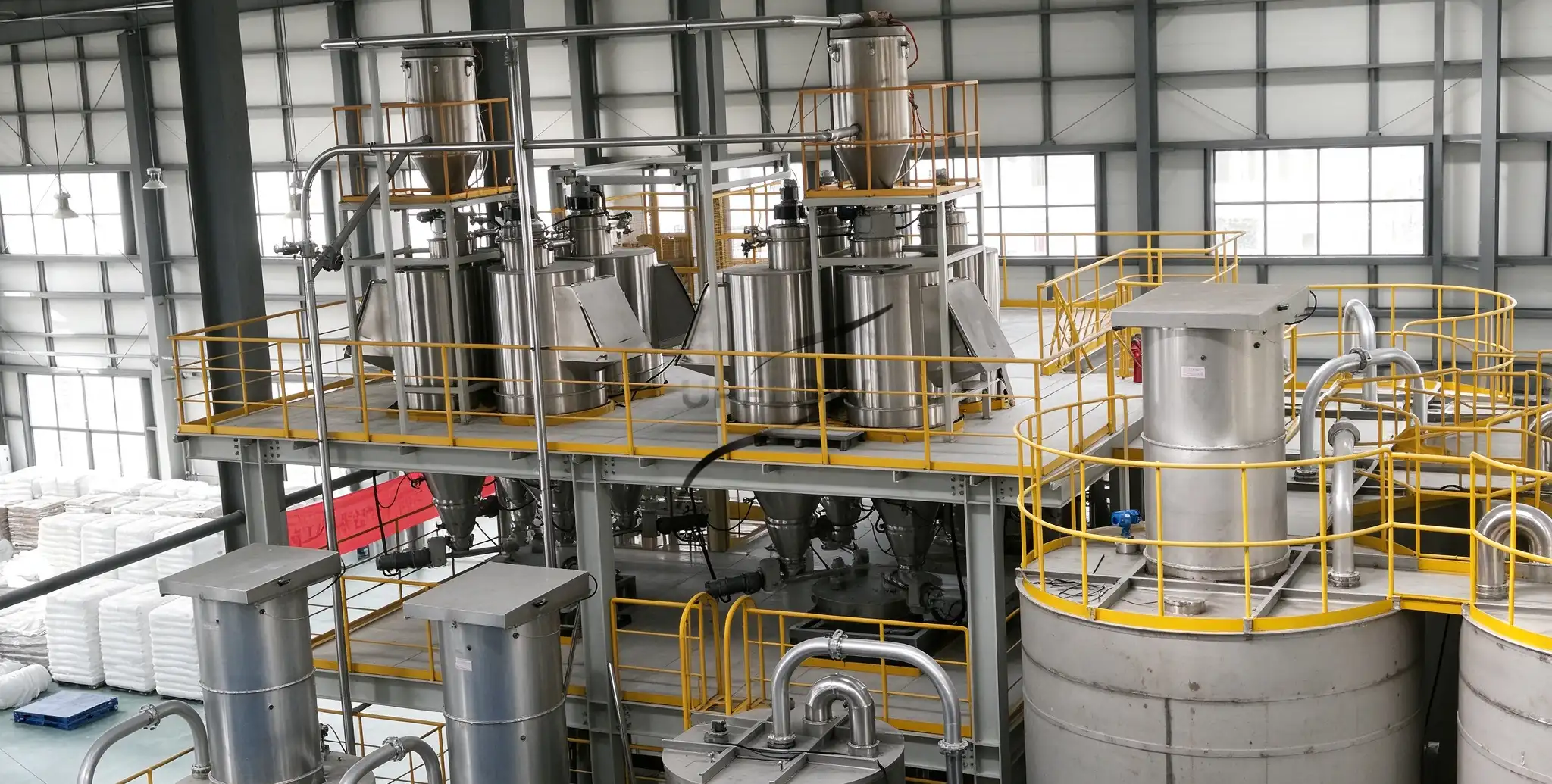
Selecting a screw feeder for fine powder dosing requires more than matching a feeder to the required capacity. Fine powders can have very different flowability, bulk density, particle size and moisture characteristics, which directly affect feeding stability and dosing accuracy.
A screw dosing system that works well for one powder may not provide the same performance for another material. The feeder, hopper, weighing system and control logic should therefore be considered together.
This guide explains the key parameters to evaluate when selecting a screw feeder for fine powder dosing applications.
1. Start with the Powder Characteristics
The material is one of the most important inputs when selecting a fine powder feeder.
Important parameters include:
Bulk density
Particle size distribution
Moisture content
Flowability
Cohesiveness
Abrasiveness
Dust generation
Tendency to bridge or compact
Fine powders may flow freely through a hopper, while cohesive powders can form bridges or compact above the screw inlet. Materials with very different bulk densities may also require different feeder configurations even when the required dosing capacity is similar.
For this reason, a powder dosing system should be designed around the actual material rather than using one standard screw feeder for every application.
2. Define the Required Feed Rate
The required feed rate determines the basic feeder capacity and operating range.
For example, a production line may require a screw dosing system to deliver several hundred kilograms per hour, while a formulation process may require only a few kilograms per hour.
The important point is not simply the maximum capacity. The feeder should also provide stable control at the minimum required feed rate.
A feeder operating continuously at an extremely low percentage of its maximum capacity may have difficulty maintaining stable material flow.
When selecting a screw feeder, consider:
Minimum feed rate
Normal operating rate
Maximum feed rate
Required turndown ratio
Batch size
Feeding time
This is particularly important for recipes containing both major and minor ingredients.
3. Screw Design Affects Feeding Stability
The screw itself plays an important role in controlling material discharge.
Depending on the powder and required feed rate, the design may involve different screw diameters, pitches, shaft configurations and rotational speeds.
For fine powders, the objective is generally to create a predictable and controllable material flow rather than simply achieving a high conveying capacity.
Factors that may need to be evaluated include:
Screw diameter
Screw pitch
Screw speed
Screw flight configuration
Screw length
Outlet geometry
Material contact surfaces
For cohesive or difficult-flowing powders, the hopper and screw inlet are equally important because poor material flow into the screw can cause unstable feeding even when the screw itself is correctly sized.
4. Consider Volumetric or Gravimetric Feeding
Screw feeders can be used in both volumetric and gravimetric dosing arrangements.
A volumetric powder feeder controls material delivery primarily through feeder speed and known feeder characteristics. It can be suitable where material density remains relatively stable and the process tolerance is less demanding.
A gravimetric feeder, such as a loss-in-weight system, continuously monitors the weight change of the feeding hopper and calculates the actual feed rate.
Gravimetric feeding can provide better control when material density varies or when the process requires tighter dosing control.
For batch applications, the weighing hopper can also be integrated with an automatic batching system to control multiple ingredients according to a defined recipe.
See our guide on Powder Batching Hopper Design: Load Cells, Vibration and Isolation for more information about weighing system design.
5. Hopper Design Is Part of Feeder Selection
A screw feeder cannot be evaluated independently from the hopper above it.
Fine powders may experience bridging, rat-holing or inconsistent discharge when the hopper geometry does not match the material.
Depending on the application, the system may require:
Suitable hopper wall angles
Agitation or vibration
Flexible connections
Flow aids
Proper screw inlet geometry
Controlled material loading
The objective is to maintain a consistent material supply to the screw.
If material enters the feeder intermittently, changing the screw speed alone will not necessarily solve the dosing problem.
6. Control Range and Dosing Accuracy
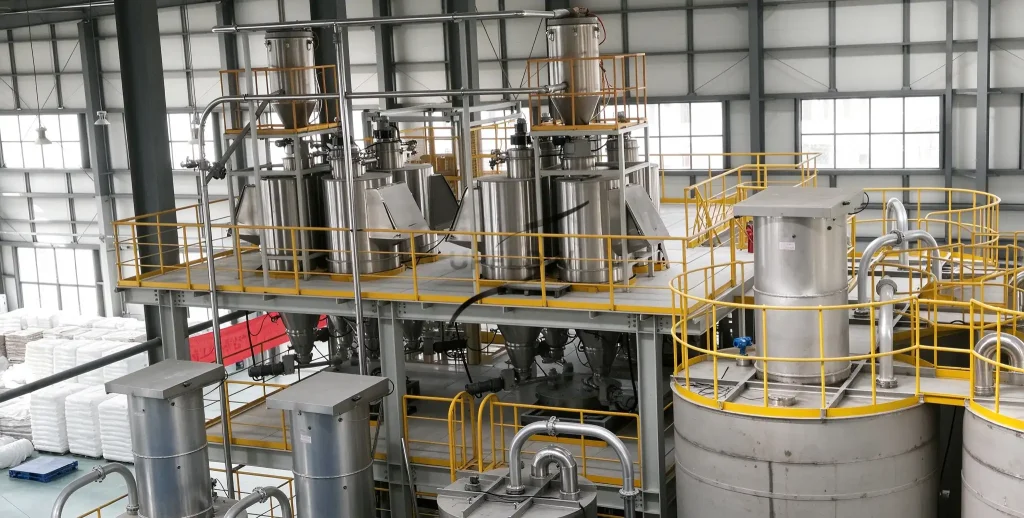
The required dosing tolerance should be defined before selecting the feeder.
For example, a process requiring a relatively broad batch tolerance may use a simpler feeding arrangement, while a formulation process with a tighter tolerance may require weighing feedback, variable-speed control and coarse/fine feeding.
The control system may use:
Coarse feeding: high feed rate for most of the target quantity.
Fine feeding: reduced feed rate as the target weight is approached.
Cutoff compensation: accounts for powder that continues moving after the feeder receives the stop signal.
These control methods can help reduce overfeeding and improve repeatability.
For a related discussion, see How to Prevent Overfeeding in Automatic Powder Dosing Systems.
7. Fine Powder Dosing May Require Different Feeder Configurations
Not every fine powder application requires the same screw arrangement.
For relatively free-flowing powders, a conventional screw feeder may provide sufficient control.
For cohesive or very fine powders, the design may need additional measures to maintain stable flow and prevent material accumulation.
For low-capacity applications, a smaller screw with a suitable speed range may be more appropriate than using a large feeder operated at very low speed.
For high-capacity applications, the feeder should be sized to provide the required production rate without sacrificing control at the lower end of its operating range.
The final configuration should therefore consider both capacity and controllability.
8. Integrating the Screw Feeder with Powder Handling Equipment
In a complete powder processing line, the screw feeder may operate together with bulk bag unloading equipment, bag dump stations, storage hoppers, weighing systems, pneumatic conveying equipment and mixers.
For example, a bulk bag unloading system can discharge powder into a hopper, while a screw feeder controls the material entering a weighing or mixing process.
UPFLOW provides Automatic Batching Systems for applications requiring controlled weighing and dosing of multiple powder ingredients.
Where material must be transferred between different process areas, a Pneumatic Conveying System can be integrated with the feeding and batching equipment.
For applications involving vacuum transfer of fine powders, a Vacuum Feeding System may also be considered according to the material and process layout.
9. What Information Should Be Provided to the Feeder Supplier?
A supplier can make a more reliable feeder selection when the project information is complete.
A typical RFQ should include:
Material name and properties
Bulk density
Particle size
Moisture content
Required feed rate
Minimum and maximum capacity
Batch size
Dosing tolerance
Hopper volume
Upstream and downstream equipment
Available installation space
Material contact requirements
Control and communication requirements
Providing these parameters early can prevent a feeder from being selected only according to its nominal capacity.
10. Project References
Screw feeding and weighing equipment can form part of a larger powder handling system.
In UPFLOW’s Magnesium Silicate Pneumatic Conveying and Batching Project, the system integrates powder feeding, weighing and pneumatic conveying equipment for an industrial material handling process.
UPFLOW has also supplied a Artificial Graphite Airflow Mixing Project involving large-capacity powder processing equipment and weighing requirements for a battery material manufacturer.
Another reference is the PVC Powder Feeding and Vacuum Conveying Project, where powder feeding and conveying equipment was integrated with existing production interfaces.
These projects illustrate why feeder selection should be considered as part of the complete process rather than as an isolated equipment purchase.
Frequently Asked Questions
What is the most important parameter when selecting a screw feeder for fine powder?
The material properties and required feed-rate range are two of the most important inputs. Bulk density, flowability, particle size and cohesiveness can significantly affect feeder performance.
Is a screw feeder suitable for fine powders?
Yes. Screw feeders are widely used for controlled powder feeding, but the screw configuration, hopper design and control method should be matched to the actual material.
What is the difference between a volumetric and gravimetric screw feeder?
A volumetric feeder controls feeding primarily according to feeder volume and speed, while a gravimetric feeder uses weight feedback to monitor the actual feed rate.
How can screw feeder overfeeding be reduced?
Coarse/fine feeding, variable-speed control and material-in-flight compensation can help reduce overfeeding when properly configured and verified through testing.
What information should I send when requesting a screw feeder quotation?
At minimum, provide the material properties, required feed rate, batch size, dosing tolerance, hopper arrangement and information about the connected upstream and downstream equipment.
Conclusion
Selecting a screw feeder for fine powder dosing requires consideration of the powder properties, required feed-rate range, screw configuration, hopper design, weighing method and control strategy.
Rather than selecting a feeder only according to maximum capacity, engineers should evaluate how consistently it can operate across the actual required feeding range.
For a customized powder dosing project, provide the material properties, required capacity, batch size and dosing tolerance to your equipment supplier. These parameters provide the foundation for selecting an appropriate screw dosing system and integrating it with the wider powder handling process.