
In industrial powder processing, production lines often handle multiple ingredients and formulations. When changing from one production recipe to another, manufacturers must consider equipment cleaning, residual material removal and batch traceability.
Without proper changeover procedures, powder remaining inside hoppers, screw feeders, pipelines or discharge valves may enter the next production batch. This can create cross-contamination risks, affect product consistency and make it difficult to identify the source of a quality problem.
For food, pharmaceutical, chemical and battery material manufacturers, powder batching recipe changeover should therefore be considered during equipment design, not only as an operational cleaning task.
This article explains the key considerations for cleaning, material identification and traceability in automatic powder batching systems.
1. Why Is Recipe Changeover Important?
A recipe changeover occurs when a production system switches from one material formulation or batch specification to another.
For example, a production line may process several powder ingredients during one shift and then switch to a different formulation.
Residual powder may remain in:
Storage and weighing hoppers.
Screw feeders and feeding outlets.
Rotary valves and discharge connections.
Pneumatic conveying pipelines.
Filters and dust collection equipment.
Mixing vessels and transfer connections.
The amount and location of retained material depend on equipment geometry, powder characteristics and operating conditions.
If these residues are not properly managed, they may contaminate the next batch or cause discrepancies between the planned and actual material quantities.
2. Identify Equipment Areas That Require Cleaning
Effective cleaning starts with identifying potential material retention points throughout the powder handling process.
Weighing hoppers: Residual powder may accumulate around hopper walls, corners and discharge outlets.
Screw feeders: Material can remain between screw flights, inside the casing and around the outlet.
Rotary valves: Internal pockets and sealing areas may retain material after discharge.
Pneumatic conveying pipelines: Powder can accumulate at bends, connection points and other areas with unfavorable material flow conditions.
Dust collectors: Filters and collection chambers may retain fine powder from previous production operations.
The cleaning method should be selected according to the material, equipment construction and required cleanliness level.
3. Select a Suitable Cleaning Method
Different powder handling systems require different cleaning approaches.
Common methods include:
Dry cleaning: Industrial vacuum cleaning, brushing or controlled removal of residual powder.
Manual cleaning: Opening accessible equipment sections for inspection and material removal.
Wet cleaning: Using suitable cleaning agents and water where equipment design and material compatibility permit.
Component removal: Dismantling selected feeding or discharge components for more thorough cleaning.
Dry cleaning may be appropriate for certain moisture-sensitive powders, while wet cleaning may be necessary for applications with specific hygiene requirements.
However, cleaning procedures must consider material hazards, dust explosion risks, chemical compatibility and equipment manufacturer instructions.
For applications requiring strict contamination control, cleaning effectiveness should be verified using suitable inspection or testing methods rather than relying only on visual appearance.
4. Design Equipment for Easier Cleaning
Cleaning efficiency is influenced significantly by equipment design.
When selecting an automatic powder batching system, consider the following features:
Accessible inspection openings.
Removable screw feeder components.
Smooth internal surfaces where appropriate.
Minimized material retention areas.
Accessible discharge valves.
Suitable pipeline connections.
Clearly defined cleaning and maintenance access.
The equipment should also be designed according to the actual material properties. Sticky, cohesive or very fine powders may require additional attention to internal surfaces and material accumulation points.
For production lines handling multiple ingredients, a suitable equipment arrangement can reduce cleaning difficulty and changeover downtime.
5. Establish Material Identification and Batch Traceability
Cleaning alone is not sufficient for managing recipe changeovers. Manufacturers also need reliable material identification and production records.
A batch traceability system should connect the raw materials used in production with the corresponding finished batch.
Important information may include:
Material name and identification code.
Supplier and incoming material lot number.
Raw material quantity.
Production recipe and revision.
Batch number and production date.
Weighing and dosing records.
Equipment cleaning and inspection status.
Operator and approval records.
A PLC-based automatic batching system can record ingredient weights and production sequences. When integrated with a suitable manufacturing execution system (MES) or enterprise resource planning (ERP) platform, the information can support broader production traceability.
6. Use Recipe Management to Control Changeovers
An automatic batching system can help reduce manual input errors by storing approved production recipes in the control system.
When a new recipe is selected, the PLC can execute the corresponding ingredient sequence and target weights.
Depending on the system configuration, additional changeover functions may include:
Recipe selection and revision control.
Material identification checks.
Batch completion records.
Cleaning status confirmation.
Operator authorization.
Production history retrieval.
These functions should be defined according to the customer’s production management requirements. Recipe management alone does not guarantee cleaning effectiveness or complete regulatory compliance.
For more information, see our guide on Multi-Ingredient Powder Batching: Sequential vs Parallel Weighing.
7. Integrating Cleaning and Traceability into Powder Handling Systems
Cleaning and traceability should be considered across the complete production line rather than only at the weighing stage.
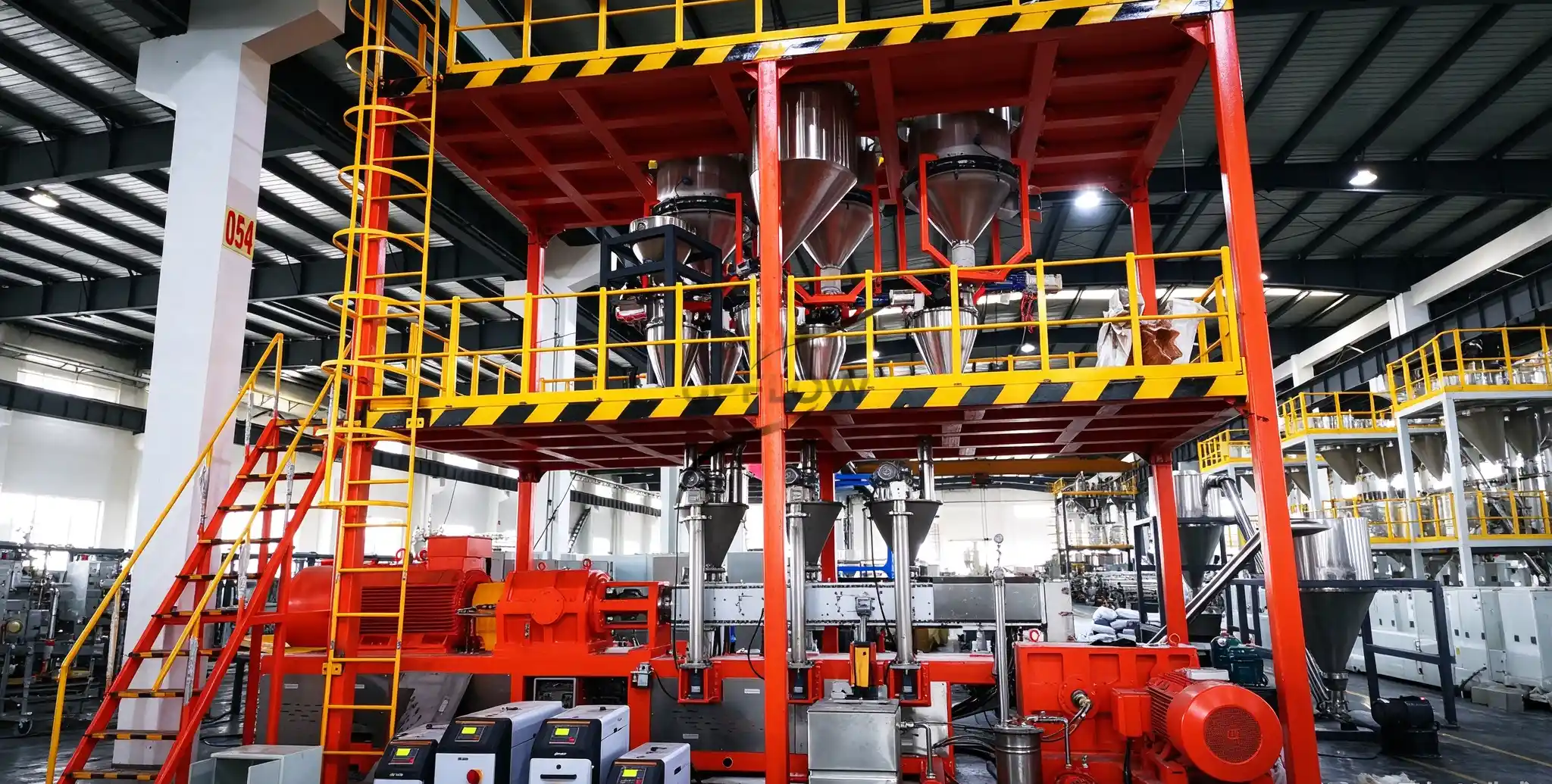
A typical arrangement may include bulk bag unloading, storage hoppers, screw feeders, weighing equipment, pneumatic conveying pipelines and mixing equipment.
Each section should have a clearly defined cleaning method, material identification point and maintenance responsibility.
UPFLOW provides customized Automatic Batching Systems for multi-ingredient weighing and dosing applications.
For upstream material supply, a Big Bag Unloading System can be integrated with storage and feeding equipment.
A Pneumatic Conveying System can also be used to transfer powder between different process areas, with pipeline layout and cleaning access considered during engineering design.
8. UPFLOW Project References
Artificial Graphite Airflow Mixing Project
UPFLOW has supplied 12 airflow mixing machines to a battery material manufacturer through four separate contracts.
Each machine has a 60 m³ design volume and a maximum loading weight of 30 tonnes per batch. The project includes PLC-based control, weighing equipment and coordinated material feeding and discharge.
This project demonstrates the importance of integrating equipment operation, material handling and process control in large-capacity powder production.
Read more about the Artificial Graphite Airflow Mixing Project.
Magnesium Silicate Pneumatic Conveying and Batching Project
UPFLOW supplied a customized powder handling system integrating bag dumping, pneumatic conveying, weighing hoppers, screw feeding and centralized control.
The project provides an engineering reference for coordinating raw material feeding, weighing and downstream processing.
Read more about the Magnesium Silicate Pneumatic Conveying and Batching Project.
PVC Powder Feeding and Vacuum Conveying Project
UPFLOW supplied a customized PVC powder feeding and vacuum conveying system incorporating bag unloading equipment, conveying units, receiving hopper modifications, pipelines and centralized electrical control.
The project illustrates the importance of coordinating material transfer equipment and production interfaces in an industrial powder handling line.
Read more about the PVC Powder Feeding and Vacuum Conveying Project.
9. Frequently Asked Questions
Q1. Why is cleaning necessary when changing powder batching recipes?
Residual material inside hoppers, feeders and pipelines may enter the next batch, creating cross-contamination risks and affecting product quality.
Q2. Which cleaning method is suitable for powder handling equipment?
Dry cleaning, manual cleaning, wet cleaning or component removal may be used depending on material properties, equipment design and cleanliness requirements.
Q3. How can cross-contamination be reduced?
Identify material retention points, establish suitable cleaning procedures, inspect critical equipment sections and verify cleaning effectiveness according to the production requirements.
Q4. What information should a batch traceability system record?
Typical records include raw material lot numbers, recipe revisions, ingredient weights, batch numbers, production dates and cleaning or inspection records.
Q5. Can an automatic batching system support recipe changeover?
Yes. PLC-based recipe management can control ingredient sequences and target weights, while additional identification, cleaning confirmation and production record functions can be integrated according to project requirements.
Conclusion
Effective powder batching recipe changeover requires coordinated equipment cleaning, material identification and production record management.
By designing accessible powder handling equipment, defining appropriate cleaning procedures and integrating recipe management with batch records, manufacturers can improve changeover consistency and reduce the risk of material cross-contamination.
UPFLOW provides customized automatic batching, powder feeding and pneumatic conveying solutions for industrial powder processing applications.
Planning a multi-recipe powder production line? Contact UPFLOW with your material list, production recipes, cleaning requirements and equipment layout to discuss a suitable system configuration.