
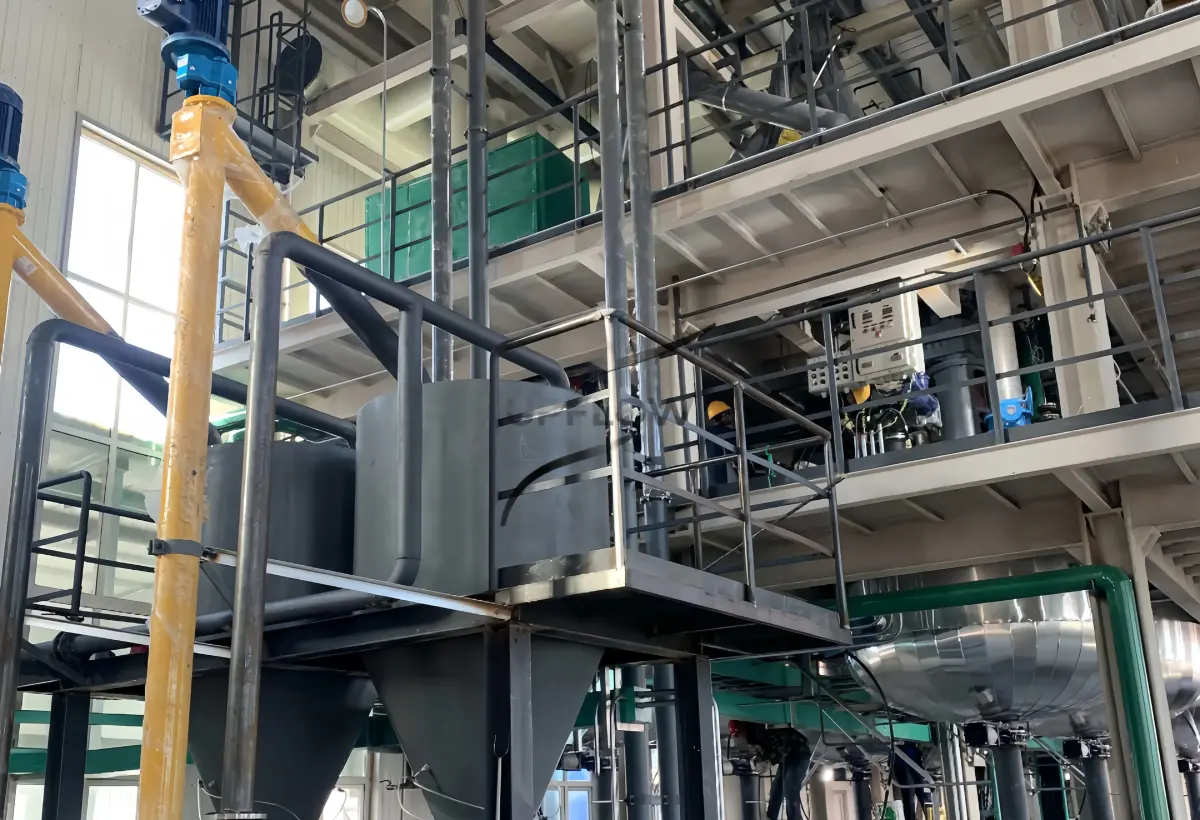
In modern advanced manufacturing industries such as additive manufacturing, aerospace engineering, powder metallurgy, and high-performance surface coating processes, the demand for stable, oxidation-free, and highly controllable powder transport technologies continues to grow rapidly, and the alloy powder pneumatic conveying system has become a core engineering solution for ensuring safe, efficient, and fully enclosed transfer of alloy powders across complex industrial production environments with maximum consistency and minimal material degradation.
Overview of Alloy Powder Materials in Industrial Applications
Alloy powder refers to finely processed metallic powders composed of multiple metal elements such as nickel, iron, aluminum, titanium, and cobalt alloys, typically produced through atomization, mechanical alloying, or reduction processes, and widely used in powder metallurgy, 3D printing, thermal spraying, and high-performance coating applications.
Although alloy powders do not have a single fixed chemical formula due to their multi-element composition, they typically exhibit key physical and chemical properties such as high surface reactivity, fine particle size distribution, oxidation sensitivity, and flowability variations depending on particle morphology, all of which make them highly challenging to handle in open environments.
For this reason, the alloy powder pneumatic conveying system is widely adopted in industrial production lines to ensure fully enclosed transport conditions, minimizing exposure to oxygen and moisture while maintaining stable feeding performance and consistent process quality.
In many production setups, the alloy powder pneumatic conveying system is also integrated with an alloy powder air flow conveying system to ensure continuous and stable material transfer across multiple processing stages.
Challenges in Handling Alloy Powder Materials
Despite its importance in advanced manufacturing, alloy powder presents significant handling challenges due to its fine particle size, high oxidation sensitivity, electrostatic behavior, and tendency to agglomerate under humid or unstable environmental conditions.
The alloy powder pneumatic conveying system is specifically designed to address these challenges by providing a fully enclosed transport environment that prevents contamination and oxidation while ensuring controlled and stable material flow.
In large-scale production environments, the alloy powder powder conveying system is often used to maintain continuous material movement between storage silos, mixing units, and forming equipment, ensuring consistent production output.
At the same time, the alloy powder air flow conveying system plays a crucial role in maintaining uniform particle dispersion and preventing material segregation during transport.
Working Principle of Alloy Powder Pneumatic Conveying System
The alloy powder pneumatic conveying system operates by using compressed air or vacuum pressure to transport alloy powder through a sealed pipeline system, enabling continuous, controlled, and contamination-free material movement between different production units.
In an alloy powder air flow conveying system, high-speed air is used to suspend and carry particles through pipelines, ensuring fast and efficient transport suitable for large-scale industrial applications.
Meanwhile, the alloy powder vacuum conveying system uses negative pressure to gently draw material into receiving equipment, making it ideal for precision dosing applications where accuracy and minimal material disturbance are required.
Together, these systems form a complete alloy powder pneumatic conveying system, capable of supporting both high-capacity and high-precision manufacturing requirements.
System Configurations: Air Flow, Vacuum, Powder Conveying, and Feeding Systems
Depending on production scale and process requirements, the alloy powder pneumatic conveying system can be configured in multiple operational modes, including dilute phase and dense phase conveying systems, each offering different advantages in efficiency, energy consumption, and material protection.
The alloy powder air flow conveying system is commonly used in high-throughput industrial environments where continuous and rapid transport is required, while the alloy powder vacuum conveying system is preferred in precision manufacturing processes where contamination control and accurate dosing are critical.
The alloy powder powder conveying system ensures stable and continuous transport of fine metal powders across multiple production stages, while the alloy powder feeding system plays a key role in accurately controlling material input into downstream equipment.
All these subsystems are often integrated into a unified alloy powder pneumatic conveying system, allowing flexible switching between different operating modes based on production needs.
Design Considerations for Alloy Powder Conveying Systems
When designing an alloy powder pneumatic conveying system, engineers must carefully evaluate particle size distribution, oxidation sensitivity, pipeline material selection, airflow velocity, and electrostatic control, as alloy powders often exhibit complex physical behaviors depending on composition and manufacturing method.
The alloy powder air flow conveying system must be optimized to maintain stable particle suspension without causing excessive turbulence or wear, while the alloy powder vacuum conveying system must ensure stable negative pressure control to prevent clogging or inconsistent flow.
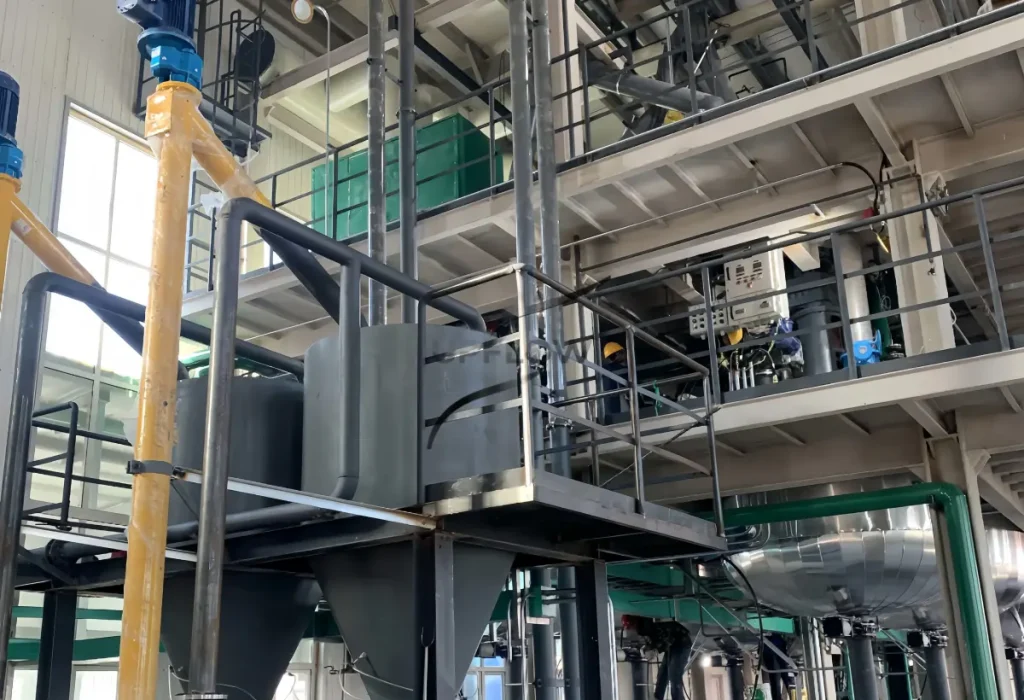
In addition, the alloy powder powder conveying system must be designed with appropriate pipeline geometry and flow control mechanisms, while the alloy powder feeding system must ensure precise metering accuracy to maintain stable downstream process performance.
Advanced systems often incorporate inert gas protection (such as nitrogen), anti-oxidation sealing, and anti-static design to further enhance the performance of the alloy powder pneumatic conveying system.
Industrial Advantages of Alloy Powder Pneumatic Conveying System
The adoption of an alloy powder pneumatic conveying system provides significant advantages in modern manufacturing, including improved material purity, reduced oxidation risk, enhanced automation, and higher production efficiency.
The alloy powder air flow conveying system enables fast and efficient long-distance transport, while the alloy powder vacuum conveying system provides precise and contamination-free feeding for high-value applications.
Meanwhile, the alloy powder powder conveying system ensures stable and continuous material movement, and the alloy powder feeding system improves dosing accuracy and process consistency, significantly enhancing overall product quality.
Conclusion
As advanced manufacturing continues to evolve, the alloy powder pneumatic conveying system has become an essential component of modern industrial powder handling infrastructure, enabling safe, efficient, and fully enclosed transport of highly sensitive metal powders across multiple high-tech industries.
By integrating key subsystems such as the alloy powder air flow conveying system, the alloy powder vacuum conveying system, the alloy powder powder conveying system, and the alloy powder feeding system, modern industries can achieve a highly optimized and flexible material handling solution that supports precision manufacturing, improves product consistency, and ensures long-term operational stability in demanding industrial environments.