
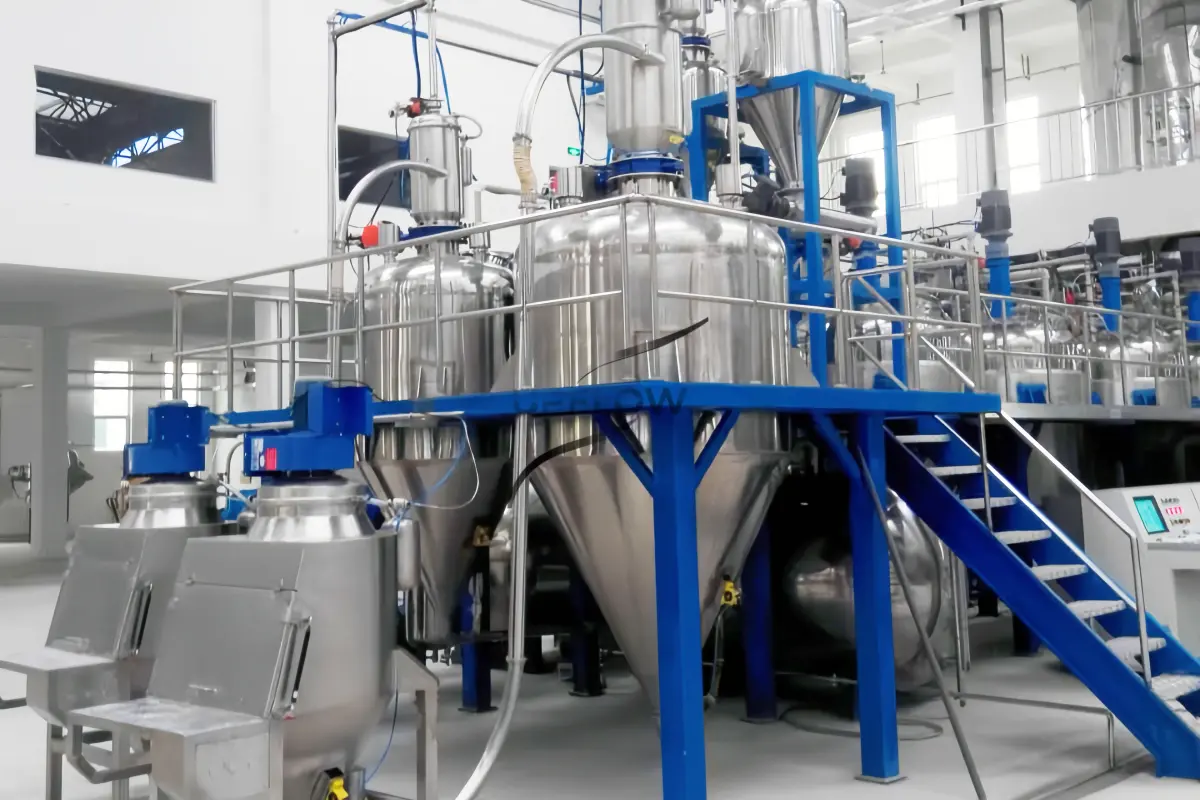
In modern bulk material handling engineering, the demand for stable, dust-free, and highly efficient powder transportation solutions continues to grow, especially in industries dealing with fine mineral powders such as iron oxides, and the iron oxide pneumatic conveying system has become a critical technological solution for ensuring continuous, enclosed, and automated transfer of these materials across production lines with high reliability and minimal environmental impact.
Overview of Iron Oxide Materials in Industrial Applications
Iron oxide is a broad term referring to a group of inorganic compounds composed primarily of iron and oxygen, most commonly including hematite (Fe₂O₃), magnetite (Fe₃O₄), and wüstite (FeO in limited industrial contexts), which are widely used as pigments, catalysts, polishing compounds, and raw materials in metallurgy, while exhibiting key characteristics such as high density, fine particulate form, strong coloration properties, and varying degrees of magnetic behavior depending on the specific oxidation state.
In industrial powder engineering systems such as the iron oxide pneumatic conveying system, the material properties of iron oxide are particularly important because its fine particle size, abrasiveness, and tendency to generate dust require a fully enclosed conveying method to ensure both product quality and workplace safety, while configurations such as the iron oxide positive pressure conveying system are often adopted to support stable high-capacity transport.
Additionally, modern production facilities frequently integrate an iron oxide centralized feeding system to ensure consistent dosing and controlled batch delivery into downstream processes, especially where continuous production stability is required.
Challenges in Handling Iron Oxide Powder
Despite its wide industrial usage, iron oxide powder presents several engineering challenges during transportation, including particle segregation, dust leakage, pipe wear, and potential material blockage, particularly when long conveying distances are involved, which makes conventional mechanical conveying systems less efficient compared to enclosed pneumatic technologies.
For this reason, the iron oxide material conveying line must be carefully designed to minimize abrasion while maintaining stable flow velocity, and in large-scale industrial layouts, the iron oxide long-distance pipeline conveying system is often required to connect storage silos with multiple processing units distributed across extensive plant areas.
In such cases, system reliability and pressure stability become critical engineering considerations, especially when operating under continuous production schedules where downtime must be minimized.
Working Principle of Iron Oxide Pneumatic Conveying System
The iron oxide pneumatic conveying system operates based on the principle of air-driven particle transport, where compressed air is used as the carrier medium to move iron oxide powder through a sealed pipeline network, ensuring that material is transported efficiently without exposure to external contamination or environmental loss.
Within this system architecture, the iron oxide positive pressure conveying system typically uses a blower or compressor to push air into the pipeline, creating a controlled pressure gradient that drives the powder through the conveying line, while maintaining stable flow conditions and reducing the risk of pipeline blockage.
In parallel, the iron oxide centralized feeding system plays a crucial role in metering and introducing material into the conveying stream, ensuring consistent feed rates and preventing fluctuations that could affect downstream process stability.
System Configurations: Positive Pressure, Central Feeding, and Long-Distance Pipelines
Depending on plant layout and production requirements, the iron oxide pneumatic conveying system can be configured in multiple ways, including dense phase or dilute phase operation, with positive pressure systems being the most commonly used in large industrial facilities due to their ability to transport material over long distances with relatively low air consumption.
The iron oxide long-distance pipeline conveying system is particularly suitable for complex industrial environments where raw material storage and production units are physically separated, enabling continuous material transfer without manual intervention or intermediate handling.
Meanwhile, the iron oxide centralized feeding system ensures that multiple production lines can be supplied from a single control point, improving operational efficiency and reducing equipment redundancy, while the iron oxide material conveying line serves as the physical infrastructure that connects all key system components into a unified transport network.
In many advanced installations, all these configurations are integrated into a single coordinated iron oxide pneumatic conveying system, allowing flexible switching between different production modes depending on demand.
Design Considerations for Iron Oxide Material Conveying Line
When designing an iron oxide material conveying line, engineers must carefully consider pipeline diameter, air velocity, pressure loss, and material abrasion characteristics, as iron oxide particles can be highly abrasive and may cause long-term wear on pipe walls if system parameters are not properly optimized.
The iron oxide positive pressure conveying system must also be calibrated to maintain sufficient pressure levels without causing excessive particle degradation, while ensuring that flow remains stable even during variations in feed rate from the iron oxide centralized feeding system.
For installations requiring extended reach, the iron oxide long-distance pipeline conveying system must incorporate booster stations or optimized routing strategies to maintain pressure balance across the entire network, ensuring consistent performance across all segments of the conveying line.
Ultimately, the efficiency of the entire iron oxide pneumatic conveying system depends on how well these engineering factors are integrated into a cohesive design strategy.
Advantages for Modern Powder Processing Industries
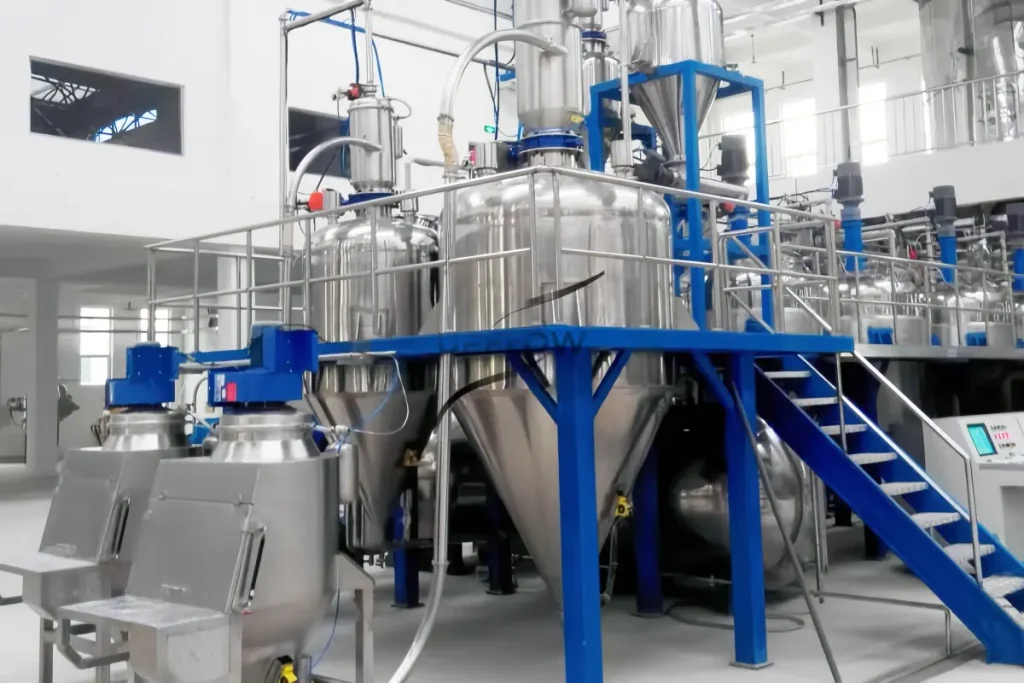
The adoption of an iron oxide pneumatic conveying system provides numerous advantages for modern industrial operations, including reduced dust emissions, improved workplace safety, lower maintenance requirements, and enhanced automation capability, all of which contribute to higher overall production efficiency.
The iron oxide centralized feeding system enables precise material control and reduces labor dependency, while the iron oxide material conveying line ensures a fully enclosed transport environment that minimizes contamination risks and product loss.
At the same time, the iron oxide positive pressure conveying system allows for high-capacity and stable long-distance transport, making it ideal for large-scale manufacturing environments where continuous operation is essential, and the iron oxide long-distance pipeline conveying system further extends system flexibility by enabling cross-facility material transfer without manual handling.
Conclusion
As industrial demand for efficient powder handling continues to increase, the iron oxide pneumatic conveying system has established itself as a core technology for safe, automated, and scalable material transport, particularly in applications involving fine and abrasive powders such as iron oxide, where system reliability, environmental control, and operational efficiency are critical to long-term production success.
By integrating advanced configurations such as the iron oxide positive pressure conveying system, the iron oxide centralized feeding system, the iron oxide long-distance pipeline conveying system, and a well-engineered iron oxide material conveying line, modern industries can achieve a highly optimized and future-ready bulk material handling solution that supports both productivity and sustainability goals.