
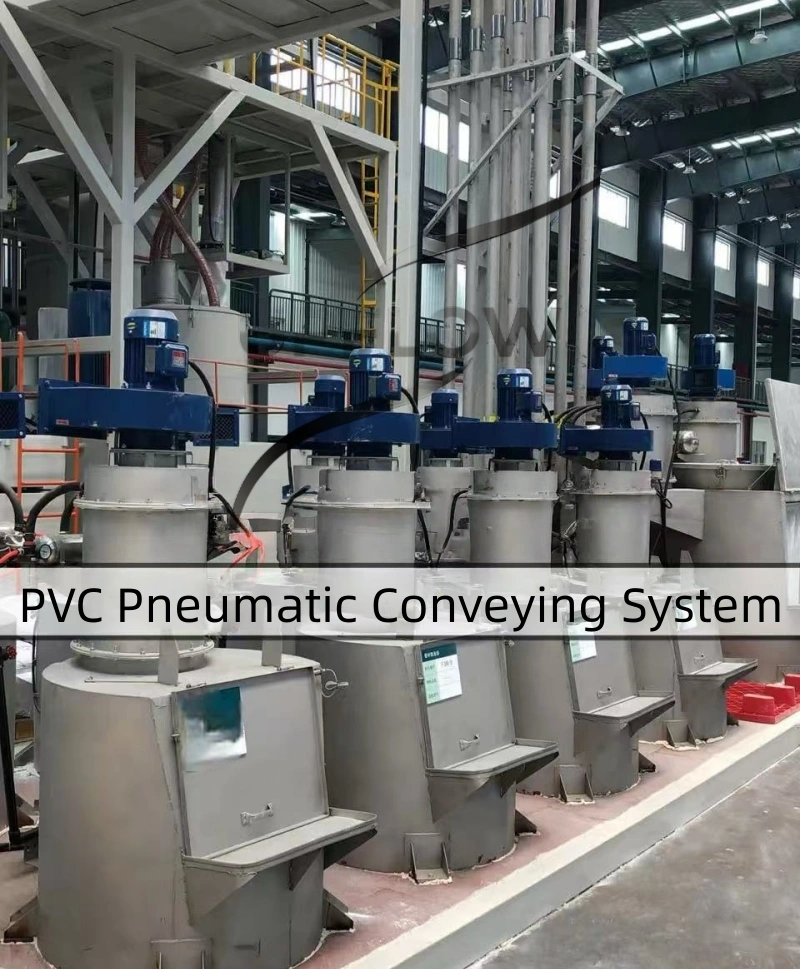
A plastic pellet conveying system, also known as a centralized feeding system plastic solution, is becoming essential in modern injection molding plants. By adopting pneumatic conveying plastic pellets, manufacturers can significantly improve material handling efficiency, reduce labor costs, and maintain a clean and automated production environment. Compared with traditional manual feeding methods, centralized systems offer higher stability, lower material loss, and better production consistency—making them a key upgrade for smart plastic manufacturing.
Industry Challenges: Why Traditional Feeding Is No Longer Efficient
According to recent industry reports, nearly 68% of injection molding workshops still rely on manual or decentralized feeding systems. These traditional methods typically achieve only around 45% of the efficiency of automated systems, while material loss can reach over 8%, far exceeding advanced industry standards.
Common problems include:
Low conveying efficiency
High labor dependency (6–10 workers per shift)
Material waste and contamination
Disorganized workshop environments
These issues directly impact production cost and product quality, making centralized feeding systems a necessary upgrade.
Typical Technical Parameters of Plastic Pellet Conveying Systems
A well-designed pneumatic conveying system for plastic pellets typically includes the following specifications:
Capacity: 1–5 ton/h or Customizable
Conveying Distance: 50–200 m
Material: Plastic pellets (PP, PE, ABS, PET, etc.)
Conveying Method: Vacuum or positive pressure conveying
Pipeline Diameter: DN38–DN102
Control System: PLC automatic control
Energy Consumption: Reduced by up to 30–35% compared to manual systems
All parameters can be customized based on plant layout and production requirements.
What Is a Centralized Feeding System in Plastic Injection Molding?
A centralized feeding system is an automated solution that transports plastic pellets from a central storage location to multiple injection molding machines through pipelines. It integrates:
Pneumatic conveying technology
Material drying and mixing
Intelligent distribution control
Learn more about: Pneumatic Conveying Systems for Plastic Pellets and Resin.
How the System Works: Automated Material Handling Process
The centralized feeding system operates in a fully automated sequence:
1.Material Preparation
Virgin pellets and recycled materials are fed into the system and mixed proportionally.
2.Drying Process
Materials are dried to ensure optimal processing quality and prevent defects.
3.Pneumatic Conveying
Pellets are transported through sealed pipelines using airflow.
4.Intelligent Distribution
Materials are automatically delivered to each injection molding machine based on demand.
5.Real-Time Monitoring
Sensors detect material levels and trigger automatic feeding.
This process ensures continuous and stable production with minimal human intervention.
Key Components of the System
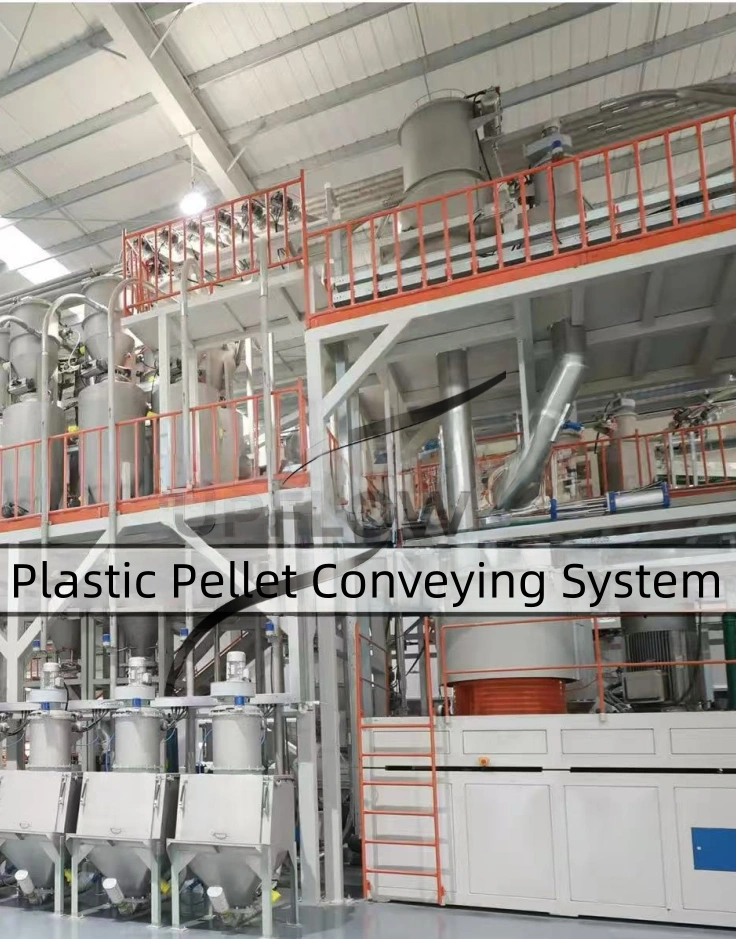
A complete plastic pellet conveying system typically consists of:
Central Vacuum Blower System (with redundancy design)
Dust Collection Unit (pulse cleaning system)
Material Storage & Feeding Station
Drying System (Dehumidifying Dryer)
Material Distribution Station
Vacuum Receivers on Each Machine
PLC Intelligent Control System
For bagged materials:Automatic Bag Emptying Machine for Granule Handling
Advantages of Centralized Feeding Systems
1. Significant Labor Cost Reduction
One centralized system can replace manual handling, reducing labor requirements by up to 70–75%.
2. Higher Production Efficiency
Continuous material supply
No downtime due to material shortage
Production efficiency improved by 50–65%
3. Lower Material Loss
Closed pipeline conveying reduces waste, lowering material loss from ~8% to below 3%.
4. Cleaner and Safer Workshop
Dust-free conveying improves the working environment and meets environmental standards.
According to the Plastics Industry Association, clean material handling is critical for ensuring product quality and safety.
5. Stable Product Quality
Precise material mixing (±2% accuracy)
Consistent drying conditions
Reduced defects such as bubbles or color variation
Real Application Cases
Case 1: Injection Molding Factory (20 Machines)
Problem:
Manual feeding required 8 workers per shift, with high material loss.
Solution:
A centralized ring-type conveying system with automatic material level monitoring.
Results:
Efficiency increased by 65%
Labor reduced by 75%
Material loss reduced to 3.2%
Case 2: Plastic Products Manufacturer
Challenge:
Compact space and high humidity environment.
Solution:
Compact system with vertical silos and integrated drying module.
Results:
Space saving up to 40%
Moisture content controlled below 0.02%
Product qualification rate increased to 99.5%
Is a Centralized Feeding System Expensive?
Many manufacturers assume centralized systems are costly, but this is often a misconception.
In reality:
Initial investment is higher
BUT long-term savings are significant
Key return areas include:
Reduced labor costs
Lower material waste
Increased production output
Most systems achieve ROI within 6–12 months, making them a cost-effective investment.
Design Considerations for Your System
When selecting a pneumatic conveying plastic pellets system, consider:
Material type (pellets, regrind, powder)
Capacity requirements (1–5 ton/h or higher)
Conveying distance and layout
Number of injection molding machines
Environmental conditions (temperature, humidity)
Learn more:Dense Phase vs Dilute Phase Pneumatic Conveying: Key Differences
Future Trends in Plastic Material Handling
Smart factory integration (Industry 4.0)
Remote monitoring and diagnostics
Energy-efficient conveying systems
Fully automated material management
Centralized feeding systems will continue to play a key role in the digital transformation of plastic manufacturing.
Conclusion
A plastic pellet conveying system is no longer optional—it is essential for modern injection molding plants. By implementing a centralized feeding system plastic solution, manufacturers can achieve higher efficiency, lower costs, and better product quality.
With the adoption of pneumatic conveying plastic pellets, factories can move toward intelligent, automated, and scalable production systems.
Looking for a reliable plastic pellet conveying system for your injection molding plant?
Contact us today for a customized centralized feeding system plastic solution.
We provide:
✔ Free system design & layout planning
✔ Turnkey pneumatic conveying solutions
✔ Fast delivery & technical support
Send your requirements now and get a professional solution within 24 hours!