
Introduction
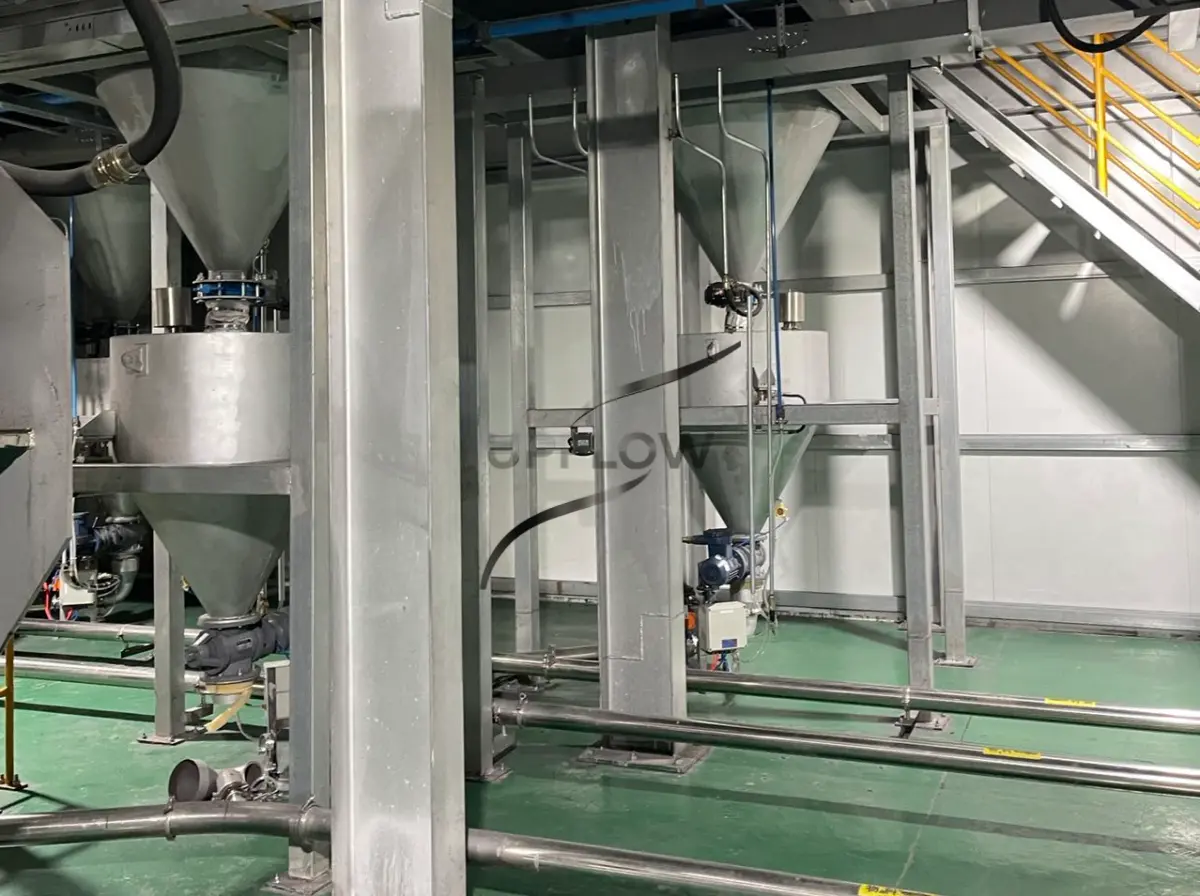
A zinc stearate pneumatic conveying system is a specialized solution designed for transporting ultra-fine, low-density powders through enclosed pipelines using controlled airflow, which is widely used in plastics, rubber, coatings, and chemical industries where dust control, product purity, and stable feeding are essential for consistent production performance.
Zinc Stearate Material Characteristics
Zinc stearate (chemical formula: Zn(C₁₈H₃₅O₂)₂) is commonly known as a metallic soap and is typically supplied as a very fine, lightweight powder with a bulk density generally in the range of 0.2 to 0.5 t/m³, depending on grade and processing conditions.
Due to its extremely fine particle size and hydrophobic nature, zinc stearate is highly prone to dusting during handling, and it can easily become airborne if not properly contained, while its low density and poor flowability may lead to feeding instability, bridging, or inconsistent conveying. In addition, its tendency to adhere to equipment surfaces can create buildup inside pipelines, which makes the design of a proper zinc stearate pneumatic conveying system particularly important for ensuring smooth and reliable operation.
Working Principle
The zinc stearate pneumatic conveying system uses airflow generated by vacuum pumps to move powder through pipelines, where particles are either suspended in air or conveyed in a controlled flow depending on system configuration, and by adjusting air velocity and pressure, the system can achieve continuous conveying while minimizing material segregation or excessive dust generation.
For applications requiring strict dust control, a vacuum conveying system (negative pressure conveying system) is often preferred, as it prevents powder leakage and keeps the entire conveying process fully enclosed.
Advantages of Zinc Stearate Pneumatic Conveying System
One of the key advantages of a zinc stearate pneumatic conveying system is its ability to achieve a fully enclosed conveying system, which effectively prevents dust escape and ensures a cleaner and safer production environment, especially when handling ultra-fine powders that are sensitive to contamination.
The system also provides stable and continuous conveying, reducing manual handling and minimizing production interruptions, while its flexible pipeline layout allows it to adapt to complex plant designs without requiring major structural changes.
Another important benefit is improved product consistency, as the material is protected from external moisture and contamination throughout the conveying process, which is particularly critical for applications where zinc stearate is used as a lubricant or release agent in precision formulations.
In addition, modern systems can be integrated into a centralized feeding system, enabling multiple production lines to be supplied from a single source, improving operational efficiency and reducing labor requirements.
Key Design Considerations
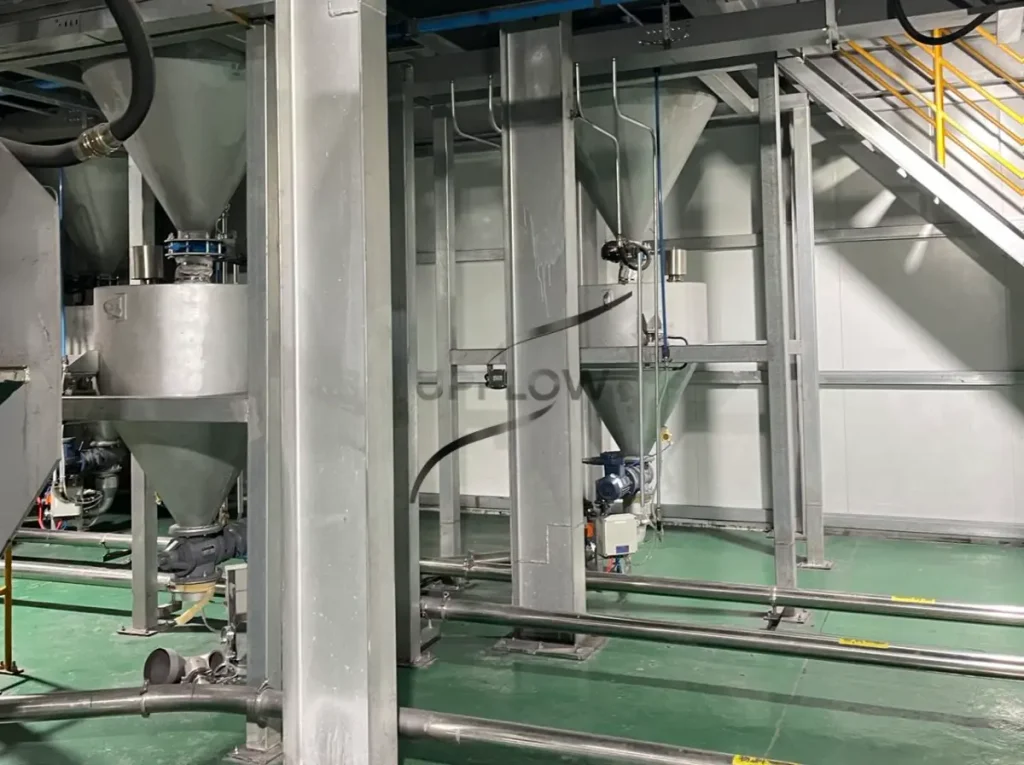
When designing a zinc stearate pneumatic conveying system, it is essential to consider its low bulk density and poor flowability, which require carefully controlled airflow to avoid material accumulation or unstable transport conditions.
A dilute phase conveying system is commonly used for this type of powder, as it allows for relatively simple system design and stable transport over medium to long distances, although airflow velocity must be optimized to prevent excessive dust generation.
Furthermore, proper feeding control is crucial to ensure consistent material entry into the system, while anti-static and dust collection measures should be implemented to enhance safety and environmental performance.
Industrial Applications
The zinc stearate pneumatic conveying system is widely applied in industries such as plastics compounding, rubber processing, coatings manufacturing, and chemical production, where it plays a critical role in ensuring accurate and contamination-free powder transfer.
By integrating with batching and mixing processes, the system helps improve production efficiency while maintaining high-quality standards in end products.
Conclusion
In summary, a well-designed zinc stearate pneumatic conveying system offers a reliable and efficient solution for handling ultra-fine powders, combining the benefits of a negative pressure conveying system, enclosed conveying system, centralized feeding system, and dilute phase conveying system to achieve clean, stable, and flexible material transfer in modern industrial environments.
Looking for a reliable zinc stearate pneumatic conveying system? Contact us today for a customized solution tailored to your material and process requirements.