
- admin
- Apr 21, 2026
- Screw Conveyor
Material Overview: What Is Diammonium Phosphate (DAP)?
Diammonium phosphate, commonly known as DAP fertilizer, is one of the most widely used phosphorus-based fertilizers in agriculture, valued for its high nutrient content and excellent solubility. Its chemical formula is (NH₄)₂HPO₄, and it is also referred to as phosphate fertilizer, ammonium phosphate, or granular DAP, depending on application and processing form.
In industrial handling, DAP is typically processed as granular or powder material, with a bulk density ranging from approximately 0.9 to 1.2 g/cm³, depending on moisture content and particle size distribution. It is characterized by good flowability in dry conditions, slight hygroscopic behavior, and sensitivity to moisture, which may lead to caking or agglomeration during storage and transport.
DAP materials can be further classified into granular diammonium phosphate (used for direct application) and powdered DAP (used for blending and industrial processing), both of which require controlled conveying systems to maintain product quality and prevent material loss.
What Is a Diammonium Phosphate Pneumatic Conveying System?
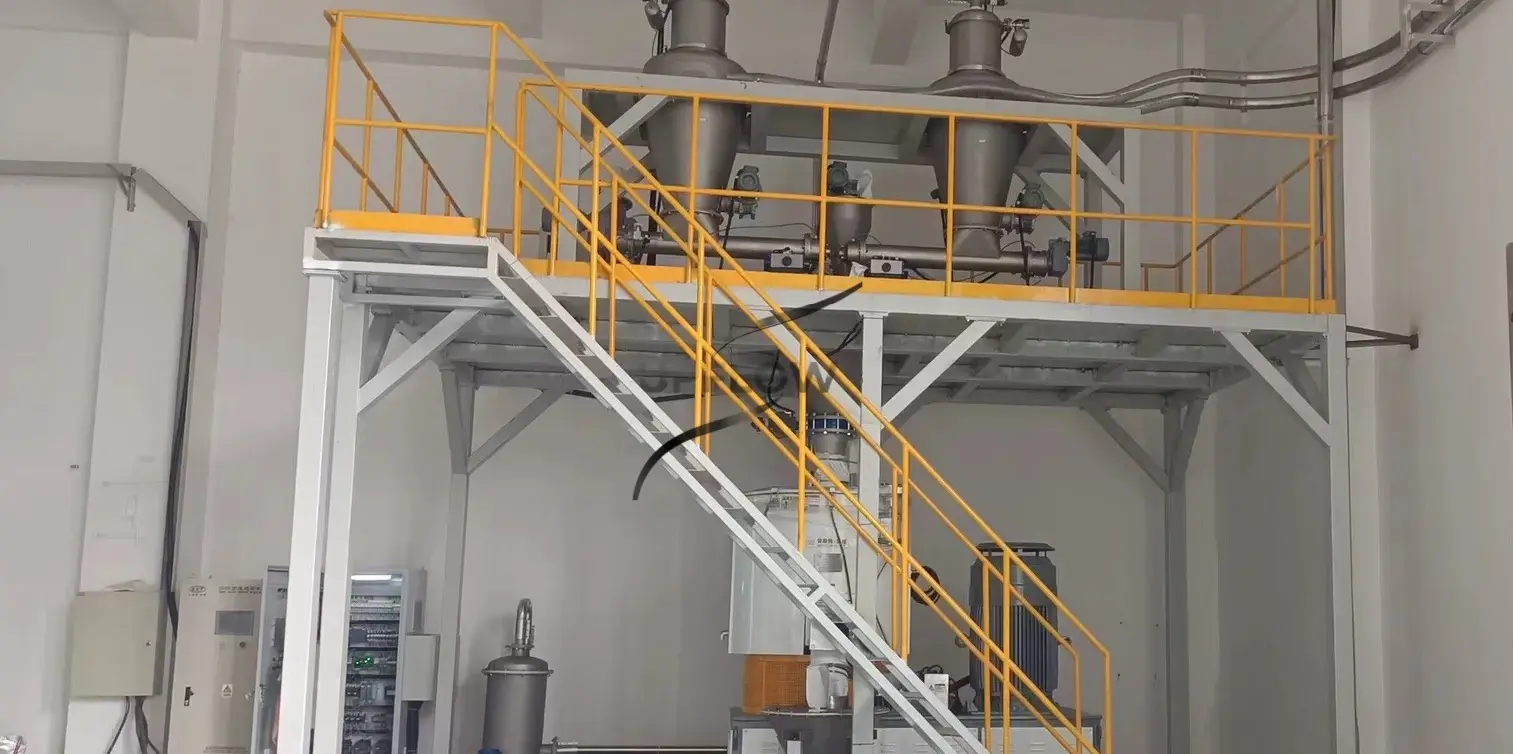
A diammonium phosphate pneumatic conveying system is a specialized solution designed to transport DAP fertilizer powder or granules through pipelines using airflow as the driving force.
In industrial applications, it is also known as a sealed conveying system for diammonium phosphate powder, a long-distance conveying system for DAP fertilizer materials, a powder transfer system for phosphate fertilizer handling, or a pneumatic powder conveying system for ammonium phosphate materials, depending on system design and production requirements.
By forming a stable gas-solid flow inside enclosed pipelines, this powder conveying system for diammonium phosphate materials ensures continuous, dust-free, and efficient transport across fertilizer production plants and logistics facilities.
Conveying Mechanism and System Operation
The diammonium phosphate pneumatic conveying system operates based on gas-solid two-phase flow, where compressed air or controlled airflow moves DAP particles through sealed pipelines.
In a positive pressure conveying mode for DAP fertilizer powder, compressed air pushes the material along the pipeline, making it suitable for long-distance conveying systems for diammonium phosphate materials. In contrast, a vacuum-based enclosed conveying system for DAP powder draws material into the pipeline under negative pressure, offering enhanced dust control and cleaner operation.
During the conveying process, DAP particles are either suspended in the airflow or transported in clusters, depending on system configuration, ensuring stable movement while minimizing degradation and material loss.
Advantages of Pneumatic Conveying for DAP Fertilizer
The diammonium phosphate pneumatic conveying system provides several key advantages compared to traditional mechanical conveying methods.
First, as a fully enclosed conveying system for DAP powder materials, it effectively prevents dust emission and environmental contamination, which is especially important for fertilizer handling where dust control regulations are strict.
Second, the system supports long-distance and flexible pipeline layout, allowing efficient transport between storage silos, production units, and packaging lines. As a powder transfer system for phosphate fertilizer materials, it also reduces manual handling and improves overall automation.
In addition, controlled airflow ensures stable feeding and minimizes material segregation, which helps maintain consistent product quality during blending and processing operations.
Application Scenarios in Fertilizer Industry
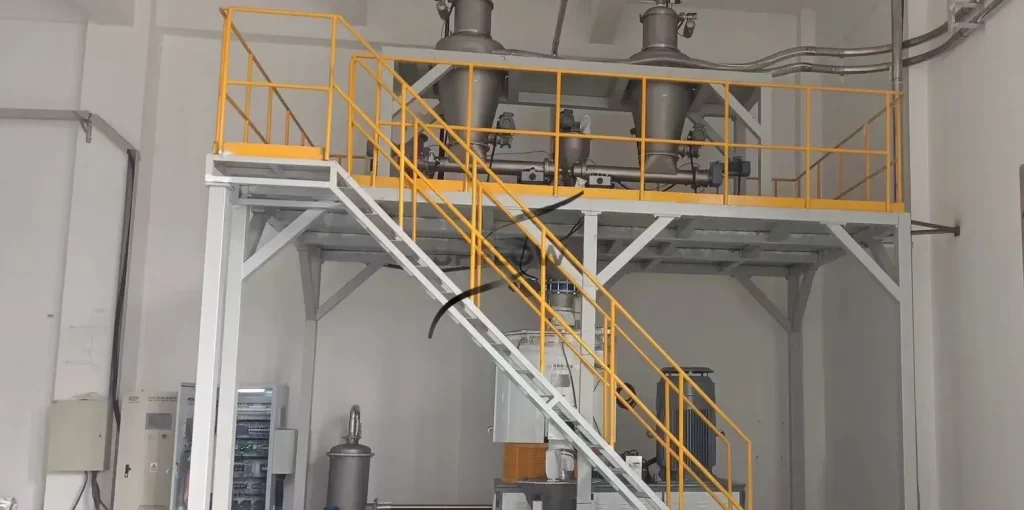
The diammonium phosphate pneumatic conveying system is widely used in fertilizer production plants, storage terminals, and bulk material handling facilities.
As a long-distance conveying system for DAP fertilizer powder, it is commonly applied in transporting materials from production units to storage silos or from warehouses to packaging systems. In blending plants, a powder conveying system for diammonium phosphate materials ensures accurate and continuous feeding into mixing systems, improving fertilizer formulation consistency.
In logistics and port operations, a sealed conveying system for DAP materials helps achieve efficient loading, unloading, and transfer of bulk fertilizers while minimizing dust and material loss.
Conclusion
The diammonium phosphate pneumatic conveying system provides a reliable, efficient, and environmentally friendly solution for handling DAP fertilizer materials. By integrating sealed conveying systems, long-distance conveying systems, powder transfer systems, and pneumatic powder conveying systems for diammonium phosphate, manufacturers and operators can achieve improved efficiency, reduced dust emissions, and enhanced process control in modern fertilizer production and handling operations.