Choosing the right positive pressure conveying system for your plant is not just a technical decision, but a key factor that directly affects production efficiency, operational stability, and long-term cost control, because different types of material conveying systems perform very differently depending on application conditions, and selecting the wrong system can lead to issues such as pipeline blockage, excessive wear, high energy consumption, and unstable material flow. A properly engineered system, on the other hand, ensures efficient, dust-free, and long-distance conveying, making it an essential part of modern pneumatic conveying systems used in industrial production
A positive pressure conveying system pushs powders or granules through pipelines from one feeding point to one or multiple discharge points, and compared with a vacuum conveying system or negative pressure conveying system, it is more suitable for long-distance conveying, high-capacity transport, and centralized distribution. In many industrial applications, especially those involving large-scale production, this type of high pressure conveying system becomes the preferred choice due to its ability to handle complex layouts and continuous operation
The first and most important step in selecting a positive pressure conveying system is understanding material characteristics, because material properties determine most of the system design parameters, including airflow requirements, pipeline configuration, and conveying method. Fine powders typically require a well-controlled powder conveying system, while larger particles or bulk solids are better handled through a granular conveying system, and factors such as moisture content, abrasiveness, and fragility must also be carefully evaluated to avoid blockage, excessive wear, or material degradation during conveying
In addition to material properties, defining conveying requirements such as distance, capacity, and feeding points is essential for selecting the right system configuration, as short-distance transport may be handled by simpler low pressure conveying systems, while long-distance or high-capacity applications require more robust high pressure conveying systems with optimized pipeline design and stronger air supply. In large plants with multiple production lines, a central conveying system can further improve efficiency by distributing materials from a single source to multiple destinations, reducing manual handling and improving overall process control
Choosing the appropriate conveying method is another critical factor, as dilute phase conveying offers lower initial cost and higher velocity for general applications, while dense phase conveying provides low-velocity transport that reduces wear and protects fragile materials, making it more suitable for long-distance or sensitive material handling. In some complex layouts, hybrid solutions that combine positive pressure conveying systems with negative pressure conveying systems may also be used to optimize system flexibility and performance
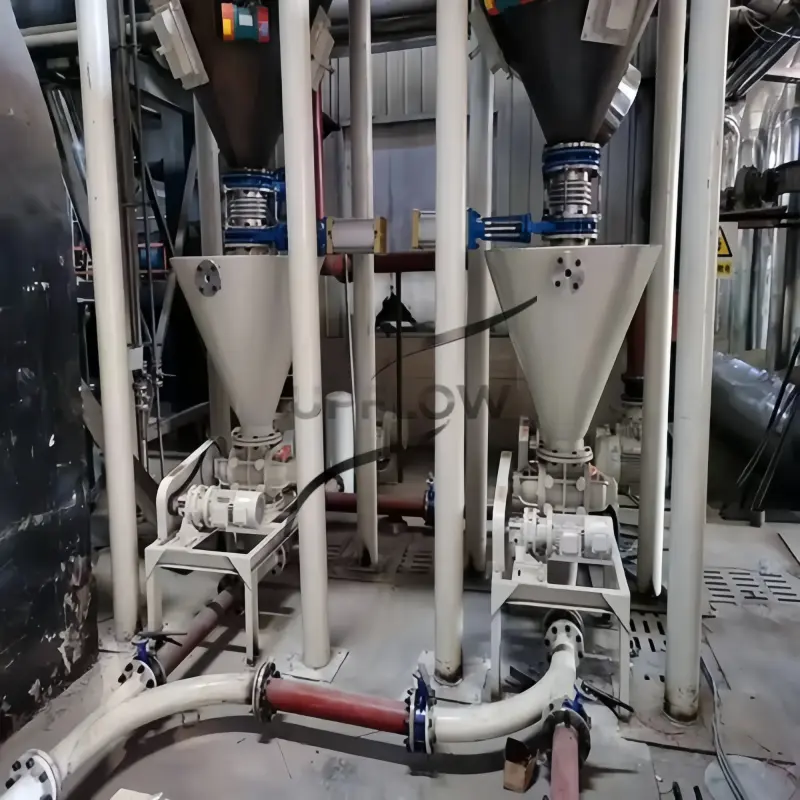
Environmental and safety requirements must also be considered during system selection, especially in industries such as food, pharmaceuticals, and chemicals, where hygiene, dust control, and explosion protection are critical. A properly designed enclosed conveying system can effectively prevent dust leakage and contamination, while additional features such as filtration systems, explosion-proof design, and noise control ensure compliance with industry standards and safe operation
From a cost perspective, it is important to evaluate not only the initial investment but also long-term operating costs when selecting a positive pressure conveying system, because factors such as energy consumption, maintenance requirements, and system lifespan have a significant impact on total cost of ownership. A low-cost system with poor design may result in higher energy usage and frequent maintenance, while a well-designed pneumatic conveying system can reduce energy consumption, improve efficiency, and deliver better long-term value
Supplier selection is equally important, as the performance of a positive pressure conveying system depends heavily on engineering capability rather than just equipment quality, and choosing an experienced supplier ensures proper system design, accurate calculations, and reliable after-sales support. Many successful projects rely on turnkey suppliers who provide integrated solutions, including system design, equipment manufacturing, installation, and commissioning, ensuring consistent performance and reduced project risk
In real industrial applications, optimized system design plays a decisive role in performance, as factors such as pipeline routing, airflow control, and feeding stability must be carefully balanced to achieve efficient and reliable operation. By minimizing bends, optimizing conveying velocity, and matching feeding equipment correctly, a material conveying system can achieve stable performance while reducing energy consumption and maintenance requirements
Overall, choosing the right positive pressure conveying system requires a comprehensive evaluation of material characteristics, conveying requirements, system configuration, and supplier capability, rather than focusing on a single parameter such as price or capacity. A properly selected system ensures efficient, clean, and scalable production, making it a key investment for modern industrial plants seeking long-term performance and profitability