
In industrial powder processing, an automatic batching cycle may be interrupted by a power failure, emergency stop, equipment fault or communication problem. When this happens, the control system must determine which ingredients have already been weighed, which feeding operations are incomplete and whether the current batch can safely continue.
For manufacturers using a PLC-controlled powder dosing system, an interrupted batch is not simply a matter of restarting the feeder. The system must maintain accurate batch records, identify the current production stage and prevent previously dosed ingredients from being added twice.
This is particularly important in chemical, food, pharmaceutical and battery material production, where recipe accuracy, material traceability and consistent batch control are essential.
1. What Causes an Automatic Powder Batching Process to Stop?
An interrupted powder batching process can result from several operating conditions, including:
Power failure: The PLC, weighing instruments or feeding equipment lose power during a dosing cycle.
Emergency stop: An operator activates the emergency stop circuit because of an abnormal operating condition.
Feeder malfunction: A screw feeder, rotary valve or discharge device stops working before reaching its target weight.
Weighing signal failure: Load cell signals become unstable or the weighing controller reports an abnormal reading.
Communication interruption: The PLC loses communication with remote I/O, weighing instruments or the factory control system.
Material supply problems: A storage hopper becomes empty, a feeding line becomes blocked or material discharge becomes unstable.
Although these interruptions may produce similar symptoms on the HMI, their causes and recovery procedures can be very different.
A reliable automatic batching system should therefore identify the reason for interruption before allowing the operator to continue production.
2. Retain Batch Status and Actual Weighing Data
One of the most important requirements in batch interruption recovery is maintaining the production status before the interruption occurred.
The PLC-controlled dosing system should record the relevant information for each ingredient, including its target weight, actual measured weight, feeding status and completion status.
For example, a production recipe may contain eight powder ingredients. If the first three ingredients have completed weighing and the fourth ingredient is only partially dosed when the system stops, the control system should distinguish between completed, incomplete and pending operations.
A typical batch record may contain:
Batch identification number and recipe revision.
Ingredient name and target weight.
Actual weighed quantity.
Feeding and discharge status.
Equipment alarm and interruption time.
Operator intervention and restart records.
Retaining this information helps prevent duplicate dosing and makes it easier to identify the exact production stage after an interruption.
However, retaining PLC data alone does not prove that the physical material remaining in the hopper matches the recorded quantity. The weighing condition and equipment status must also be checked before recovery.
3. Establish a Controlled Batch Restart Procedure
After an interruption, the system should not automatically restart every feeding device from the beginning.
Instead, the recovery procedure should follow the actual batch status and the cause of the interruption.
A typical restart procedure includes:
Step 1: Identify the interruption. Review the PLC alarm history and determine whether the stop was caused by a power failure, emergency stop, feeder fault or communication problem.
Step 2: Check the equipment condition. Confirm that the screw feeders, rotary valves, weighing hoppers, discharge valves and connected conveying equipment are ready for operation.
Step 3: Verify actual material quantities. Compare the retained weighing records with the current physical condition of the hopper and material transfer equipment.
Step 4: Confirm the completed ingredients. Determine which ingredients have been fully dosed and whether any partially completed ingredient needs to be weighed again or adjusted.
Step 5: Authorize the recovery operation. After the relevant interlocks and process conditions have been satisfied, an authorized operator can select the appropriate restart procedure.
This approach helps prevent repeated feeding, incorrect batch quantities and unexpected material discharge during recovery.
4. Design PLC Control Logic for Different Interruption Conditions
Different interruption events should trigger different control responses.
For example, a short communication interruption may require the system to verify the status of remote equipment before continuing, whereas a power failure may require the PLC to recover retained batch information and verify the physical weighing condition.
An emergency stop should always require the applicable safety reset and equipment inspection before production can resume.
The control program can use clearly defined batch states, such as:
Batch preparation.
Material feeding.
Weighing completed.
Material discharge.
Batch interruption.
Recovery verification.
Batch completion.
Each state should have defined transition conditions and equipment interlocks.
For more complex powder processing lines, the PLC can also communicate with a higher-level production management system to record batch status and production history.
The exact recovery logic should be determined according to the equipment arrangement, risk assessment and customer’s production requirements.
5. Prevent Duplicate Feeding and Incorrect Batch Quantities
One common risk during batch recovery is adding an ingredient that has already been partially or completely discharged.
For example, if a 100 kg ingredient has already been weighed and discharged into a mixer, restarting the complete recipe could introduce another 100 kg and create a significant formulation error.
To prevent this situation, the control system should distinguish between weighing completion and discharge completion rather than treating them as the same operation.
The recovery strategy should also account for material remaining inside screw feeders, discharge chutes and transfer pipelines, because material-in-flight may continue moving after the stop command.
For systems handling multiple ingredients, the PLC should maintain separate status records for each dosing operation and require verification before repeating an incomplete step.
See our related guide on How to Prevent Overfeeding in Automatic Powder Dosing Systems.
6. Integrate Recipe Management, Weighing and Batch Traceability
A complete automatic powder batching system should connect recipe management, weighing feedback and batch production records.
The HMI touch screen allows operators to select approved recipes and monitor the current dosing sequence, while the PLC coordinates the feeding equipment, weighing instruments and discharge operations.
Depending on project requirements, the system can also include:
Recipe selection and revision management.
Ingredient target weight configuration.
Actual weighing data recording.
Batch interruption and recovery history.
Alarm and operator event records.
Communication with remote monitoring systems.
Production data exchange through suitable interfaces.
For additional information, read Powder Batching Recipe Changeover: Cleaning and Material Traceability.
7. Integrating PLC-Controlled Dosing with Complete Powder Handling Equipment
Batch interruption management should be considered during the engineering design of the complete production line, including raw material unloading, storage, feeding, weighing, conveying and mixing equipment.
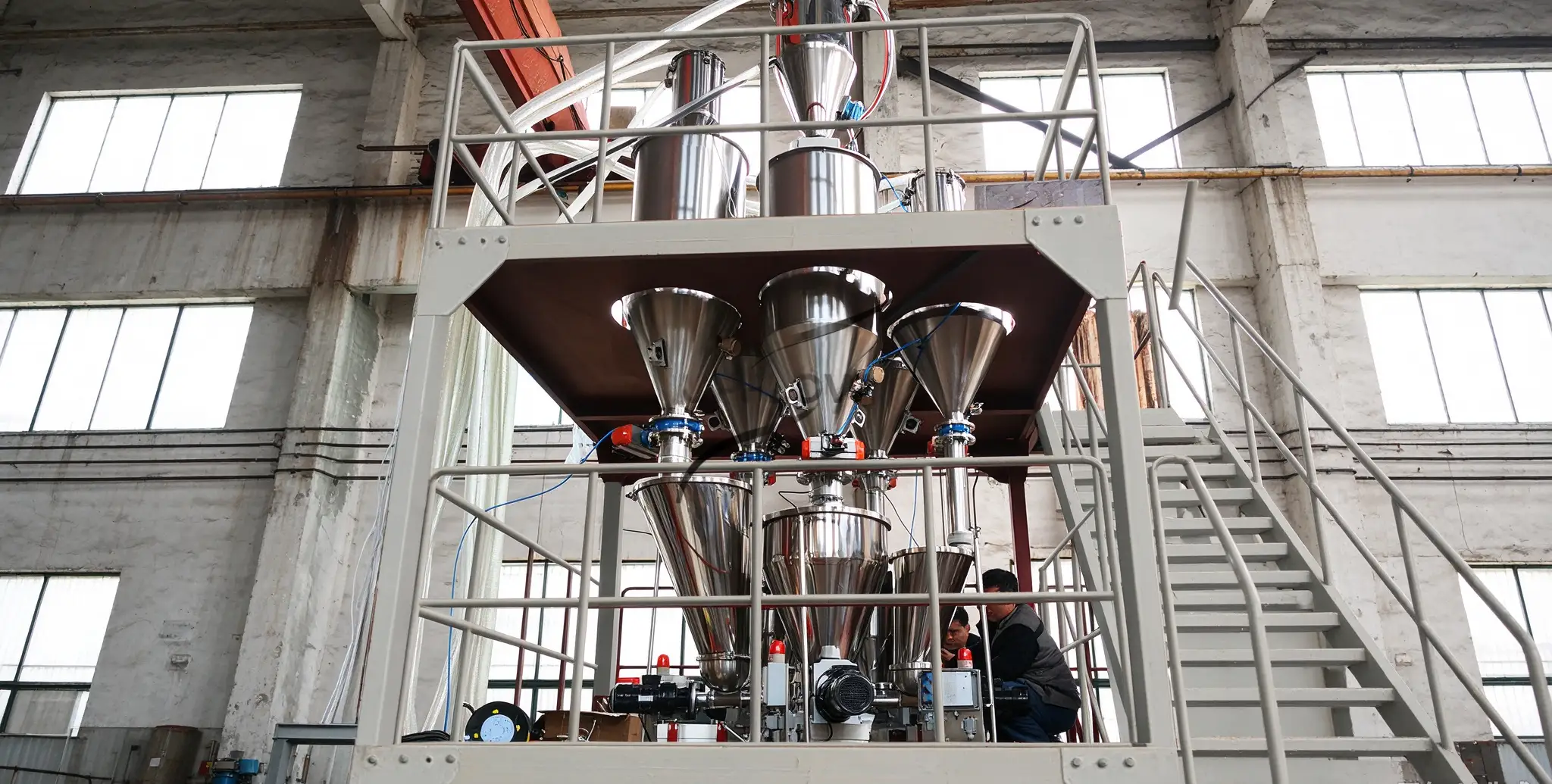
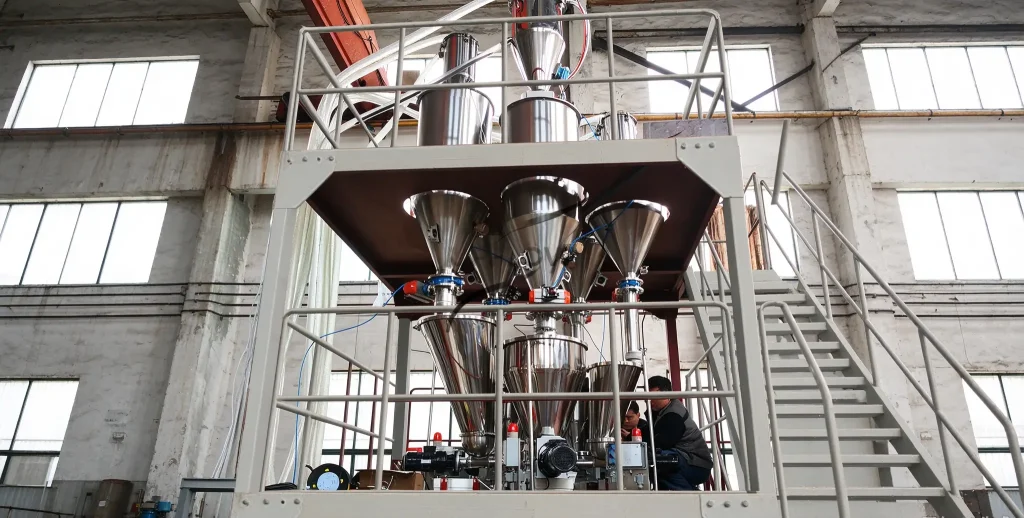
UPFLOW provides customized Automatic Batching Systems for multi-ingredient powder weighing and dosing applications.
A Pneumatic Conveying System can be integrated for enclosed material transfer, while a Big Bag Unloading System can supply bulk powders to the upstream storage and feeding process.
The PLC control scope, communication interfaces, alarm handling and restart requirements should be clearly defined during the project specification and engineering stage.
8. UPFLOW Project References
Artificial Graphite Airflow Mixing Project
UPFLOW has supplied 12 airflow mixing machines to a battery material manufacturer through four separate contracts.
Each machine has a 60 m³ design volume and a maximum loading weight of 30 tonnes per batch. The technical requirements include PLC and HMI control, weighing functions, a reserved RS485 communication interface and the ability to switch between local and remote control.
This project demonstrates the importance of coordinating weighing equipment, material feeding and centralized process control in large-capacity powder processing applications.
Read more about the Artificial Graphite Airflow Mixing Project.
Magnesium Silicate Pneumatic Conveying and Batching Project
UPFLOW supplied a customized system integrating manual bag dumping, pneumatic conveying, weighing hoppers, screw feeding and centralized control.
The project provides an engineering reference for integrating material feeding, weighing and downstream processing equipment.
Read more about the Magnesium Silicate Pneumatic Conveying and Batching Project.
European Anode Material Big Bag Feeding Project
UPFLOW supplied multiple big bag feeding systems for a European anode material manufacturer, supporting the customer’s battery material handling process.
This project provides an additional reference for integrating bulk material receiving and feeding equipment into industrial production lines.
Read more about the European Anode Material Big Bag Feeding Project.
9. Frequently Asked Questions
Q1. Can a PLC-controlled powder batching system resume automatically after a power failure?
It depends on the control design and the interruption conditions. The system should first recover its batch records, verify actual material quantities and check equipment interlocks before allowing an authorized restart.
Q2. How can duplicate ingredient feeding be prevented after an interruption?
The PLC should retain individual ingredient weighing and discharge statuses, allowing the recovery procedure to distinguish completed operations from incomplete ones.
Q3. What information should be saved during an interrupted batch?
Important records include the batch number, recipe revision, target and actual weights, feeding status, discharge status, alarm history and operator recovery actions.
Q4. Can an HMI display the interrupted batch status?
Yes. An appropriately configured HMI can display the current production stage, ingredient quantities, equipment alarms and recovery instructions.
Q5. Should every interrupted batch be restarted from the last completed ingredient?
Not necessarily. The appropriate restart point depends on the physical material condition, weighing records, discharge status and cause of interruption. Some batches may require manual verification or reprocessing before production continues.
Conclusion
Handling interrupted batches in PLC-controlled powder dosing systems requires reliable batch status retention, accurate weighing records, clear equipment interlocks and a controlled restart procedure.
By coordinating PLC logic, HMI monitoring, weighing feedback and material handling equipment, manufacturers can reduce duplicate feeding, improve batch traceability and manage production interruptions more effectively.
UPFLOW provides customized automatic batching, powder feeding and pneumatic conveying solutions for industrial powder processing applications.
Planning a PLC-controlled powder batching project? Contact UPFLOW with your ingredient list, weighing requirements, production sequence and control system specifications to discuss a suitable engineering configuration.