Introduction
Choosing the right positive pressure conveying system for your plant is a critical decision that directly impacts production efficiency, operational cost, and product quality. A properly selected positive pressure pneumatic conveying system ensures stable, dust-free, and long-distance material transport, while a poorly designed system may lead to pipeline blockage, excessive wear, and high energy consumption.
In this guide, we will explain how to choose the right positive pressure conveying system, covering material characteristics, conveying distance, system types, and real project considerations to help you make the best decision.
Looking for a customized positive pressure conveying system solution? Contact us today for a free design and consultation.
What Is a Positive Pressure Conveying System?
A positive pressure conveying system uses compressed air or a blower to push powder or granular materials through pipelines from one feeding point to multiple discharge points.
Compared with vacuum conveying systems, positive pressure systems are ideal for:
Long-distance conveying (50–1500 meters)
High-capacity production (up to 100 t/h)
Multi-point discharge systems
They are widely used in:
Cement and building materials
Chemical powders
Food and pharmaceutical industries
Plastics and polymers
Step 1: Understand Your Material Characteristics (Most Important)
Material properties determine 80% of system design.
Key factors include:
1. Particle Size and Shape
Fine powders → easier fluidization
Large or irregular particles → require stronger conveying force
2. Moisture and Stickiness
Dry materials → ideal for positive pressure conveying
Wet or sticky materials → risk of pipeline blockage
3. Abrasiveness
Materials like silica or cement require wear-resistant pipelines
4. Fragility
Fragile materials require low-velocity dense phase conveying
5. Explosion Risk
Use nitrogen conveying or explosion-proof systems for hazardous materials
Tip: Always conduct material testing before final system selection.
Step 2: Define Your Conveying Requirements
A proper positive pressure conveying system selection depends on:
1. Conveying Distance
Short distance (<50 m) → dilute phase
Medium distance (50–300 m) → optimized system
Long distance (>300 m) → dense phase or hybrid system
2. Capacity (Throughput)
Small scale → simple systems
Large scale → high-pressure, large pipeline systems
3. Feeding and Discharge Points
Single feeding → multiple discharge → positive pressure preferred
Multi-point feeding → may require combined systems
Related reading:
Positive Pressure Conveying System Cost Guide: Price Factors and Selection Tips
Positive Pressure Pneumatic Conveying System for Long-distance Transport
Step 3: Choose the Right Conveying Type
1. Dilute Phase Positive Pressure Conveying
High velocity (15–30 m/s)
Lower initial cost
Suitable for non-fragile materials
Higher energy consumption
2. Dense Phase Positive Pressure Conveying
Low velocity (2–8 m/s)
Higher initial investment
Lower wear and energy consumption
Ideal for long distance and fragile materials
Related reading:Positive Pressure VS Negative Pressure Pneumatic Conveying Systems: Which One to Choose?
3. Hybrid Systems
Combination of vacuum + positive pressure
Suitable for complex layouts
Need help choosing between dilute and dense phase? Our engineers can recommend the best solution for your materials.
Step 4: Consider Environment and Safety Requirements
1. Explosion Protection
ATEX-compliant systems
Nitrogen conveying for hazardous materials
2. Hygiene Requirements
Food & pharma → 304/316L stainless steel
GMP-compliant design
3. Noise Control
Blowers require silencers or remote installation
4. Dust Control
Fully enclosed system
Dust collectors and filters
Step 5: Evaluate System Cost and ROI
Choosing the cheapest system is a common mistake.
Instead, consider:
Initial investment
Energy consumption
Maintenance cost
System lifespan
Related reading: Integrated Material Handling System: Conveying, Feeding and Dosing Solution
A higher-quality system may:
Reduce energy cost by 20–30%
Extend equipment life
Improve production stability
Step 6: Choose the Right Supplier
Selecting a reliable supplier is just as important as choosing the system.
Key evaluation points:
✔ Industry experience
✔ Customization capability
✔ Engineering support
✔ After-sales service
✔ Successful project cases
Product reference: bulk bag unloading system
Looking for a reliable supplier? Contact us to get a tailored solution for your plant.
Project Case Study
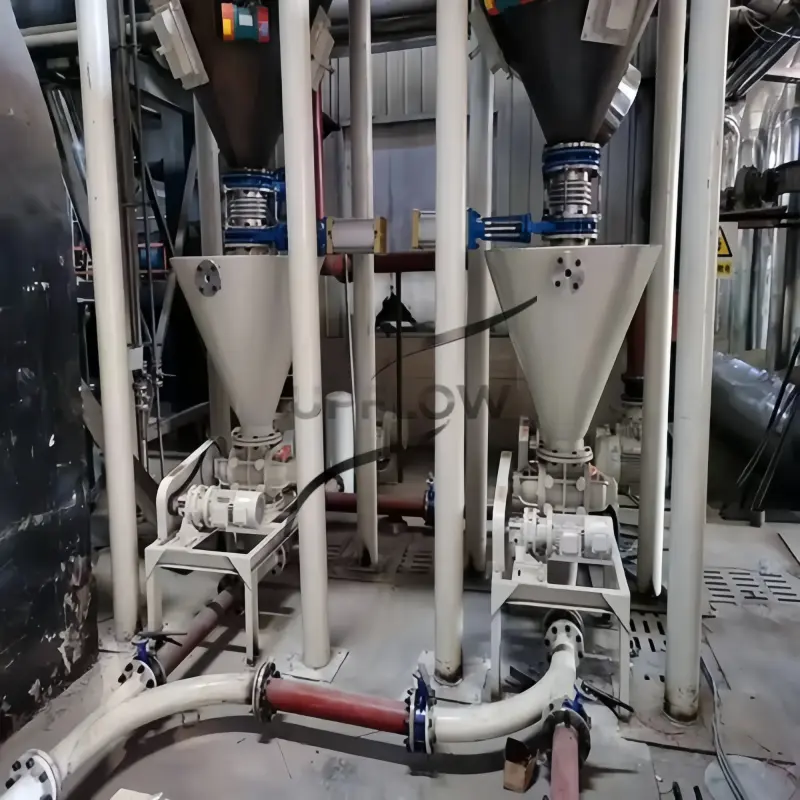
Chemical Powder Conveying System
A chemical plant needed:
Long-distance conveying (400 m)
Capacity: 30 t/h
Explosion-proof requirements
Solution Provided:
Dense phase positive pressure conveying system
Nitrogen protection system
Wear-resistant pipeline
PLC control
Results:
Energy consumption reduced by 25%
Maintenance reduced by 40%
Zero leakage and improved safety
Stable 24/7 operation
Common Mistakes to Avoid
❌ Ignoring material characteristics
❌ Choosing based on price only
❌ Underestimating energy cost
❌ Not testing materials
❌ Choosing inexperienced suppliers
Avoiding these mistakes can save significant long-term costs.
Advanced System Design Considerations for Positive Pressure Conveying
When selecting the right positive pressure conveying system for your plant, advanced engineering design plays a critical role in ensuring long-term performance and cost efficiency.
1. Pipeline Design Optimization
Pipeline design directly impacts system stability and energy consumption.
Key optimization strategies include:
Reducing the number of bends and elbows
Avoiding sharp angles that increase wear and pressure loss
Maintaining consistent pipeline diameter
Designing proper vertical and horizontal transitions
A well-designed pipeline can reduce energy consumption by 10–20% and significantly extend equipment lifespan.
2. Airflow and Pressure Control
In positive pressure conveying systems, airflow must be precisely controlled.
Improper airflow may lead to:
Pipeline blockage
Material degradation
Excessive energy consumption
Advanced systems use:
Variable frequency drives (VFD)
Real-time pressure monitoring
Automated airflow adjustment
These features ensure stable conveying performance under varying production conditions.
3. Feeding System Matching
The feeding system must be matched with the conveying system.
Common feeding equipment includes:
Rotary valves
Pressure vessels
Incorrect matching can cause:
Inconsistent material flow
Pressure fluctuations
System inefficiency
A properly designed feeding system ensures smooth material entry into the pipeline.
Need help optimizing your system design? Our engineers can provide a tailored solution based on your plant layout and materials.
System Scalability and Future Expansion
Modern factories require flexible systems that can adapt to future growth.
A well-designed positive pressure conveying system should allow:
Expansion of production lines
Increased conveying capacity
Integration with additional equipment
Modular design makes it easier to upgrade the system without major reconstruction.
Energy Efficiency Optimization
Energy consumption is a major long-term cost factor.
To improve efficiency:
Use high-efficiency blowers
Optimize conveying velocity
Minimize pressure loss
Implement intelligent control systems
Dense phase conveying systems are often more energy-efficient for long-distance applications.
Maintenance Strategy and Reliability
Long-term system performance depends on proper maintenance planning.
Key practices include:
Regular inspection of pipelines and bends
Monitoring wear parts such as rotary valves
Cleaning filters and dust collectors
Scheduled system calibration
Using high-quality components reduces maintenance frequency and improves reliability.
Return on Investment (ROI) Considerations
Investing in the right system provides significant long-term benefits.
ROI Drivers:
Reduced labor cost (up to 50%)
Increased production efficiency (20–40%)
Lower material loss
Reduced downtime
Improved product quality
Most industrial plants achieve ROI within 1–2 years after upgrading to an optimized system.
Industry-Specific Selection Tips
Chemical Industry
Explosion-proof design
Corrosion-resistant materials
Food and Pharmaceutical Industry
Hygienic design (GMP compliance)
Stainless steel construction
Building Materials Industry
Wear-resistant pipelines
High-capacity systems
Plastics Industry
Centralized feeding systems
Multi-line conveying
Related reading: Hazardous Powder Conveying System for Chemical Production Lines
Why Turnkey Solutions Are Recommended
Many companies attempt to combine equipment from multiple suppliers, which can lead to:
Compatibility issues
Reduced system efficiency
Higher maintenance costs
A turnkey supplier provides:
Integrated system design
Optimized performance
Single-point responsibility
Choosing a turnkey solution ensures smoother implementation and long-term reliability.
Future Trends in Positive Pressure Conveying
Smart automation (PLC + IoT)
Energy-efficient designs
Integrated conveying + batching systems
Advanced wear-resistant materials
Conclusion
Choosing the right positive pressure conveying system for your plant requires a comprehensive evaluation of material characteristics, conveying requirements, system type, and supplier capability.
A well-designed system ensures:
Higher efficiency
Lower cost
Better product quality
Safe and clean operation
CTA
Planning to install a positive pressure conveying system?
We provide:
Customized system design
Material testing
Dense & dilute phase solutions
Turnkey project delivery
Contact us now to get a free technical proposal and optimize your production system.