
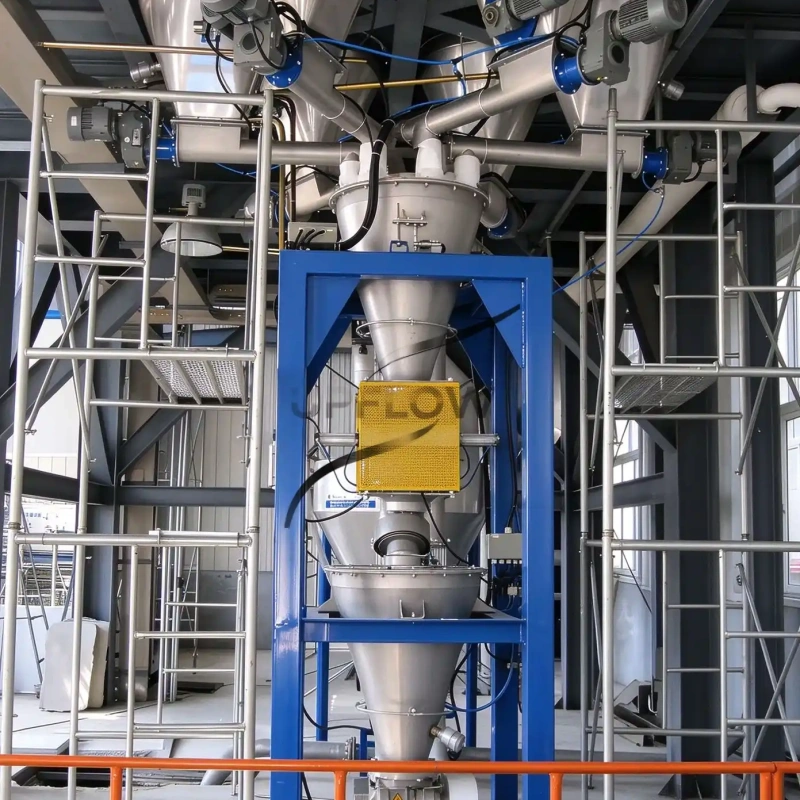
Pneumatic Conveying and Batching System Supplier: What Should a Quotation Include?
A pneumatic conveying and batching system supplier should quote a defined material path, the weighing duty, the control interfaces and the evidence used for acceptance. An equipment list alone does not show who is responsible when the receiver cannot discharge into the weighing hopper, or when the upstream transfer cycle interrupts a recipe.
Ask each bidder to return the same scope matrix with every item marked included, excluded, optional or supplied by the buyer. This guide focuses on that supplier deliverable. The incoming material and route information belongs in the separate pneumatic conveying RFQ datasheet.
Define the material path before comparing prices
Mark the start and end of the supply on a process sketch: bag discharge or storage outlet, pickup, conveying line, receiver, intermediate hopper, weighing equipment and downstream inlet. Put an equipment identifier at each handover. State whether the bidder supplies the complete path or only selected modules.
Then ask where the batch is actually measured. Material can be weighed before transfer, after transfer, or through a metering arrangement selected for the process. A conveying receiver is not automatically a weighing hopper. Our pneumatic conveying systems provide the transport context; the quotation must describe the proposed weighing arrangement separately.
If material arrives in bulk bags, include the ton bag unpacking equipment and its connection to the conveying pickup in the scope. State who supplies the bag outlet connection, intermediate storage and downstream feeding controls.
Return a completed supply-and-responsibility matrix
The following is an original buyer worksheet. It contains confirmation questions, not a standard UPFLOW package or a performance promise. Add an owner, drawing reference and acceptance record to each row.
| Package boundary | What the quotation should identify | Evidence or handover to agree |
|---|---|---|
| Unloading and storage | Bag interface, storage outlet, support and extraction connections | Layout, material entry point and owner of upstream equipment |
| Pneumatic transfer | Pickup, line, routing fittings, air source, receiver and filter | Material/route basis and a repeatable transfer trial |
| Weighing and dosing | Weigh location, feeders, load-cell mounting and isolation interfaces | Batch range, tolerance basis, reference weighing and residual-material treatment |
| Control integration | Recipe ownership, refill permissions, ready signals and fault actions | Signal list and witnessed operating-sequence checks |
| Downstream connection | Discharge flange, venting path, pressure boundary and support | Interface drawing signed off by the receiving-equipment owner |
| Site delivery | Installation, cables, utilities, commissioning and training | Named responsible parties, exclusions and completion records |
Keep transfer capacity and batching acceptance separate
Review the Automated Batching System range when defining weighing, dosing and batch-control responsibilities. Specify which weighing equipment and control functions the offer includes, and how their acceptance will be verified.
A quoted conveying rate needs a material, route and operating-cycle basis. Our full-cycle vacuum conveying capacity guide explains why suction time alone is an incomplete basis. A quoted batch tolerance needs a target batch size, reference measurement and test procedure. Ask whether an accuracy statement is relative to the setpoint, actual delivered mass or scale capacity. These are different denominators.
Also define where accepted material is measured. A correctly indicated weighing hopper does not, by itself, establish the mass arriving in a mixer after discharge. Agree how retained material, interrupted batches and recovered product are recorded. For a powder conveying and batching system manufacturer, these questions should lead to a written acceptance method rather than an unsupported accuracy number.
Make the control handovers visible
For a negative-pressure arrangement, define the vacuum feeding system as an integrated package: vacuum source, transfer route, receiving equipment and controls. Identify the supplier responsible for coordinating this package with weighing and dosing.
For each receiver and weighing point, ask what permits refill, what stops it, and what must happen before weighing or discharge can begin. Identify the owner of the mixer-ready signal and recipe data. Document what happens after loss of power, a high-level signal, an empty source or a failed discharge confirmation.
UPFLOW’s automated batching animation below helps identify feeding vessels, connecting equipment and control boundaries. It illustrates a system arrangement; it does not establish the configuration, throughput or weighing tolerance of a future order.
Watch on UPFLOW’s YouTube channel.
Check a real integration reference against your own scope
The magnesium silicate conveying and batching project for a Kenyan customer connects a manual bag dump station, pneumatic transfer, material receiving, storage and automatic batching. This is a useful reference when a buyer needs transport and controlled addition to work as one process.
Use that process chain to mark the handover at each stage of your own quotation: who supplies the feeding interface, where material is received, and who controls the batch delivered downstream? For the operating relationship between these packages, read our guide to integrating pneumatic conveying and batching systems. The Kenya reference handles magnesium silicate powder; offered batch tolerances and transfer duties still need agreement for the actual material and installation.
List exclusions that can change the installed cost
Ask the supplier to identify foundations, steelwork, lifting, access platforms, electrical installation, compressed-air treatment, dust handling, connection to existing equipment and site supervision. Record whether each item is included, separately priced or the buyer’s responsibility. Do the same for calibration, trial material, test disposal, spare filters and operator training.
A proposal that says “turnkey” still needs these boundaries. Compare the installed scope and acceptance obligation as well as the equipment subtotal. Unknown quantities should remain identified assumptions until the site and material information is confirmed.
Questions buyers ask before placing an order
Should one supplier own both conveying and batching?
A single integration lead can coordinate the interfaces, but the quotation must name that responsibility. With separate suppliers, assign one owner to the shared drawings, signal list and acceptance sequence before ordering.
Does a pneumatic conveying and batching system quotation need a guaranteed batch accuracy?
It needs an agreed requirement and verification method. Any offered guarantee should state the applicable materials, batch range, installation conditions and exclusions. Do not treat an unqualified percentage as a complete specification.
What should accompany the final technical offer?
Request the marked process sketch, scope matrix, utility schedule, interface list, acceptance procedure and commercial exclusions under matching revision numbers.
Request an integrated quotation
Send your material list, batch requirements and process sketch to UPFLOW for a conveying and batching scope review. Identify existing equipment and the packages you want the supplier to include, so the proposal can show the remaining responsibilities clearly.