
Introduction
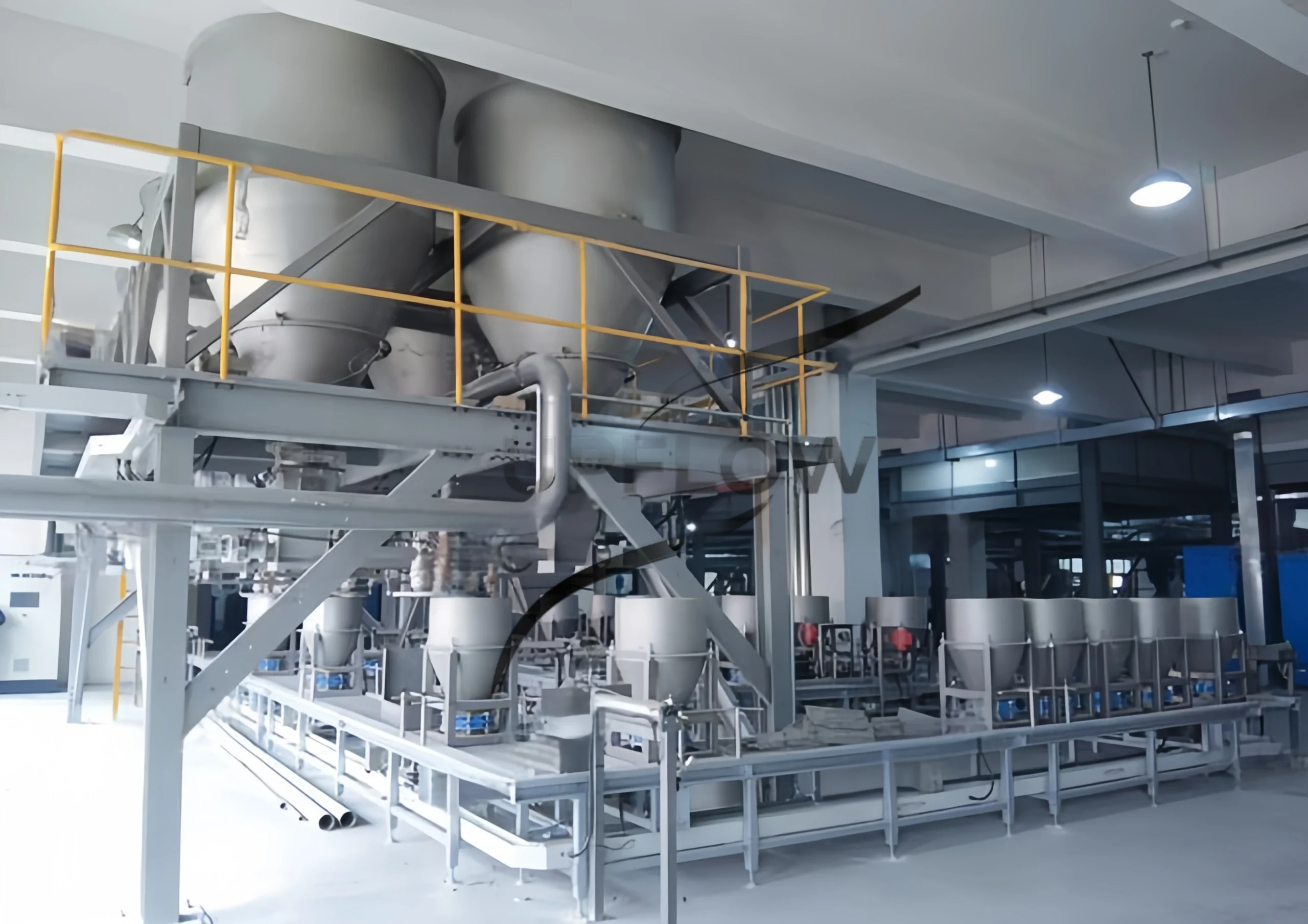
A pneumatic conveying system for carbon black handling is one of the most effective solutions for transporting ultra-fine powder materials in modern industrial environments. Carbon black, due to its extremely fine particle size, low bulk density, and strong tendency to become airborne, poses significant challenges in handling and conveying. Traditional conveying methods often result in severe dust pollution, material loss, and unstable feeding. By implementing advanced pneumatic conveying technology, manufacturers can achieve enclosed, automated, and high-efficiency conveying, ensuring consistent product quality, improved operational safety, and compliance with environmental standards.
Industry Background
Carbon black is widely used in rubber production (especially tires), plastics, coatings, inks, and chemical manufacturing. As global industries demand higher production efficiency and stricter environmental compliance, the limitations of conventional conveying methods have become increasingly evident.
In traditional systems such as manual handling or mechanical conveying (e.g., screw conveyors and bucket elevators), several problems frequently occur:
Dust leakage and environmental contamination
High labor intensity and cost
Inconsistent material feeding
High material loss rates
Increased maintenance requirements
Carbon black particles are extremely fine and tend to agglomerate, making them difficult to transport using open or semi-enclosed systems. Additionally, airborne carbon black dust can create explosion risks in confined environments.
As a result, industries are shifting toward enclosed, automated conveying systems, with pneumatic conveying becoming the industry standard for carbon black handling.
System Solution
A pneumatic conveying system uses compressed air or vacuum to transport carbon black through sealed pipelines. This fully enclosed process prevents dust emissions and ensures stable, continuous material flow.
Learn more:What Is a Pneumatic Conveying System and How Does It Work?
For carbon black applications, dense phase pneumatic conveying is typically preferred. This method operates at lower air velocities, allowing material to move in plugs or slugs rather than suspension, which provides several advantages:
Reduced pipeline wear
Lower energy consumption
Minimal particle degradation
Improved conveying stability
Related application:Pneumatic Conveying System for Chemical Powder Production Lines
The system can be designed for:
Long-distance conveying (up to 200 meters or more)
Multi-point feeding and discharge
Integration with granulation, storage, and packaging systems
Continuous automated production lines
System Components
A complete carbon black pneumatic conveying system consists of several key subsystems:
1. Air Source System
Roots blower or air compressor
Provides stable airflow and pressure
Typical operating pressure ≥0.6 MPa
2. Feeding System
Common feeding devices include:
Rotary valve feeders
Dense phase pressure vessels
For carbon black, pressure vessel feeding is often preferred to ensure stable and high-capacity conveying.
3. Conveying Pipeline System
Main conveying pipeline
External bypass pipeline (dual-pipe design)
The bypass system injects compressed air into the pipeline to break material plugs and prevent blockages, ensuring continuous operation.
4. Separation and Filtration System
Cyclone separators
Pulse-jet bag filters
Filter materials are designed with anti-static, oil-resistant, and waterproof properties to safely handle carbon black dust.
5. Intelligent Control System
PLC-based automation
Real-time monitoring of pressure, flow, and material levels
Automatic alarm and fault detection
Related solution:Centralized Conveying System for Multi-Machine Production Lines
Technical Features and Advantages
1. Fully Enclosed Dust-Free Conveying
Carbon black is highly prone to dust generation. Pneumatic conveying systems eliminate dust leakage through sealed pipelines, significantly improving workplace cleanliness.
According to the Occupational Safety and Health Administration, effective dust control is essential to maintaining industrial safety standards.
2. High Efficiency and Continuous Operation
Automated feeding system
Continuous, uninterrupted conveying
Reduced downtime
Production efficiency can increase by more than 50% compared to traditional methods.
3. Advanced Anti-Blocking Technology
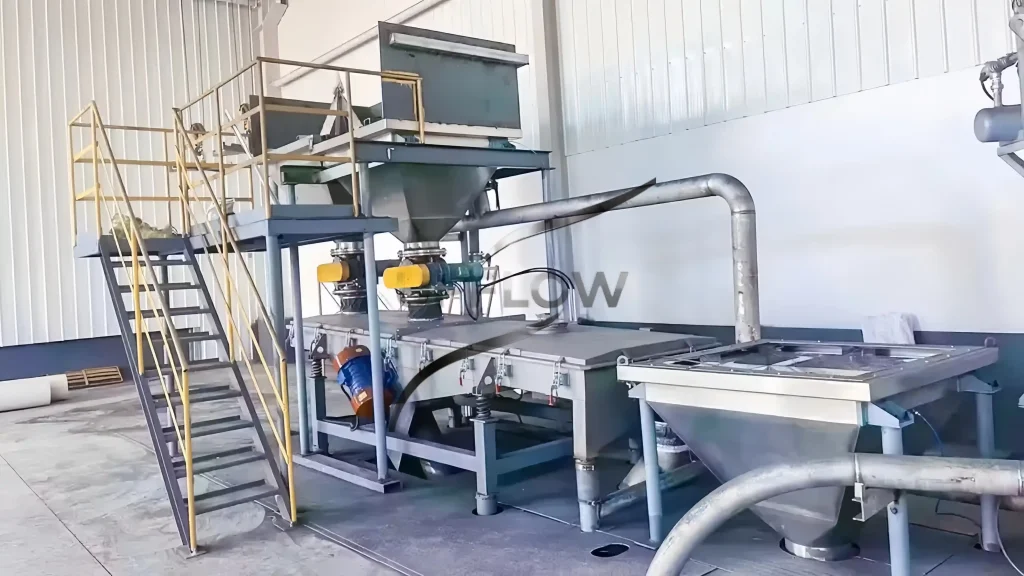
Carbon black can easily cause pipeline blockage due to agglomeration. Advanced systems incorporate:
Bypass air injection
Optimized airflow velocity
Dense phase conveying technology
These features ensure stable and reliable operation.
4. Energy Optimization
By carefully controlling airflow and pressure, pneumatic conveying systems can significantly reduce energy consumption while maintaining high throughput.
5. Flexible Layout and Scalability
Pipeline systems can be installed horizontally, vertically, or with multiple bends, making them adaptable to complex plant layouts and future expansion.
Design Considerations
Designing an efficient carbon black conveying system requires detailed analysis of material properties and operational requirements.
Material Characteristics
Ultra-fine particle size
Low bulk density
Strong dusting tendency
Moderate abrasiveness
System Parameters
Typical design parameters include:
Capacity: 1-20 ton/h
Conveying Distance: 30-200 m
Conveying Pressure: ~20 kPa
Air Supply Pressure: ≥ 0.6 MPa
Filtration Velocity: ≤ 1 m/min
Safety Requirements
Explosion-proof system design
Anti-static pipeline materials
Pressure vessel compliance with safety standards
Environmental Considerations
High-efficiency dust collection systems
Controlled airflow to minimize dust dispersion
Compliance with environmental regulations
Case Example
Case 1: Carbon Black Production Line
Challenge:
A carbon black plant needed to transport fine powder from collection units to granulation systems and storage silos. The existing system experienced:
Severe dust leakage
Frequent blockages
High material loss
Poor working conditions
Solution:
A customized dense phase pneumatic conveying system was implemented:
Pressure vessel feeding system
Dual pipeline (main + bypass) design
Pulse-jet bag filtration system
PLC-based intelligent control
Results:
Dust emissions reduced by over 90%
Production efficiency increased by 60%
Material loss significantly reduced
Continuous and stable conveying achieved
Improved workplace safety
Case 2: Carbon Black Deep Processing (7000+ Tons/Year)
Challenge:
A plant processing recycled carbon black required integration with grinding, separation, and storage processes while preventing secondary pollution.
Solution:
Fully enclosed conveying system
Integrated dust removal and magnetic separation
Multi-point conveying network
Results:
Zero secondary pollution
Improved product consistency
Reduced maintenance costs
Enhanced system reliability
Case 3: Chemical Powder Extension Application
The same conveying technology is widely applied in:
Chemical powder conveying
Raw material feeding systems
Waste material transport
Related application:Pneumatic Conveying System for Plastic Injection Molding Plants
Conclusion
A pneumatic conveying system for carbon black handling is a critical technology for modern industrial production. By enabling enclosed, efficient, and safe material transfer, it helps manufacturers improve productivity, reduce environmental impact, and ensure consistent product quality.
As industries continue to move toward automation and sustainability, pneumatic conveying systems will play an increasingly important role in powder handling applications.
Looking for a reliable solution for carbon black conveying?
Contact us today for a customized pneumatic conveying system tailored to your:
Material characteristics
Production capacity
Plant layout
We provide:
Customized system design
Turnkey engineering solutions
Professional technical support
Send your requirements now and get a tailored solution within 24 hours!